Joint Meeting of Inter-Ministerial Job Task Force (TF) Held
Deterioration in Construction Employment Indicators... Targeted Support Measures Prepared
Intensive Support for Unemployed Graduates in Second Half of Year Implemented
As the construction industry faces a downturn, increasing difficulties for workers in the sector, the government plans to boost public investment to increase job demand and introduce measures to curb rising construction costs. While expanding support for worker-tailored training, it will also promote livelihood support measures such as easing interest-free loan conditions and raising loan limits. If the employment decline worsens in the future, the government will consider designating the construction industry as a special employment support sector.
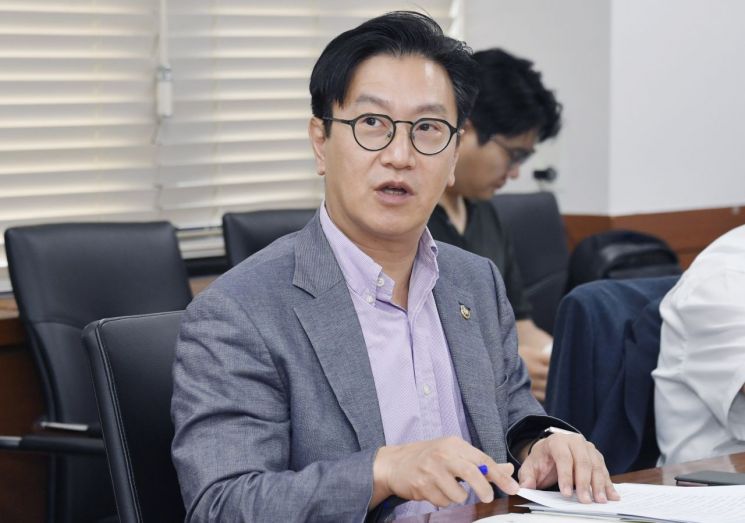 Kim Beom-seok, First Vice Minister of the Ministry of Economy and Finance, speaking at the joint government ministries' dedicated job task force (TF) meeting held at the Government Seoul Office Building on the 14th / Photo by Ministry of Economy and Finance
On the 14th, Kim Beom-seok, First Vice Minister of the Ministry of Economy and Finance, and Kim Min-seok, Vice Minister of Employment and Labor, chaired a joint task force (TF) meeting of related ministries at the Government Seoul Office and announced the 'Construction Industry Job Support Plan' and the 'Strengthening Regional Youth Employment Support Plan for the Second Half of the Year.' These targeted support measures were introduced in response to the continuous decline in employment in the construction industry and the growing difficulties faced by vulnerable groups such as youth.
According to employment trends released by Statistics Korea on the same day, the number of employed persons in the construction industry was 2,014,000 as of last month, down 3.9% (81,000 persons) compared to the same month last year. This is the largest decrease since the industrial classification revision in 2013. The number of regular subscribers to employment insurance in the construction industry also decreased by 1.5% (12,000 persons) to 769,000 as of the end of last month, marking 12 consecutive months of decline.
The government diagnosed that due to continued high interest rates and overlapping adverse factors such as rising construction costs, it will be difficult for the construction market and job situation to improve in the near term. Accordingly, efforts will be made to supplement job demand in the construction industry and improve the employment service blind spots for daily construction workers. Training support will be strengthened to a level comparable to that of special employment support sectors, and support for job transitions and livelihoods will be enhanced for workers facing difficulties due to job losses. To increase the employment insurance subscription rate of daily construction workers, which stands at about 18.8%, the government will also promote the compulsory employment insurance enrollment of uninsured workers.
To boost job demand in the construction industry, the scale of public institution investment will be expanded by 2 trillion won in the second half of the year, and unexecuted amounts (8.6 trillion won) from local public enterprises’ investments in the first half will be rapidly executed. The 'Housing Supply Expansion Plan' announced on the 8th will also be swiftly implemented. This plan includes supplying a total of 427,000 housing units in Seoul and the metropolitan area. The Ministry of Economy and Finance, the Ministry of Land, Infrastructure and Transport, and other related ministries will prepare a 'Construction Cost Stabilization Plan' next month through the task force to reduce factors causing construction delays.
In providing customized employment services for construction workers, support measures will be prepared according to the type of desired employment, such as continuous employment or job transition. For those wishing to continue working, job vacancy and job seeker information will be enhanced, and detailed information on regional and occupational labor supply and demand will be provided. For those seeking to improve their construction expertise or transition to other industries such as manufacturing, tailored training courses will be supported. In the second half of the year, specialized training will be intensively provided to 17,000 people, and education linked to the construction worker grading system to cultivate skilled construction technicians will be significantly expanded.
Support for daily construction workers will be expanded to a level comparable to that of special employment support sectors. From next month through December, the limit of the 'Tomorrow Learning Card' (Naeil Baeum Card) will be increased from 4 million won to 5 million won over five years for those newly issued or applying for a limit increase. The loan limit for training living expenses for daily construction workers will be expanded from 10 million won to 15 million won. Conditions for interest-free loans for living expenses using the Construction Mutual Aid Association’s retirement mutual aid funds will be eased, and active support for employment retention subsidies will also be included.
The government will form an employment situation team and establish customized support plans if crisis construction companies report large-scale employment changes. Loan conditions for employers with wage arrears will also be eased to support the clearance of unpaid wages. If the employment decline in the construction industry intensifies in the future, the government will consider designating the construction industry as a special employment support sector. Additional support measures will be introduced after collecting field opinions.
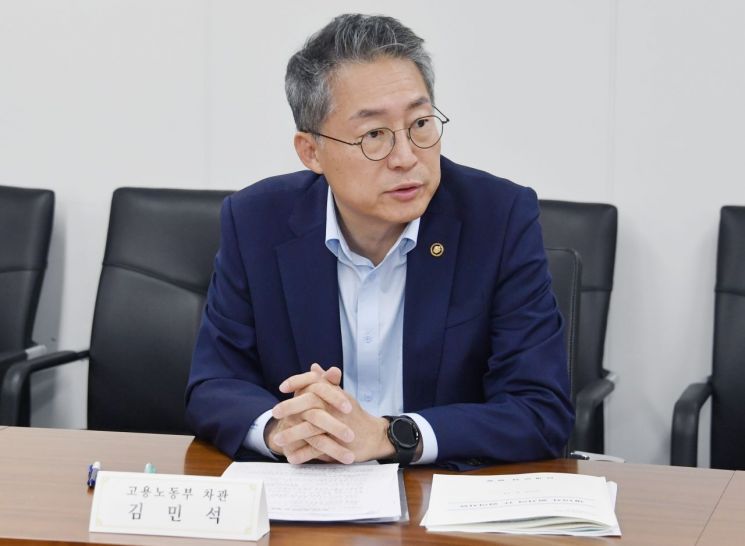 Kim Min-seok, Vice Minister of Employment and Labor, speaking at the joint task force (TF) meeting on job creation held at the Government Seoul Office Building on the 14th / Photo by Ministry of Economy and Finance
To address the issue of delayed labor market entry, with youth taking an average of 11.5 months to find employment after graduating from university, concentrated employment support will be provided in the second half of the year. A 'Youth Employment All-Care Platform Pilot Project' will be conducted this month at eight universities nationwide, including in Seoul (Konkuk University, Sungshin Women’s University), Gyeonggi (Dankook University), and Busan/Gyeongnam (Dong-Eui University), offering recruitment-linked programs to more than 3,000 unemployed graduates.
Vice Minister Kim Beom-seok said, "The number of employed persons in the construction industry and self-employed continues to decline, and difficulties for vulnerable groups including youth persist. We will closely monitor and respond to employment situations in each sector through the pan-ministerial job task force."
Vice Minister Kim Min-seok stated, "Along with tailored job support by industry and target groups, we will continue social dialogue to promote labor reforms that lay the foundation for private sector job creation," adding, "We will also rapidly advance active labor market policy (ALMP) innovations to quickly bridge the gap between corporate recruitment difficulties and job seekers’ employment challenges."
© The Asia Business Daily(www.asiae.co.kr). All rights reserved.

![A Woman with 50 Million Won Debt Clutches a Stolen Dior Bag and Jumps... A Monster Is Born [Slate]](https://cwcontent.asiae.co.kr/asiaresize/183/2026021902243444107_1771435474.jpg)
















