Unfair Support to Affiliates... Fair Trade Commission Imposes 24.5 Billion KRW Fine
"Freshone Established to Modernize Local Food Distribution"
Opposition to Conclusion on Local Shareholder Removal and Unfair Personnel Support
"Regret Over Insufficient Explanation"
The group catering company CJ Freshway has been ordered by the Fair Trade Commission (FTC) to take corrective measures and pay fines totaling 24.5 billion KRW (16.7 billion KRW for CJ Freshway and 7.8 billion KRW for Freshone) for unfair support, including dispatching company personnel to its subsidiary Freshone to dominate the local food ingredient distribution market and paying hundreds of billions of won in labor costs on its behalf.
CJ Freshway expressed regret over the FTC's sanction decision, stating that it planned a co-growth model through agreements with local distributors aiming to modernize the food ingredient distribution market. They also said they would seek a re-evaluation through administrative litigation, citing that the explanations provided during the investigation were not sufficiently reflected.
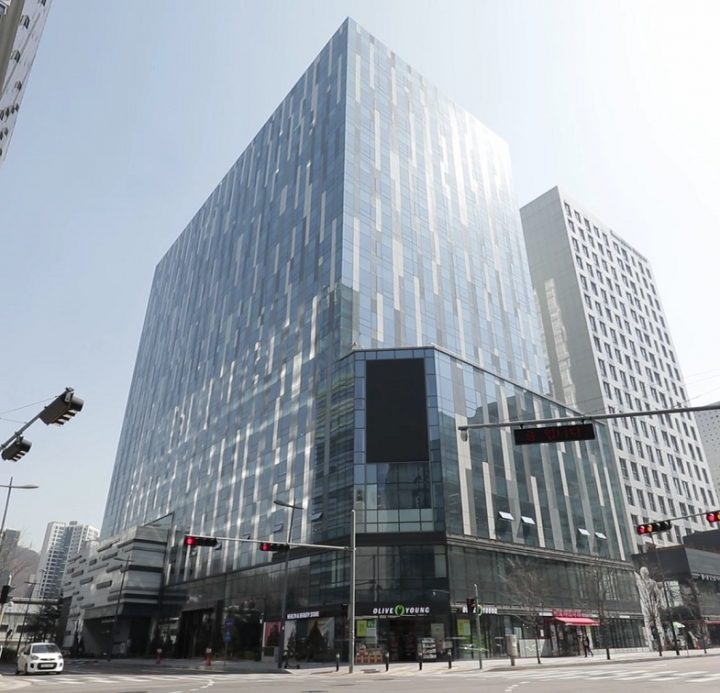
On the 13th, after the FTC's sanction decision was announced, CJ Freshway explained, "Freshone is a joint venture established on the premise of 'joint management' between the company and local distributors with the goal of modernizing the regional food ingredient distribution market." They added, "At the time of establishment, some local distributors felt the need for structural transformation to maintain their business, such as a transparent transaction system, triggered by the strengthening of the Food Sanitation Act, but judged that independent structural changes were difficult, so they sought cooperation with CJ Freshway." They further stated, "We proposed a co-growth business model combining the strengths of both sides along with CJ Freshway's goal of entering the regional market."
On the other hand, the FTC viewed that around 2010, CJ Freshway expanded its business to preempt the local food ingredient market, which was mainly composed of small business owners and had not been entered by large corporations. When small business owners opposed the entry of large corporations as an 'invasion of neighborhood markets,' CJ Freshway entered the market by establishing the joint venture Freshone under the guise of 'nominal coexistence.'
The FTC also judged that CJ Freshway made contracts with designated small business owners to establish Freshone, then sequentially purchased Freshone's shares to become the largest shareholder, effectively acquiring the small business owners' sales networks rather than forming a joint venture. In fact, CJ Freshway viewed local shareholders as a 'risk' to Freshone's business and organized a large team to prepare risk response measures at the group level and to expel local shareholders. Through this systematic effort, all shareholders were expelled, and CJ Freshway acquired 100% of the shares.
In response, CJ Freshway argued, "The decision to purchase shares was made to minimize the damage to local distributors who were shareholders." They added, "After the business started, losses occurred due to the growth of online commerce and prolonged recession, and some local shareholders requested CJ Freshway to acquire their shares. Some local shareholders publicized their share acquisition requests through political circles in 2016," and "later, political circles also recommended CJ Freshway to acquire 100% of the shares, and to minimize shareholder damage, shares were gradually purchased over nine years."
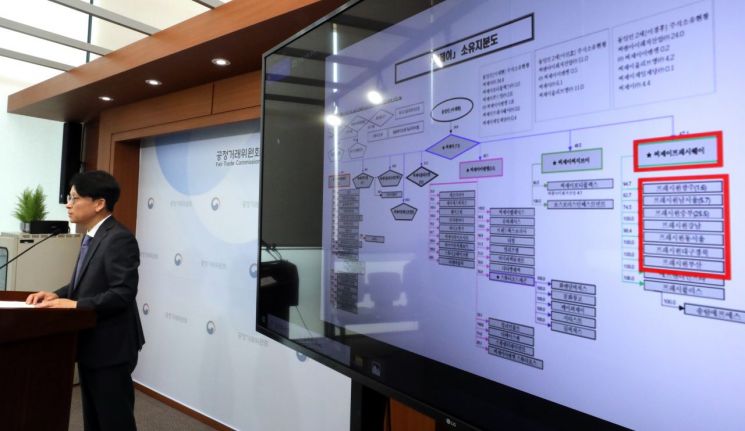 Yuseong Wook, Director of the Corporate Group Surveillance Bureau at the Fair Trade Commission, is explaining the sanctions on CJ Freshway Co., Ltd., a subsidiary of CJ Group, for large-scale unfair labor support activities at the Fair Trade Commission press room in the Government Sejong Complex on the morning of the 13th. [Image source=Yonhap News]
There is also a significant difference in views between the FTC and CJ Freshway regarding the personnel support issue, which was a key basis for the sanction decision. The FTC judged that CJ Freshway provided personnel support to easily take control of Freshone and support its market settlement. From November 2011, when Freshone was established, until last June, about 221 company personnel were dispatched to Freshone, handling core tasks, and labor costs of 33.4 billion KRW were paid on behalf of Freshone, constituting unfair support. Through this, Freshone secured favorable competitive conditions in the market, undermining fair competition, leading to the sanction decision. This is the largest personnel and amount, and the longest period of personnel support among unfair support cases sanctioned by the FTC.
On the other hand, CJ Freshway denied that employees were dispatched to lead Freshone's operations. They explained that CJ Freshway provided logistics infrastructure and dispatched business management personnel, and Freshone purchased distribution products in principle through CJ Freshway according to the contract, so personnel were dispatched to expand sales of distribution products. They also claimed that the dispatched employees' duties were limited to business management areas such as purchasing systems, logistics infrastructure, and accounting, excluding sales, but the FTC interpreted that these employees performed Freshone's tasks.
CJ Freshway also emphasized, "Freshone's market share is around 1%, which is negligible and cannot be interpreted as a dominant position that damages market fairness," adding that "the overall market share is on a declining trend." According to the company's estimates, Freshone's regional market shares in 2016 were 2.54% in Seoul/Capital area/Gangwon, 1.18% in Chungcheong, 2.40% in Honam, and 1.02% in Gyeongsang, but shares have continuously declined in all regions, falling below 1% as of 2022.
A CJ Freshway official said, "It is very regrettable that these facts were not sufficiently clarified in the FTC's judgment," and "We will seek a re-evaluation through the given procedures, including litigation." According to the Fair Trade Act, an administrative lawsuit can be filed with the Seoul High Court within 30 days from the date of receipt of the FTC's disposition or decision on objections.
© The Asia Business Daily(www.asiae.co.kr). All rights reserved.


















