Alternative to Resident Attrition 'Nursing Act' Passage Imminent
Obtaining Surgical Consent and Prescribing with Professor ID
Patient Death Possible if Performed by Low-Skilled Personnel
"The proposal is to formally introduce a Physician Assistant (PA) nurse system, where nurses can perform simple intubation on patients' throats as surgical assistants."
On the 9th, Kim Sang-hoon, the Policy Committee Chairman of the People Power Party, made this statement while explaining the necessity of enacting the Nursing Act on a radio broadcast, which drew heavy criticism from the medical community. This was because he mentioned 'endotracheal intubation,' a critical procedure for patients struggling to breathe, as if it were a simple skill easily performed. The Korean Medical Association issued a press release condemning it as a "reckless remark that lightly disregards public health and life" and "an ignorant statement by an irresponsible politician," expressing strong anger.
In response, Asia Economy took an in-depth look at what kind of medical procedure endotracheal intubation is, the scope of work for Physician Assistant (PA) nurses that is currently a contentious issue in the Nursing Act discussions, and how it should be defined.
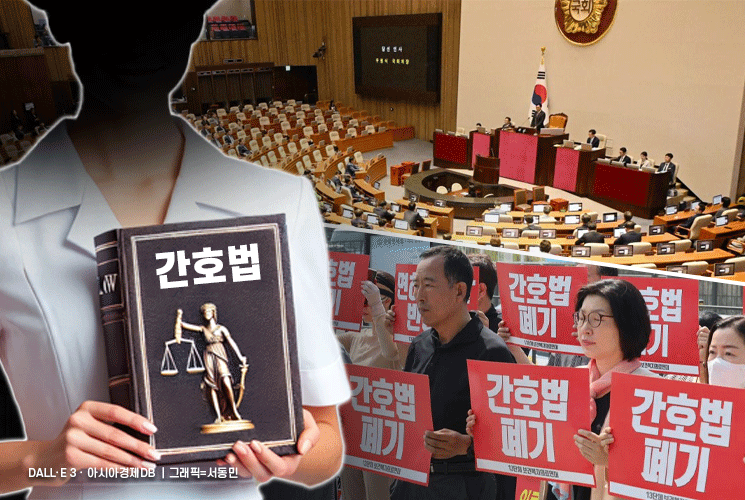
"Not a simple skill"... Concerns over side effects for patients
The government is pushing for a structural transformation to turn tertiary hospitals into 'specialist-centered hospitals' as a solution to the current medical crisis caused by the mass resignation of residents. In this process, it is highly likely that the Nursing Act, which allows PA nurses to fill the vacancies left by residents, will pass the National Assembly this month.
The PA nurse system is designed to allow nurses to perform some delegated tasks from doctors to assist in medical care. Previously, many hospitals struggling with manpower shortages have secretly operated PA nurses who effectively act as substitutes for doctors. However, PA nurses do not legally exist under the Medical Service Act, and all medical acts they have performed so far have been illegal. According to the Ministry of Health and Welfare, following the residents' resignation crisis earlier this year, the role of PA nurses has increased, with about 14,500 PA nurses active as of the end of June.
The medical community is concerned that although some delegated tasks may seem simple at first glance, if performed incorrectly by low-skilled personnel, they could lead to patient death. Endotracheal intubation is a representative example.
Endotracheal intubation is a procedure to secure the airway by inserting a tube into the trachea for patients who need airway maintenance or mechanical ventilation. It is usually performed when a patient is experiencing respiratory distress and is expected to die within minutes to hours without intervention, serving as a substitute for lung function. It is a medical act related to the larynx and respiratory system, and even specialists in anesthesiology or head and neck surgery, who perform intubation, may encounter structural difficulties, making it a specialized medical procedure. Since it is frequently performed under general anesthesia or in emergency situations when the patient is unconscious, immediate follow-up by a specialist and comprehensive respiratory and circulatory treatment must be provided after intubation.
Endotracheal intubation requires managing countless variables depending on the patient's condition. Doctors say that even specialists skilled in intubation cannot know the exact situation until the patient's mouth is opened. Therefore, the consensus is that it is not an easy procedure that nurses, residents, or even specialists from other departments can perform easily.
A director of emergency medicine at a general hospital, Mr. A, said, "If endotracheal intubation is not successful on the first attempt, it is a critical procedure that can lead to hypoxic brain injury or death." He pointed out, "Some might say that if a PA nurse fails, they can just ask an anesthesiologist, but each failure scrapes the area around the airway, increasing the difficulty of intubation. During the 1-2 minutes of attempting intubation, the patient cannot breathe, so failure itself can cause death."
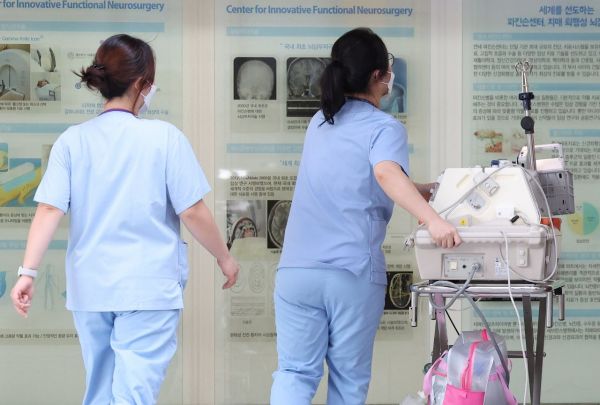
"Tasks that cannot be performed should not be allowed"... Nursing community also opposes
Besides intubation, procedures such as 'ultrasound,' 'prostate massage,' 'drainage tube management and removal,' and 'emergency cardiopulmonary resuscitation' may seem simple but carry significant risks, so the medical community explains that considerable discussion is needed on whether these should be included in the PA nurses' scope of work.
Director A said, "The difficulty of some procedures may be low. Actions like disinfection, ultrasound observation, ECG recording, and suturing can be performed by nurses with some training," but he added, "The problem is that even if only one out of 100 cases involves inappropriate treatment or judgment, patient harm will occur 100%." He continued, "For example, if an emergency situation is not immediately recognized despite ultrasound examination, the damage falls entirely on the patient," emphasizing, "This is why the person performing these tasks must be responsible and capable of handling emergencies."
Earlier, the Korean Nurses Association reported that in February, they received reports from nurses about unfair medical orders in hospitals, including writing treatment and surgery consent forms, catheter removal, surgical site dressing, CT contrast agent tests, MRI tests, blood transfusions, and even drug prescriptions using professors' IDs. In one hospital, PA nurses were instructed to insert chemoports (catheters inserted into large veins near the heart) for cancer patients, which is a medical act requiring local anesthesia and skin incision and must be performed by doctors, not nurses.
Chae Dong-young, the Korean Medical Association's public relations director, said, "Endotracheal intubation, emergency cardiopulmonary resuscitation, emergency drug administration, central venous catheter insertion, and peripherally inserted central catheters are procedures that even doctors consider cautious unless they are specialists," warning, "The side effects and damages resulting from the passage of the Nursing Act will be directly transferred to patients and frontline medical staff."
The nursing community is also cautious about the appropriate scope of PA nurses' work. While welcoming the enactment of the Nursing Act, they demand clear distinctions for tasks that nurses cannot perform. A Korean Nurses Association official said, "If tasks that nurses cannot perform are legally permitted, unavoidable legal responsibilities may arise in the event of medical accidents," adding, "It is important to define PA tasks only within the scope of nurses' capabilities when creating enforcement ordinances in the future."
The Korean Medical Association claims that the Nursing Act is being pushed forward without sufficient discussion on the scope of PA nurses' work and responsibilities. An association official said, "Last year, the medical community and the Ministry of Health and Welfare discussed nurses' duties, but the talks were not concluded due to the controversy over medical school expansion," emphasizing, "Sufficient discussion on what medical acts nurses can perform and their risks must precede."
© The Asia Business Daily(www.asiae.co.kr). All rights reserved.
![Clutching a Stolen Dior Bag, Saying "I Hate Being Poor but Real"... The Grotesque Con of a "Human Knockoff" [Slate]](https://cwcontent.asiae.co.kr/asiaresize/183/2026021902243444107_1771435474.jpg)

















