Ministry of Health and Welfare Medical Reform Promotion Team, "Review of Fee Adequacy"
The government is considering raising the fees for about 1,000 severe surgeries performed at tertiary general hospitals and general hospitals. This is to improve the imbalanced structure of the fee-for-service payment system. They are also exploring selective intensive management measures for non-covered items that are excessively performed beyond medical necessity.
On the 13th, Jeong Gyeong-sil, head of the Medical Reform Promotion Team at the Ministry of Health and Welfare, held a briefing at the Government Seoul Office to announce the progress of medical reform, including discussions on 'establishing a fair compensation system for essential medical care' and 'improving the non-covered and actual expense reimbursement system.'
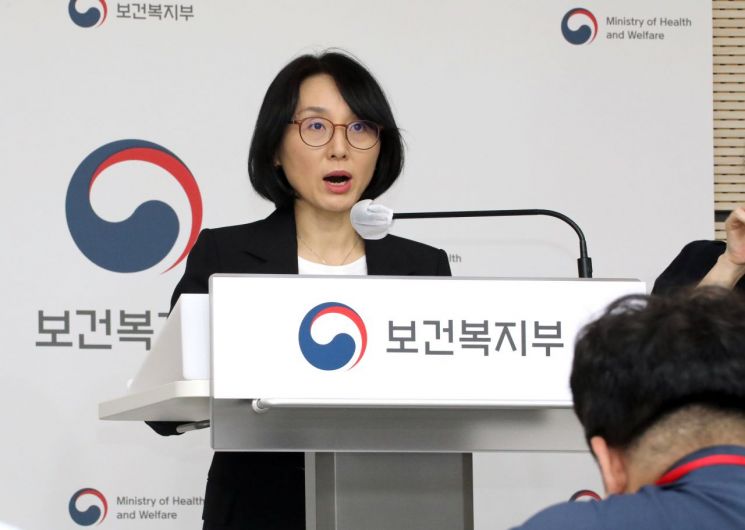
First, a comprehensive reform will be promoted to raise compensation levels in undercompensated areas and lower them in overcompensated areas. Director Jeong explained, "Since it is difficult to adjust all fees at once, we are currently considering selectively raising the fees for about 1,000 severe surgeries, mainly performed at tertiary general hospitals and general hospitals, which currently have low compensation levels."
A 'Medical Cost Analysis Committee' has also been established within the Health Insurance Policy Deliberation Committee to adjust medical fees based on scientific evidence. Director Jeong said, "The committee will establish a foundation for scientifically analyzing the costs underlying medical fees," adding, "By reviewing the validity of basic data such as time, risk, and labor costs, as well as the appropriateness of medical fees, we expect the fee adjustment system to become more scientific and transparent."
Director Jeong also stated, "The special committee identified six priorities requiring focused investment: severe, high-difficulty essential care, emergency, nighttime and holiday care, pediatrics and childbirth, and vulnerable areas," adding, "Based on this, we plan to systematically introduce public policy fees." For example, they intend to provide stronger support by selecting areas such as ▲severe care with high difficulty and risk ▲fields with constant standby requirements ▲areas requiring additional costs to maintain infrastructure due to regional characteristics.
Director Jeong further said, "We have begun full-scale work to overhaul the uniform hospital-type surcharge system and convert it into a performance-based reward system," explaining, "Currently, tertiary general hospitals receive a flat 15% surcharge regardless of severity; this will be changed to a system where more compensation is given for treating severe cases and less for mild cases."
To this end, 'appropriate disease groups' suitable for each medical institution's function will be selected and applied. The policy aims to provide greater compensation to medical institutions that treat more patients with appropriate diseases, improve patient health outcomes more effectively, and reduce unnecessary medical expenses.
To enhance transparency in the non-covered market, which raises concerns about overtreatment, the non-covered disclosure system will also be improved. Director Jeong said, "We are considering measures to help patients and consumers make rational choices about non-covered treatments by comprehensively disclosing not only the unit price per item but also total medical costs, safety and efficacy evaluation results, and alternative covered treatments," adding, "There are discussions about restricting concurrent covered and non-covered treatments for non-covered items with overtreatment concerns, such as manual therapy, non-covered lens use in cataract surgery, and non-valve reconstruction surgery."
© The Asia Business Daily(www.asiae.co.kr). All rights reserved.

















