KCCI Surveys 219 Corporate Foundations
62% Say Regulations Negatively Impact Private Donations
"33 Years Since Tax Law Changes, Need to Raise Tax Exemption Limits"
It has been revealed that companies perceive the 33-year-old inheritance and gift tax law's '5%' tax exemption limit as having a negative impact on donation activities. The business community has suggested that the exemption limit regulation in the inheritance and gift tax law should be promptly improved to promote donations.
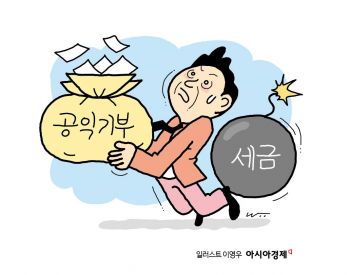
On the 13th, the Korea Chamber of Commerce and Industry announced that, as a result of a survey on 'Corporate Public Interest Corporation System Improvement Tasks' conducted on 219 public interest foundations of 88 publicly disclosed business groups this year, 61.6% of corporate public interest corporations responded that regulations negatively affect the finances of corporate foundations.
Corporate foundations identified regulations that significantly impact private donations, such as the stock tax exemption limit under the inheritance and gift tax law (33.3%), internal transaction approval and disclosure (22.9%), and voting rights restrictions under the Fair Trade Act (18.8%).
The stock tax exemption limit under the inheritance and gift tax law stipulates that when voting stocks are donated to a corporate foundation, the foundation is exempt from inheritance or gift tax only up to 5% of the total issued shares, and must pay up to 60% inheritance and gift tax on shares exceeding 5%. This rule was introduced in 1991 and has been in effect for 33 years. The regulation was introduced in response to concerns that large business groups were indirectly using public interest foundations within the group as a means of corporate control.
According to the Korea Chamber of Commerce and Industry, Group A's B School Foundation, which received and held more than 50% of shares from multiple affiliates over 40 years ago, had to sell all shares exceeding the 5% tax exemption limit?more than 45%?by the late 1990s. This resulted in missed opportunities to earn billions of won due to stock price increases and affiliate listings. Group C's D University professors intended to donate more than 20% of shares to the university to support startups in robotics, IT, and bio sectors, but are reconsidering the donation due to the inheritance and gift tax law's '5% rule.'
The voting rights restriction under the Fair Trade Act is a regulation that prohibits public interest foundations belonging to business groups with total assets exceeding 10 trillion won from exercising voting rights even if they hold affiliate stocks. Voting rights can only be exercised within a 15% limit combined with related parties in special cases such as executive appointments or dismissals and mergers. This regulation was introduced in 2020.
An official from the Korea Chamber of Commerce and Industry said, "With the strict stock tax exemption limit under the inheritance and gift tax law and the inclusion of voting rights exercise prohibition for corporate foundation affiliate stocks in the Fair Trade Act, both the 'front and back doors' for donation incentives to corporate foundations are blocked."
Among the surveyed foundations, 52.5% responded that the contribution level of Korean foundations is lower than that of advanced countries. According to the World Giving Index (WGI) published annually by the UK’s Charities Aid Foundation (CAF), Korea's donation index ranking dropped 34 places from 45th in 2013 to 79th last year over a decade. The most common reason cited for the low national contribution of corporate foundations was "the low tax exemption limit and strict, overlapping regulations" (53.7%).
Corporate foundations emphasized the urgent need to raise the tax exemption limit under the inheritance and gift tax law. An overwhelming 83.3% expressed the opinion that it "should be improved." The preferences were "raise to 15%" (28.2%), "abolish the exemption limit like the EU" (20.5%), "raise to 10%" (19.2%), and "raise to 20% like the US" (15.4%) in order.
Regarding the voting rights restriction regulation under the Fair Trade Act, the majority preferred to observe further. The most common opinion (57.7%) was to decide on regulatory improvements after a certain period since the regulation was implemented at the end of 2022. However, 42.3% also expressed opinions that the regulation should be immediately improved, including "abolish the regulation" (26.9%) and "raise the limit" (15.4%).
Kang Seok-gu, head of the Korea Chamber of Commerce and Industry’s survey division, said, "The current Fair Trade Act sufficiently prevents corporate foundations from being used as indirect means of control," adding, "If it is difficult to improve both the inheritance and gift tax law and the Fair Trade Act together, the tax exemption limit under the inheritance and gift tax law should be eased first."
© The Asia Business Daily(www.asiae.co.kr). All rights reserved.

















