"South Korea, Mandatory Separate Waste Disposal for 20 Years"
The US daily Washington Post (WP) highlighted South Korea's food waste disposal methods.
On the 9th (local time), WP published an article titled "South Korea recycles 98% of its food waste. What can this teach the world?" introducing that South Korea recycles most of its food waste into livestock feed, compost, and biogas. It added, "South Korea is one of the few countries worldwide with a nationwide food waste disposal system," noting that only some countries and cities, such as France, which mandated composting of food waste starting this year, and New York in the US, have similar regulations.
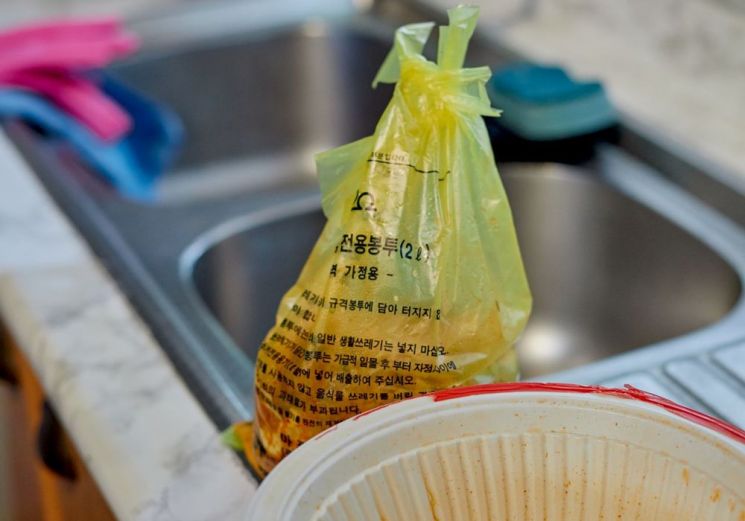
According to WP, the US recycles 40% of its food waste. The annual per capita food waste generation reaches 137 kg, of which 60% is directly landfilled. When food waste is buried in the ground, it contaminates the soil and emits methane, a greenhouse gas considered one of the main causes of global warming.
In contrast, WP introduced that South Korea has banned burying food waste in the ground for over 20 years and has mandated the separate disposal of food waste, general waste, and recyclables, achieving a recycling rate of 98%. WP analyzed, "(In terms of food waste disposal) there are very few countries like South Korea," and added, "The high recycling rate was possible thanks to the food waste separation and volume-based waste fee system deeply ingrained in citizens' daily lives."
WP pointed out, "However, challenges remain, such as impurities like disposable items or animal excrement mixed with food waste, which lower the quality of feed or fertilizer." It also expressed concerns that the method of recycling food waste into biogas may be less efficient in summer when heating demand is low, and noted that this method might not be suitable for other countries such as hot Southeast Asian nations or the US, where the land is vast and waste transportation costs exceed landfill costs.
Jonathan Krons, an assistant professor in the Department of Engineering at Brandeis University in the US, told WP, "It may be difficult to apply South Korea's food waste disposal methods in the US," adding, "The best way to ultimately solve the food waste problem is to reduce waste so that less food waste is generated."
© The Asia Business Daily(www.asiae.co.kr). All rights reserved.
![Clutching a Stolen Dior Bag, Saying "I Hate Being Poor but Real"... The Grotesque Con of a "Human Knockoff" [Slate]](https://cwcontent.asiae.co.kr/asiaresize/183/2026021902243444107_1771435474.jpg)
















