"No Legal Basis for Issuing Subpoenas to Hearing Witnesses"
Democratic Party Also Proposes Amendment Law and States Reasons
On the 14th, the National Assembly's Legislation and Judiciary Committee will hold a 'Prosecutor Impeachment Investigation Hearing,' where Prosecutor General Lee Won-seok and Kim Young-cheol, Deputy Chief Prosecutor of the Seoul Northern District Prosecutors' Office and the subject of the impeachment motion, have been selected as witnesses. On the 9th, the Supreme Prosecutors' Office stated that requiring the subject of the impeachment motion, who is a party to the hearing, to appear as a witness is unconstitutional and illegal.
Prosecutor General Lee Won-seok submitted a letter of non-attendance to the National Assembly, stating that it is inappropriate for the Prosecutor General to appear before the National Assembly to answer questions about ongoing investigations, as it could undermine the political neutrality of the prosecution.
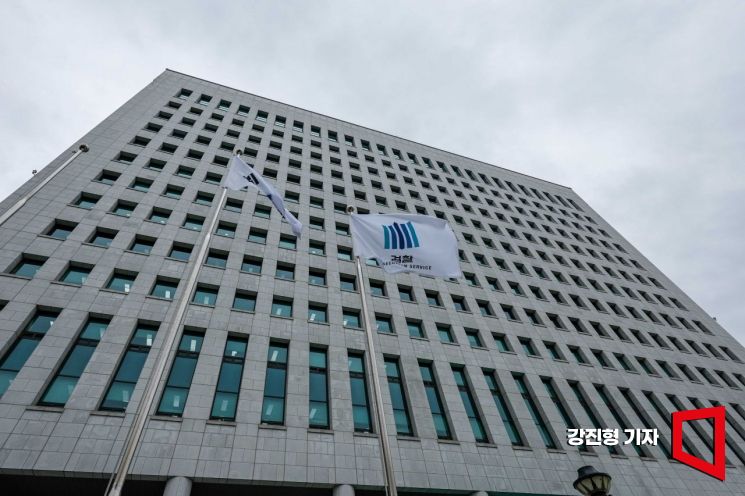
In a statement distributed to the press on the same day, the Supreme Prosecutors' Office pointed out, "Summoning prosecutors involved in investigations and trials related to the Democratic Party as witnesses to the hearing is an unconstitutional measure that directly contradicts the separation of powers and the rule of law, as it implies that the Democratic Party intends to conduct investigations and trials themselves."
It added, "Interfering with ongoing investigations and trials and significantly hindering the functions and activities of the involved prosecutors exceeds the limits of the National Assembly's investigative authority as stipulated in Articles 8 and 14 of the Act on the National Assembly's Audit and Inspection (hereinafter referred to as the National Assembly Audit and Inspection Act), constituting an illegal procedure."
Article 8 (Limits of Audit or Investigation) of the National Assembly Audit and Inspection Act stipulates that "Audits or investigations shall not be exercised for the purpose of infringing on an individual's privacy or interfering with ongoing trials or investigations."
Additionally, Article 14 (Duty of Care) Paragraph 1 of the same law states, "When conducting audits or investigations, care must be taken to ensure that the functions and activities of the subject institution are not significantly hindered and that confidentiality is not breached."
The Supreme Prosecutors' Office expressed concern that if the Democratic Party forces frontline prosecutors to appear as witnesses beyond these legal limits, it would affect investigations and trials related to cases mentioned as grounds for impeachment, such as the Democratic Party Convention money envelope case, illegal North Korean remittance case, and presidential election opinion manipulation case, and significantly hinder the prosecutors' performance of duties in other cases.
The Supreme Prosecutors' Office stated, "Selecting Deputy Chief Prosecutor Kim, the subject of the impeachment, as a witness for this hearing and demanding his attendance is an illegal procedure without legal basis."
As grounds for this judgment, the Supreme Prosecutors' Office cited ▲ the fact that the subject of the impeachment is a party to the impeachment procedure and cannot be a third-party witness ▲ that compelling testimony from the subject of the impeachment contradicts the spirit of the Constitution ▲ and that there is no legal basis to require the attendance of the subject of the impeachment.
Furthermore, the Supreme Prosecutors' Office opposed the Democratic Party's threat to issue a summons if Deputy Chief Prosecutor Kim does not appear, stating, "Under current law, the Legislation and Judiciary Committee of the National Assembly has no legal basis to issue a summons."
First, the Supreme Prosecutors' Office pointed out, "According to the National Assembly Act, the National Assembly Audit and Inspection Act applies to the impeachment investigation procedures of the Legislation and Judiciary Committee, and especially the National Assembly Witness and Expert Testimony Act applies to procedures related to witness and expert testimony. Just as a defendant in a trial cannot be a 'third-party' witness because they are a 'party' to the case, the subject of the impeachment, as a party to the procedure, cannot be a witness in the impeachment investigation procedure, and the National Assembly Act distinguishes between 'subjects of impeachment' and 'witnesses.'" Since only third parties excluding the parties can be witnesses, selecting a party as a witness and demanding attendance is illegal.
The Supreme Prosecutors' Office also stated, "Criminal procedure applies to impeachment trials, and the manner and content of witness oaths, reasons for refusal to testify, and perjury penalties applied in impeachment procedures are all the same as those in the Criminal Procedure Act. Therefore, the spirit of criminal procedure regulations should be reflected in this hearing's investigation procedures. If the subject of the impeachment is selected as a witness, they must take an oath to 'tell the truth under penalty of perjury' according to the National Assembly Witness and Expert Testimony Act, thereby imposing the burden of perjury. This results in compelling the party to testify, which contradicts Article 12 Paragraph 2 of the Constitution, which guarantees the right not to be forced to give self-incriminating testimony," it pointed out.
Finally, the Supreme Prosecutors' Office said, "In general audits of state affairs and investigations into specific state matters, the concept of 'party' does not exist, so anyone involved can be summoned as a witness. However, in hearings for the impeachment of a 'specific person,' there is a 'party' who is the subject of the impeachment. Yet, there is no provision to require the attendance of the 'party' subject to impeachment other than witnesses, experts, or reference persons."
Article 131 Paragraph 2 of the National Assembly Act (Investigation of Referred Impeachment Cases) stipulates that the investigation methods and duties of care under the National Assembly Audit and Inspection Act apply to investigations related to impeachment motions in the Legislation and Judiciary Committee.
Article 10 Paragraph 1 of the National Assembly Audit and Inspection Act states, "The committee, subcommittee under Article 5 Paragraph 1, or panel may, by resolution, require the submission of reports or documents related to audits or investigations from relevant persons or other institutions, and may require the attendance and examination of witnesses, experts, or reference persons." It regulates the authority to require attendance of witnesses, experts, and reference persons but does not include parties subject to investigation as those who can be required to attend.
The Supreme Prosecutors' Office added, "Even in the National Assembly confirmation hearings, the party to the hearing, such as a public office candidate, and third-party witnesses are clearly distinguished, and the attendance request procedures are separately regulated. The oath for public office candidates does not include the phrase 'under penalty of perjury,' unlike witness oaths, and there are no perjury penalties for public office candidates."
In fact, Article 4 Paragraph 2 of the Confirmation Hearing Act states, "The committee may, if necessary, hear testimony or statements from witnesses, experts, or reference persons for evidence investigation," and Article 7 Paragraph 2 of the same law stipulates the oath for public office candidates as, "I, the public office candidate, swear to tell the truth without concealment or addition according to my conscience."
Based on these legal grounds, the Supreme Prosecutors' Office argued, "Therefore, summoning prosecutors who are parties to the impeachment procedure as witnesses to the hearing is an illegal measure without legal basis, and forcing their attendance despite this constitutes compelling an act without legal obligation."
The Supreme Prosecutors' Office also pointed out that the Democratic Party's announced 'issuance of summons' lacks legal basis under current law.
The Supreme Prosecutors' Office stated, "The Democratic Party has threatened to issue summons if witnesses refuse to appear, but under current law, summons can only be issued by 'committees for national audits or investigations,' so the Legislation and Judiciary Committee, which is a standing committee for agenda review, cannot issue summons under the pretext of investigating impeachment cases."
It added, "The Democratic Party has also proposed an amendment to the National Assembly Witness and Expert Testimony Act to allow summons not only for national audits or investigations but also for agenda reviews and other hearings, assuming that summons are currently impossible under existing law."
Then, it disclosed the reasons for the proposal stated in the amendment to the National Assembly Witness and Expert Testimony Act, which was introduced on June 20 by Jeong Cheong-rae, the chairman of the Legislation and Judiciary Committee and a senior member of the Democratic Party.
According to the Supreme Prosecutors' Office, at that time, Democratic Party lawmakers stated as the reason for the amendment, "There are many criticisms that hearings to confirm legislation and current issues lack effectiveness because the current law does not allow summons for witnesses who fail to appear."
In conclusion, the Democratic Party lawmakers clearly knew that under current law, summons cannot be issued even if a witness selected for a hearing fails to appear, yet they threatened to issue summons without legal basis.
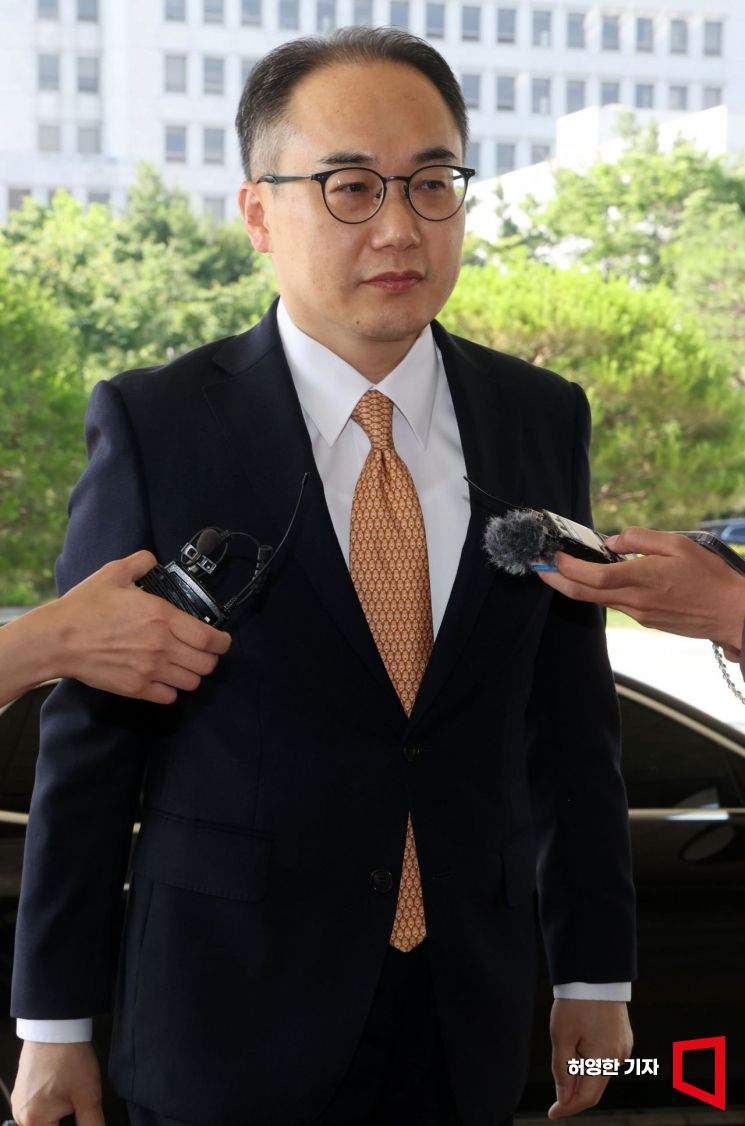
Meanwhile, Prosecutor General Lee Won-seok also submitted a letter of non-attendance for this hearing, as he did for the 'Petition Hearing on the Request for the Impeachment Motion of President Yoon Seok-youl' held last month.
According to the Supreme Prosecutors' Office, regarding the reason for non-attendance, Prosecutor General Lee stated, "If the Prosecutor General, who oversees prosecution affairs and commands and supervises prosecutors, appears before the National Assembly to answer specific questions about criminal investigations and prosecutions, it would unduly influence investigations and trials that should be conducted neutrally and fairly, thereby undermining the quasi-judicial functions of the prosecution and damaging its political neutrality."
He added, "The National Assembly Audit and Inspection Act limits the National Assembly's authority by stipulating that audit and investigation powers must not be exercised for the purpose of interfering with ongoing investigations or trials, and that the functions and activities of the subject institution must not be significantly hindered or confidentiality breached. Respecting the political neutrality of the prosecution in accordance with the Constitution and laws, the Prosecutor General has not appeared before the National Assembly except for national audits, and the constitutional practice of the Minister of Justice, as the highest supervisor of prosecution affairs and a member of the Cabinet, appearing before the National Assembly has ensured the prosecution's political neutrality."
Prosecutor General Lee pointed out, "The witness examination attached to the summons from the National Assembly states that 'it is necessary to confirm overall aspects of the prosecutor impeachment,' which appears to target cases such as the perjury inducement and official secrets leakage case involving Jang Si-ho included in the impeachment motion, the Democratic Party Convention violation of the Political Parties Act case, and the Kobana Contents large corporation sponsorship case related to the president's spouse."
"The perjury inducement and official secrets leakage case involving Jang Si-ho is currently under investigation by the High-ranking Officials' Crime Investigation Office and the police, and the Democratic Party Convention violation case is under prosecution and trial by the courts. Therefore, if the Prosecutor General appears before the National Assembly to answer questions, it could affect these investigations or trials, making it inappropriate," he noted.
He added, "The Kobana Contents large corporation sponsorship case related to the president's spouse, the Acrovista leasehold registration case, and the Deutsche Financial stock purchase case are either excluded from the Prosecutor General's command due to the previous government's Minister of Justice's exercise of investigative authority or are under investigation by the Corruption Investigation Office for High-ranking Officials, so it is inappropriate for the Prosecutor General to appear and respond."
Finally, Prosecutor General Lee stated, "Summoning the Prosecutor General as a witness to the prosecutor impeachment hearing and demanding answers about ongoing investigations and trials exceeds the legislative authority, drags the judiciary into political strife, and undermines the rule of law."
© The Asia Business Daily(www.asiae.co.kr). All rights reserved.


















