"Medical Reform Special Committee and Other Major Decision-Making Bodies Must Be Transparently Disclosed"
Professors at Seoul National University Hospital criticized the government's plans for 'specialized personnel-centered hospitals' and the 'transition of tertiary general hospitals' structure' as a "serious misjudgment that shows a lack of understanding of the field."
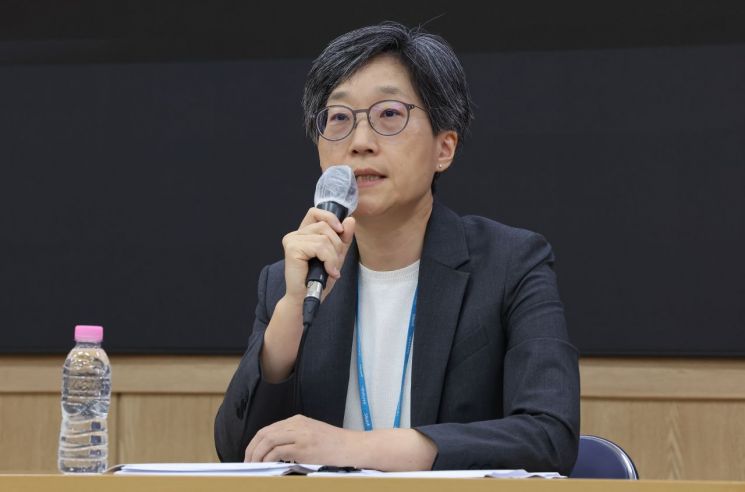 Kang Hee-kyung, Chairperson of the Emergency Measures Committee, Seoul National University College of Medicine and Hospital.
 [Image source=Yonhap News]
The Emergency Response Committee of the Seoul National University College of Medicine-Seoul National University Hospital Professors' Council (ERC) released a statement on the 8th titled "Opinion on the Transition of Tertiary General Hospital Structure and Promotion of Specialized Personnel-Centered Hospitals," saying, "Considering physician assistants (PAs) participating in medical care instead of residents as a positive change toward specialized personnel is a serious misjudgment by the Ministry of Health and Welfare, which does not understand the field," and added, "Without long-term medical policies that consider the rapidly increasing medical costs and the depletion of the National Health Insurance fund, changes limited to tertiary general hospitals will not be sustainable."
Regarding the transition of tertiary general hospitals' structure, they stated, "The goal of the transition should not be to reduce the volume of medical services at tertiary general hospitals but to improve patients' health status through cooperation between primary and secondary medical institutions and tertiary general hospitals," and added, "Therefore, the transition of tertiary general hospitals' structure should be promoted based on strengthening the capabilities of primary and secondary medical institutions, establishing and operating a network between primary and secondary medical institutions and tertiary general hospitals, and a fee system that enables this."
They criticized the Ministry of Health and Welfare's positive evaluation of the reduction in medical volume at tertiary general hospitals. The ERC pointed out, "The Ministry of Health and Welfare positively evaluates the reduction in medical volume at tertiary general hospitals caused by the medical crisis, but this is merely a phenomenon resulting from the reduction of medical capacity," and added, "In the field, there is a serious decline in the quality of medical care due to the absence of residents with medical knowledge and research capabilities and the decrease in specialists."
They also argued that the normalization of the medical delivery system should be pursued with public consensus. The ERC said, "There needs to be public consensus on proper medical care and the normalization of the medical delivery system," and added, "Tertiary general hospitals are medical institutions for treating severe and intractable diseases, and without social consensus that the decision to use tertiary general hospitals should be made by doctors, not medical consumers, it is difficult to achieve normalization of the medical delivery system."
They further explained, "Decisions regarding medical care at tertiary general hospitals should be made based on medical staff judgment, not mechanical criteria. Even for the same disease, it is desirable to manage patients at tertiary general hospitals during severe and acute phases and at primary, secondary, and local medical institutions during recovery and chronic phases," and added, "To truly lead the transition of tertiary general hospitals' structure and the change to 'specialist'-centered hospitals, it is necessary to carefully estimate and allocate the costs and personnel required to maintain the capabilities as institutions for treating severe and rare diseases and for education and training."
Regarding the method of structural transition, they emphasized that it should be done through improving the compensation system rather than coercion. The ERC stated, "Instead of enforcing goals such as reducing the number of general beds in tertiary general hospitals and increasing the proportion of severe diseases, changes should be induced through improvements in medical fees and compensation systems," and added, "Medical fees and compensation systems should be improved to enable not only tests, prescriptions, procedures, and surgeries but also sufficient consultation, education, and multidisciplinary care."
They also urged transparency in major decision-making bodies such as the Medical Reform Special Committee. The ERC pointed out, "Important policy decision processes that affect all citizens, such as medical policies, should be reviewable by anyone if necessary," and added, "Currently, meetings of the Medical Reform Special Committee, expert committees, and subcommittees do not disclose even the list of participants or meeting materials."
They continued, "Meetings of important decision-making bodies such as the Medical Reform Special Committee and its subcommittees, the Health Insurance Policy Deliberation Committee, the Health and Medical Policy Deliberation Committee, and medical fee negotiation meetings should be made public through live broadcasts or transcripts."
Earlier, on the 6th, the Ministry of Health and Welfare announced plans to transform tertiary general hospitals into 'severe patient-centered hospitals' by increasing the proportion of severe patients to 60% over three years and reducing the scale of general beds, and to transition to 'specialized personnel-centered hospitals' by replacing the roles of residents with specialists and PA nurses.
© The Asia Business Daily(www.asiae.co.kr). All rights reserved.

















