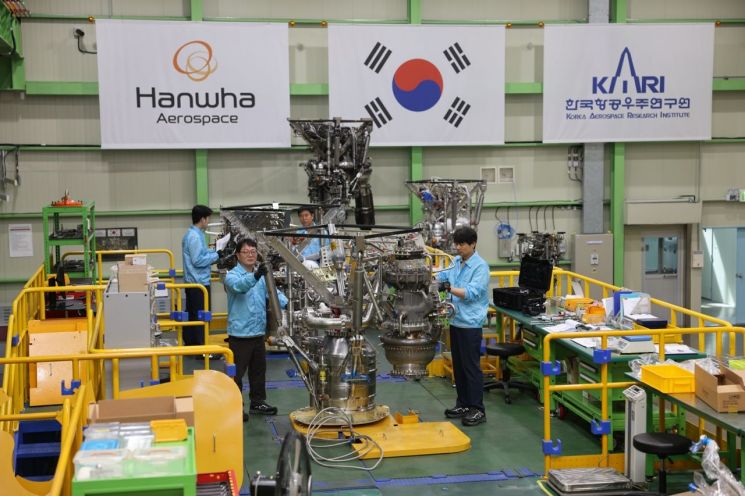
 Engineers from Hanwha Aerospace, the system integrator of Nuriho, are conducting the final inspection of the 75-ton engine for the 4th Nuriho rocket, scheduled to launch in the second half of next year, at the Changwon 1 plant on the 27th. Photo by Hanwha Aerospace
Hanwha Aerospace is showing differences of opinion with the Korea Aerospace Research Institute (KARI) over intellectual property rights related to the next-generation launch vehicle. It has been confirmed that Hanwha decided to proceed with the contract first while concluding to undergo review by the National Contract Dispute Mediation Committee.
On the 7th, Hanwha Aerospace released a statement containing this information, stating, "Hanwha plans to invest in facility investments and labor costs for design and manufacturing separately from government budgets to carry out the project. It is not reasonable for us to have no rights over the results of joint development involving our technology and investment."
The two sides are at odds over whether the intellectual property rights arising from the next-generation launch vehicle project, a national project, should be solely owned or jointly owned. KARI argues that this project was merely a goods production contract from the purchase request stage, and according to Article 16 of the Research and Development Innovation Act and related Enforcement Decree Article 32, the intellectual property rights arising from the contract should belong to KARI as the principal research and development institution.
On the other hand, Hanwha judged this project as a joint development project based on the purchase summary in the project proposal request and related documents, and claims that the results of joint development projects should be shared according to the Innovation Act. As the differences could not be narrowed, Hanwha Aerospace stated that considering the disadvantages imposed when the preferred bidder cancels the contract, it was better to first sign the contract and then proceed with legal procedures such as objections.
Hanwha Aerospace said, "Regarding the differences, we decided to find a reasonable alternative later through the mediation committee according to the usual national contract procedures," and added, "There is no form of separate side agreement, and we are not currently considering litigation."
KARI stated that it was unaware of Hanwha’s position until the contract, and that during the technical negotiation process before the contract, experts from both sides attended and discussed for about a month, explaining the contract condition of sole ownership of intellectual property rights, thus the negotiation was already completed.
© The Asia Business Daily(www.asiae.co.kr). All rights reserved.
![User Who Sold Erroneously Deposited Bitcoins to Repay Debt and Fund Entertainment... What Did the Supreme Court Decide in 2021? [Legal Issue Check]](https://cwcontent.asiae.co.kr/asiaresize/183/2026020910431234020_1770601391.png)
















