Increasing Trend of Online Reservations and Remote Queueing Stores
Approximately 2 Million Users of Major Waiting Apps in July
Various Methods and Channels... Consumer Fatigue Accumulates
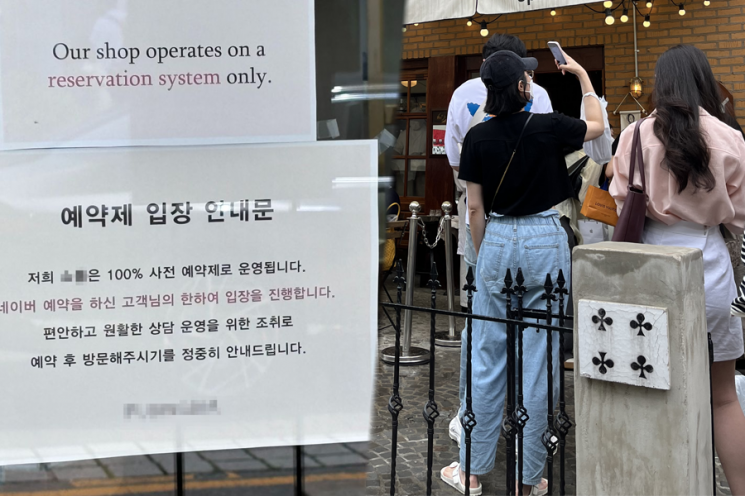
#1. On the 7th, Han (58), who visited a restaurant in Jung-gu, Seoul, quickly turned around and left. He was informed that the restaurant operates by online reservation only, and walk-in customers must wait. Han said, "They told me to leave and wait if I didn't have a reservation, so I left," adding, "I came out for some errands, and it was so hot that I went into the restaurant right in front of me, but it's hard to just have a meal." He sighed and said, "But since there are already more than 20 people waiting (through the online remote queue), I think I'll just try another restaurant."
#2. Kim (24), who lives in Nowon-gu, Seoul, said, "I rushed into a hair salon recently, and there was no special notice, but I was surprised to find out it was 100% reservation-only, so I just left," expressing, "Reservations require planning ahead, but it seems many stores are becoming places you can't visit suddenly when needed, which is inconvenient."
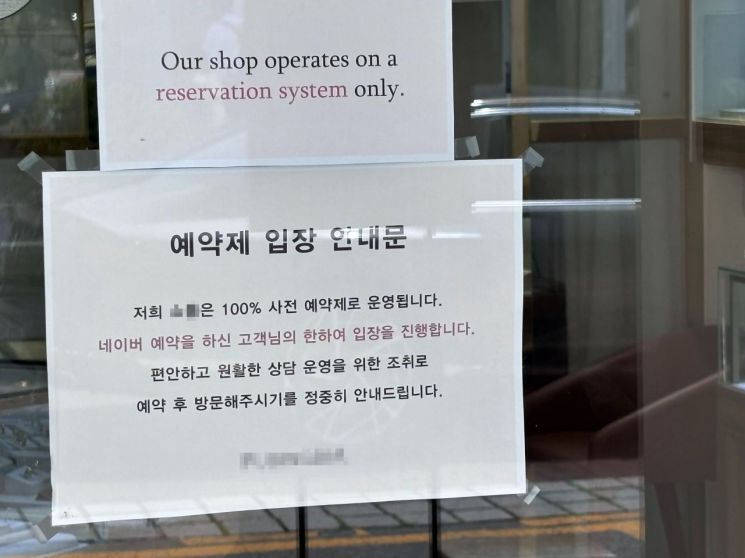 An entrance of a store in Jung-gu, Seoul, has a notice stating that it operates on a '100% advance reservation system.'
 [Photo by Dayeon Yeom]
Recently, operating by 100% reservation or requiring remote queueing through waiting applications (apps) has become a culture, especially in popular restaurants, cafes, and hair salons. Without 'pre-work' online, even visiting the store in person does not guarantee service. Many places do not announce reservation or waiting instructions, leading to frequent wasted trips.
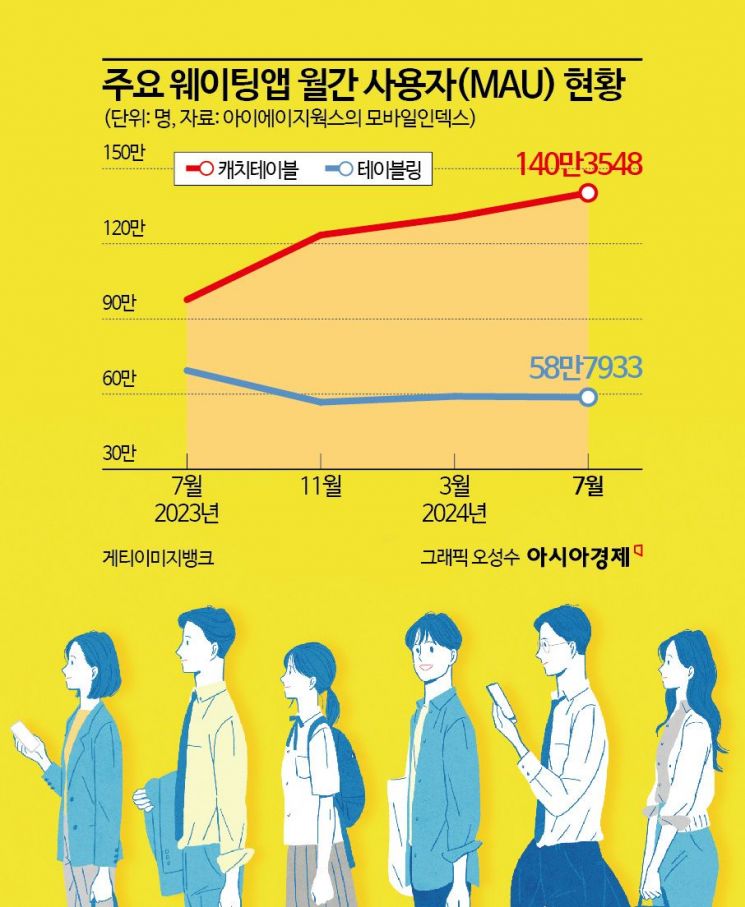
In fact, the number of stores affiliated with waiting apps and online reservations is steadily increasing. According to Mobile Index by data company IGAWorks, the number of users of major waiting apps in July was about 2 million.
In particular, Catch Table saw a 235% increase in the number of stores adopting waiting systems as of June compared to the same period last year, and the number of affiliated franchise stores nationwide surpassed 10,000. The average daily users of on-site and remote waiting queues reached 46,000.
Because the methods and channels for online reservations vary, consumers are complaining of fatigue. Reservations are made through various means such as social networking service (SNS) messages like Instagram and KakaoTalk, official websites, and specialized waiting apps.
A (26) living in Dongjak-gu, Seoul, said, "The reservation methods and online waiting systems are all different, so it's inconvenient," adding, "Now, it has become a habit to search in advance before visiting cafes or restaurants." He complained, "I don't even know how many related apps I've installed. At first, I thought it was convenient to do it in advance, but now it feels exhausting."
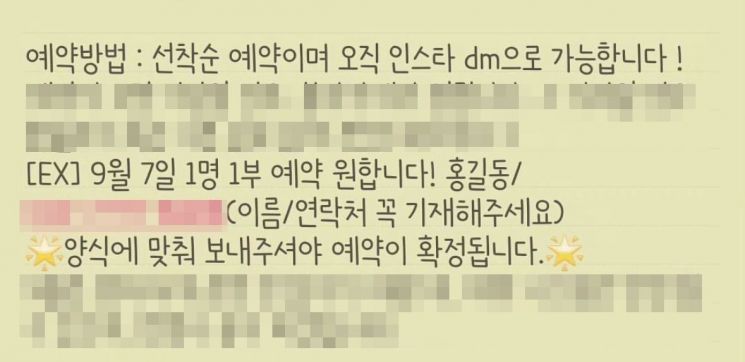 A restaurant in Seoul posted a notice stating that reservations are only possible through Instagram messages on social networking services (SNS). [Photo by the restaurant's SNS account screen capture]
Along with this, concerns are emerging about the digitally marginalized groups who have difficulty using digital devices. While younger generations can easily adapt to the online transition, marginalized groups may face difficulties even in essential areas of daily life. Professor Eunhee Lee of Inha University's Department of Consumer Studies explained, "The transition to online not only causes social fatigue but also excludes the digitally marginalized group aged 65 and older from consumer life," adding, "Elderly people may be increasingly pushed into situations where basic consumer activities become impossible."
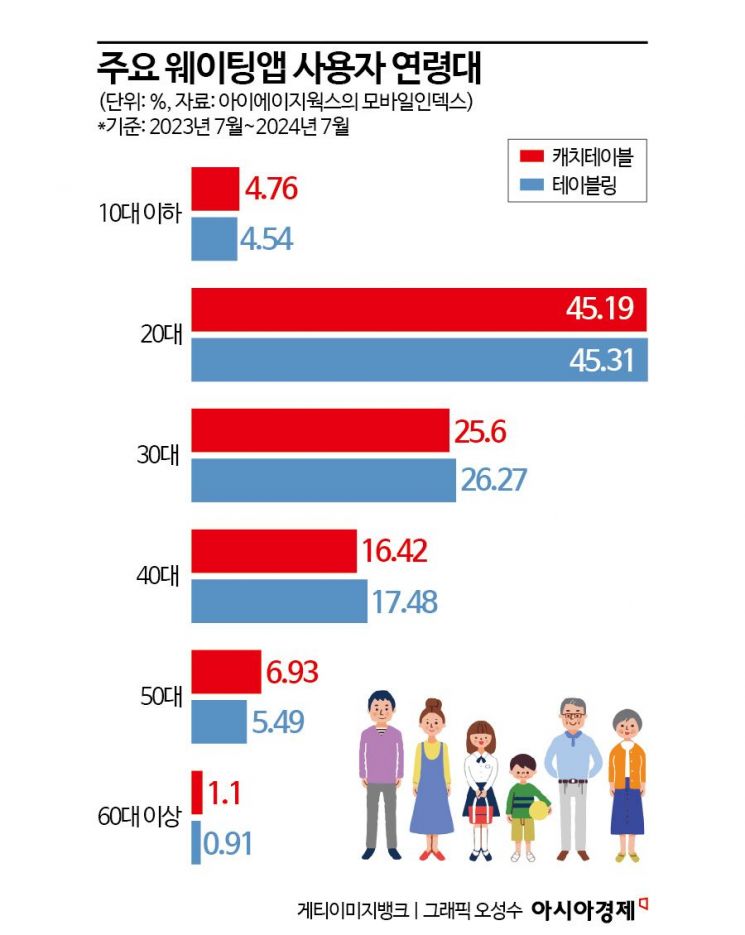
In fact, 87% of waiting app users are in their 20s to 40s. According to Mobile Index, among all users of major waiting apps, only 6% are in their 50s, and just 1% are 60 or older.
Experts agree that the transition to online should be made in a way that includes digitally marginalized groups. Professor Lee emphasized, "For some essential areas like restaurants and hair salons, policies or considerations are needed to maintain a certain balance between on-site and online services," adding, "We need to think about ways to give priority to marginalized groups."
Pop culture critic Jinmi Hwang also said, "The transition to online due to technological advancement is natural, but currently, it excludes some people," adding, "Progress should be made in a way that includes more people, not excludes them."
© The Asia Business Daily(www.asiae.co.kr). All rights reserved.



















