Italian Government Appoints New Emergency Committee Chair
Domestic Imports Still Minimal... Shipping Costs and Other Obstacles
The spread of the 'blue crab,' which is causing significant damage to Italy's shellfish farms, has become more severe.
On the 6th (local time), Italian local media ANSA and AFP reported that Francesco Rollobridgida, the Minister of Agriculture, held a press conference at the Prime Minister's Office in Rome and announced the appointment of a new emergency committee chairman for the blue crab issue.
Minister Rollobridgida stated, "If strategic measures are not taken against the blue crab, there is a risk of damaging the entire marine ecosystem," and introduced Enrico Caterino, the newly appointed chairman with extensive administrative experience, who is expected to bring significant change.
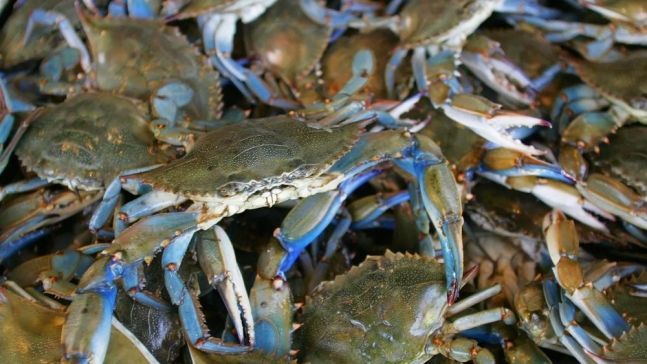
Currently, fisheries along the Mediterranean coast are suffering great damage due to the invasion of blue crabs. The blue crab is a crustacean that has entered the Mediterranean Sea several years ago and primarily feeds on clams, mussels, and oysters, which are popular among Italians. The problem is that there are no natural predators to control the blue crab population along the Mediterranean coast, leading to a population explosion. As a result, local aquaculture farmers are reportedly incurring huge losses.
Coldiretti, Italy's largest farmers' association, estimates that the cumulative damage caused by the blue crab has reached 100 million euros (approximately 115 billion KRW) to date. Even if blue crabs are caught, there is no proper way to process them. Unlike Korea, Italy has almost no culture of cooking and eating crabs.
Earlier, the blue crab issue in Italy became known domestically last year, leading to suggestions of importing them. A YouTuber residing in Italy shared the view that making soy sauce marinated crab (ganjang gejang) with blue crabs resulted in a high yield. In fact, last year, some import companies were reported to be in talks with Italian counterparts regarding the import of blue crabs.
However, the amount of Italian blue crabs imported into Korea remains minimal. Due to the long distance between Italy and Korea, there are reportedly obstacles such as shipping and processing costs.
© The Asia Business Daily(www.asiae.co.kr). All rights reserved.

















