Clothing Contamination by Food Waste
Entire Batch Disposed Due to Odor
Residents' Disputes and Hardships Over Smell
A, a 63-year-old CEO operating a clothing collection box consignment management company in Gangbuk-gu, Seoul, feels anxious every time he opens the collection box once every three days. The memory of struggling with wet blankets discarded in the clothing collection box during the rainy season has not faded. Due to the hot weather, dozens of maggots and centipedes swarmed the blankets. A foul odor also permeated inside the collection box. The clothes collected together were infested with insects and absorbed the smell, so they were discarded.
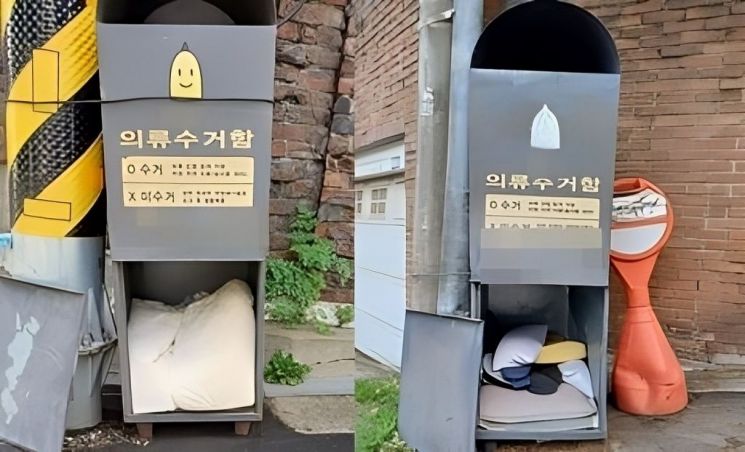 On the 6th, household waste such as blankets and shoes was discarded in a clothing collection box placed in an alley in Buam-dong, Jongno-gu, Seoul. [Image source=Provided by reader]
As cases of illegal dumping of household waste in clothing collection boxes continue, used clothing collection companies are reportedly facing difficulties. The used clothes become contaminated by the discarded waste, causing damage to clothing exports as well.
According to Seoul City on the 7th, as of last month, there are 12,039 clothing collection boxes installed in Seoul. Each district office entrusts private companies with the consignment management of clothing collection in exchange for some road occupancy fees. These companies hand over clothes in good condition among the collected items to trading companies for export to third countries. Ten percent of the profits earned from exports are donated to welfare organizations or the relevant district offices as a form of social contribution.
However, companies complain that ongoing illegal dumping of waste has dealt a severe blow to clothing exports. B, a 45-year-old employee of a consignment company managing clothing collection boxes in five autonomous districts in Seoul, including Mapo-gu, recently discarded all collected clothes. This was because a bag of discarded food waste burst inside the collection box, severely contaminating the clothes. Despite several attempts to wash and remove the odor, the smell embedded in the clothes did not disappear. B said, "When food waste gets on used clothes, it takes more than three weeks just to remove the smell," adding, "Many high-quality clothes are discarded due to food contamination."
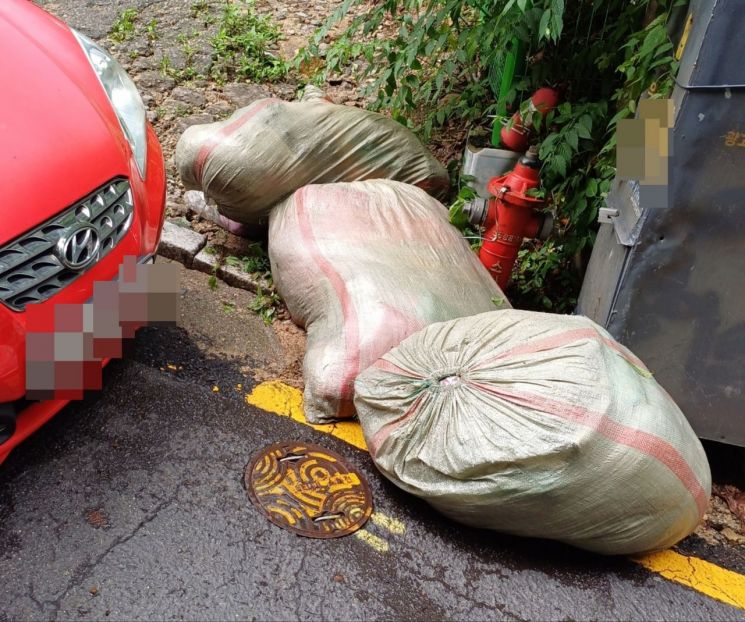 On the 25th of last month, blankets collected from a clothing donation bin in Buam-dong, Jongno-gu, Seoul, were packed in burlap sacks. [Image source=Provided by reader]
The hardships faced by collection workers at the collection sites are also significant. The work time doubles as they transfer the discarded waste into volume-based waste bags. Especially in summer, workers suffer from the foul odor caused by the decay of used diapers and food waste inside the clothing collection boxes.
C, a 61-year-old employee of a consignment company managing clothing collection boxes in Jongno-gu, Seoul, said, "I even carry food waste bags purchased with my own money to the work site," adding, "When I scoop food waste into the bags, I feel like my nose is numbing. If it weren't for the waste, the collection time would be halved."
Residents' views are also unfavorable due to the ongoing dumping of waste. Many mistake the area near the collection boxes for a waste collection site and dump trash there. Consignment company officials lament that they have moved clothing collection boxes to other neighborhoods several times due to continuous complaints from residents.
CEO A said, "When complaints come through the relevant district office, we relocate the collection boxes to other areas, but after a few weeks, we receive the same complaints again," and appealed, "We earnestly ask citizens to dispose of household waste in volume-based waste bags."
© The Asia Business Daily(www.asiae.co.kr). All rights reserved.


















