Most Popular Yen Carry Trade Strategy
Surge in Yen Value Due to BOJ's Surprise Rate Hike...Asset Liquidation
Global Stock Markets and Emerging Market Currencies Adjust
BOJ Likely to Postpone Additional Rate Hikes
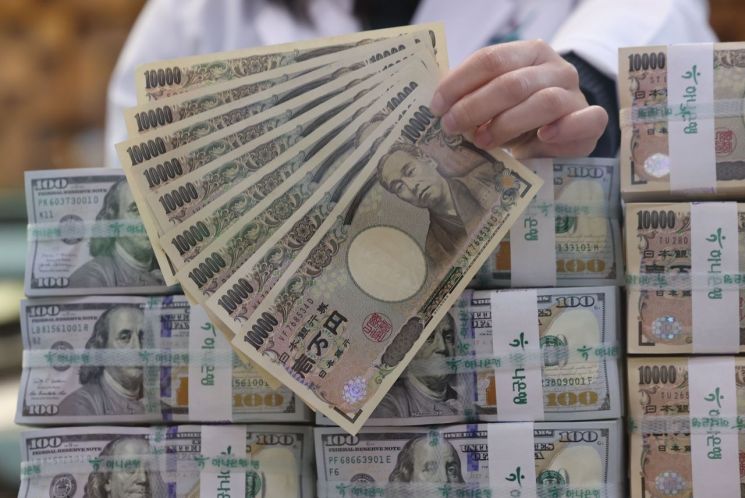
The unwinding of the 'yen carry trade' has been cited as a major factor behind the recent sharp declines in global stock markets.
On the 5th (local time), the Wall Street Journal (WSJ) reported, "The dismantling of the yen carry trade, one of the most popular investment strategies among investors for years, is causing ripples across global asset markets."
The carry trade refers to a technique where institutions such as investment banks (IBs) borrow currencies from countries with low interest rates and invest in financial markets that offer high returns, such as buying emerging market currencies like the Mexican peso with higher interest rates. In recent years, the Japanese yen has been the most notable currency used in carry trade funds. While major countries like the US and Europe sharply raised benchmark interest rates to curb inflation ignited after COVID-19, Japan maintained its negative interest rate policy. The negative interest rate stance was lifted when the Bank of Japan (BOJ) raised short-term rates for the first time in 17 years last March.
However, after the BOJ emphasized continued purchases of long-term government bonds to supply market liquidity, the yen's value fell even further than before, leading to the assessment that the yen carry trade strategy remained effective.
The turning point came on the 31st of last month when the BOJ surprised markets by raising the benchmark interest rate again after four months. At that time, the BOJ also decided to gradually reduce long-term government bond purchases by about 400 billion yen quarterly. Consequently, the dollar-yen exchange rate, which had briefly exceeded 161 yen on the 10th of last month, plunged to fluctuate around 145 yen. The decline in the yen-dollar exchange rate means the yen appreciated against the dollar.
The WSJ reported, "Last week, the yen surged 7.5% against the dollar, inflicting heavy losses on carry traders who faced margin calls from banks." To cover these losses, investors bought yen once again, causing a sharp rise in the yen's value, and eventually some investors' assets began to be liquidated. This led to adjustments not only in global stock markets, emerging market currencies, and risky assets like Bitcoin, but also in safe-haven assets such as gold.
According to the US Commodity Futures Trading Commission (CFTC), contracts betting on yen weakness held by hedge funds and other investors exceeded 180,000 contracts with a net asset value of over $14 billion in early July. These positions had sharply decreased to about $6 billion by last week.
Some quarters are raising accountability concerns over the BOJ's premature interest rate hikes amid the global asset crash, Bloomberg News reported. Bloomberg added that this situation makes it highly likely that the BOJ's plans to signal further rate hikes will be put on hold.
© The Asia Business Daily(www.asiae.co.kr). All rights reserved.

















