Additional 5,884 Electric Vehicles to be Supplied in Second Half
Two-Year Restriction Period for Electric Cargo Vehicle Support Eased
10% National Subsidy for Multi-Child Families
Selection Based on Vehicle Delivery and Registration Order
The Seoul Metropolitan Government plans to distribute about 5,800 electric vehicles (EVs) in the second half of this year and is accepting applications for purchase subsidies. The city intends to offer new benefits to ease the financial burden on individual business owners such as delivery cargo trucks and electric taxis.
On the 6th, Seoul announced that it aims to convert 10% of urban vehicles to electric by 2026 and will supply 5,884 EVs in the second half of the year. Including the volume announced earlier for the first half, the total supply for this year will be 17,462 vehicles.
Accordingly, applications for second-half EV purchase subsidies will be accepted starting from the 7th. Eligible applicants include individuals, sole proprietors, corporations, and public institutions who have resided or maintained an office in Seoul for more than 30 days as of the application date, and only vehicles that can be delivered within two months are eligible. Buyers must sign a purchase contract with the vehicle manufacturer or importer, who will then apply for the subsidy from Seoul City.
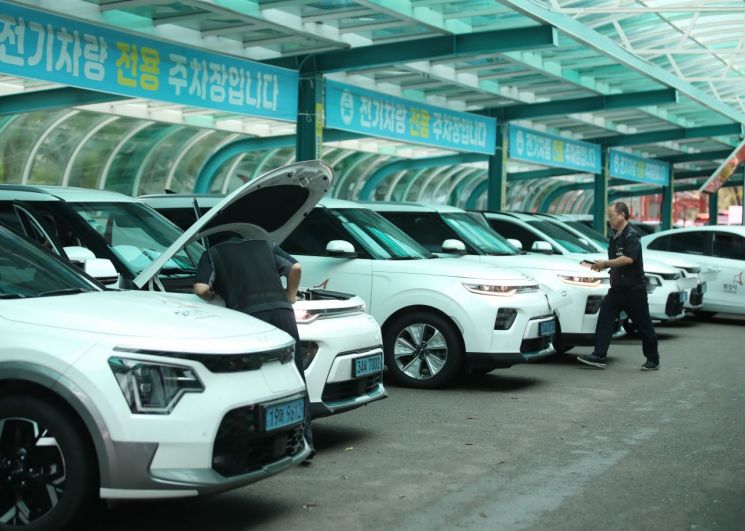
Currently, available EV models include 91 passenger cars, 53 cargo trucks, 64 medium and large vans, and 71 two-wheelers. Especially in the second half, additional benefits will be provided to individual business owners and small merchants purchasing electric vehicles such as delivery cargo trucks and electric taxis to alleviate their economic burden.
First, when purchasing an EV from a manufacturer or importer, both the manufacturer/importer and the city will each provide up to 500,000 KRW as additional purchase subsidies. Thus, small merchants buying electric taxis or cargo vehicles can receive up to 1,000,000 KRW, and delivery cargo vehicles can receive an additional 500,000 KRW, totaling up to 1,500,000 KRW in extra support.
Additionally, multi-child households that have given birth to or adopted two or more children, with at least one child under 18 years old, can receive an additional 10% of the national subsidy amount when purchasing an electric passenger car.
The re-application restriction period for electric cargo vehicles has been eased from 5 years to 2 years. However, the mandatory operation period has been extended from 5 years to 8 years, and the subsidy recovery rules for selling electric cargo vehicles during the mandatory operation period have been strengthened from 10,000 km to 20,000 km and from 1 year to 2 years.
Seoul City will announce the second-half plan for private sector EV and electric two-wheeler distribution on the 7th, selecting subsidy recipients in order of vehicle delivery and registration. The subsidy will be paid directly by Seoul City to the vehicle manufacturers or importers, so buyers only need to pay the remaining amount after deducting the subsidy from the vehicle purchase price.
Yeo Jang-kwon, Head of the Climate and Environment Headquarters, said, "We will focus on distributing commercial vehicles that have a significant greenhouse gas reduction effect and are closely related to citizens' daily lives, and promote EV distribution that fits market conditions. We will not only support purchase subsidies but also continuously strive to create a convenient charging environment."
© The Asia Business Daily(www.asiae.co.kr). All rights reserved.

















