Apple, Samsung, and Other Manufacturers Ordered to Pay Hundreds of Billions of Dollars
"Blocking Fair Market Competition by Other Companies"
A U.S. court has ruled that Google violated antitrust laws by paying smartphone manufacturers such as Apple and Samsung hundreds of billions of dollars to pre-install its own applications (hereinafter apps) in order to maintain a monopoly position in the search engine market.
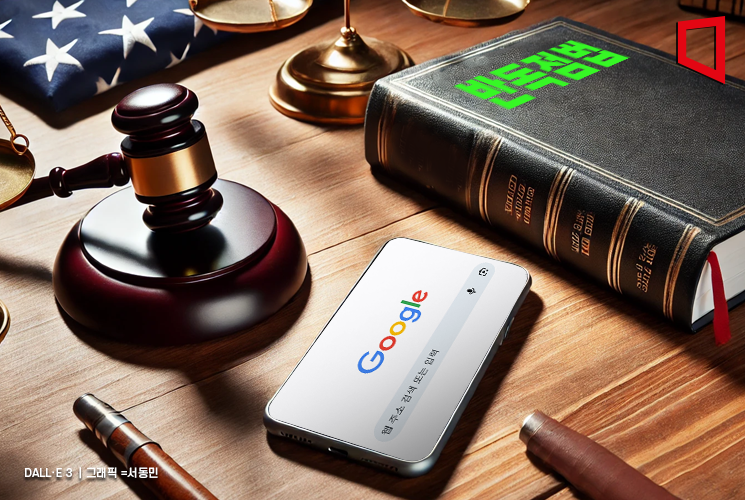
On the 5th (local time), Judge Amit Mehta of the U.S. District Court in Washington D.C. decided that Google's parent company Alphabet paid $26 billion (approximately 35.6 trillion KRW) to smartphone manufacturers to block fair competition from other companies. Google, which holds 90% of the global internet search market, was found to have abused its market dominance to prevent competitors from entering the market.
In a 276-page ruling, Judge Mehta stated, "Google's payment to set its search engine as the default on smartphone web browsers violates U.S. antitrust laws." He added, "The $26 billion paid by Google effectively blocked other competitors from succeeding in the market," and ruled that "Google's exclusive search agreements on devices such as Android and Apple iPhones are anti-competitive acts that helped solidify its dominance in the search market."
Judge Mehta noted in the ruling, "Google is a monopoly and has acted like a monopolist to maintain its monopoly."
Earlier, the U.S. Department of Justice (DOJ) filed a lawsuit against Google in October 2020, alleging that Google violated antitrust laws by establishing overwhelming market dominance. According to the DOJ, Google paid billions of dollars to each smartphone manufacturer over more than a decade to secure an advantage in the search engine market, generating over $300 billion (approximately 411 trillion KRW) annually in search advertising revenue. The DOJ argued that these actions hindered fair competition and limited consumer choice.
Google, on the other hand, has countered that users simply chose better search services.
This lawsuit has attracted significant attention as the largest antitrust case against Big Tech in over 20 years since the U.S. government sued Microsoft (MS) for dominating the browser market through its Windows operating system (OS). The outcome of the trial could determine Google's fate, including the possibility of having to break up its business.
Furthermore, the DOJ's lawsuit could influence other antitrust cases against Big Tech, prompting other companies to closely monitor the results. In March, the DOJ filed a lawsuit against Apple, alleging that its closed ecosystem, which allows only its own apps on the iPhone and restricts compatibility on other devices, violates antitrust laws.
© The Asia Business Daily(www.asiae.co.kr). All rights reserved.
![Clutching a Stolen Dior Bag, Saying "I Hate Being Poor but Real"... The Grotesque Con of a "Human Knockoff" [Slate]](https://cwcontent.asiae.co.kr/asiaresize/183/2026021902243444107_1771435474.jpg)











