Controversy Over 'Gemini' Ad Targeting the Olympics
"Even Heartfelt Letters Are Ghostwritten by AI" Criticism
Google's generative artificial intelligence (AI) chatbot advertisement, created to coincide with the Paris Olympics, was ultimately withdrawn after facing backlash from viewers.
On the 2nd (local time), foreign media including the US CNBC and AFP reported in unison that Google had pulled the advertisement made for broadcast on public television to promote its AI chatbot 'Gemini.' The controversial ad featured a girl and her father who want to write a fan letter to Sydney McLaughlin, the American track star competing in this year's Paris Olympics.
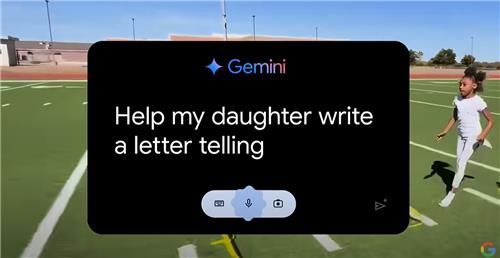
The advertisement showed the girl training based on hurdling technique tips generated and provided by Google's AI search function. The father then asked Google's AI chatbot Gemini, "Gemini, my daughter wants to express her admiration for McLaughlin," and "Help her write a fan letter." Gemini immediately drafted the letter, including a 'plan to break the world record' within the letter.
Through this ad, Google aimed to highlight Gemini's brainstorming capabilities, but contrary to expectations, the market reaction was cold. There were criticisms that entrusting even a letter expressing human emotions to AI was inappropriate, as well as concerns that it seemed to encourage leaving child education to AI. Additionally, some opinions suggested that the world depicted in the ad resembled a dystopian future where humans lose even basic creative abilities and rely entirely on AI.
Will Leitch, creator of the famous sports blog Deadspin, pointed out on the social networking service X (formerly Twitter), "Google's ad, where a father entrusts AI to write what his daughter wants to say to her favorite athlete instead of encouraging her to write it herself, gnaws away at my soul a little every time I see it." Podcast host Linda Holmes criticized on social media, "Everything about this ad is disgusting," urging, "Sit down with your child and write the letter together." Shelley Palmer, a communications professor at Syracuse University, said on her blog, "The father in this video is not encouraging his daughter to learn how to express herself."
As the controversy grew, Google explained, "The initial survey conducted right after producing the ad showed a favorable public response," but added, "Considering actual public opinion and feedback, we have decided not to air the advertisement going forward."
© The Asia Business Daily(www.asiae.co.kr). All rights reserved.
![Clutching a Stolen Dior Bag, Saying "I Hate Being Poor but Real"... The Grotesque Con of a "Human Knockoff" [Slate]](https://cwcontent.asiae.co.kr/asiaresize/183/2026021902243444107_1771435474.jpg)
















