Happy Money Fully Insolvent... No Issuance Limits or Requirements
"If the Gaming Industry Issued 'Money,' Financial Responsibility Is Natural"
Some Coffee Shops Also Excluded from Financial Regulatory Oversight
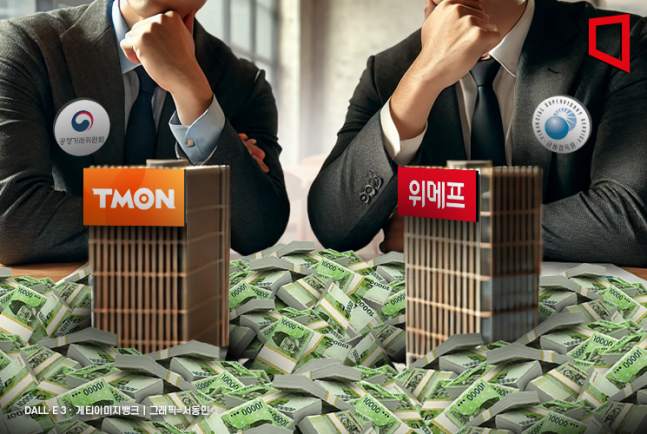
A warning has emerged that the TMON and WEMAKEPRICE settlement crisis could be replicated not only in e-commerce but also across various industries such as gaming and coffee. This is because companies that receive money from consumers first and provide goods or services much later may face difficulties in settlements if they lose their payment capacity.
According to industry sources on the 2nd, Happy Money Inc., the issuer of Happy Money gift certificates and Happy Cash (electronic payment recharge funds), has effectively stopped refunds. Various online and offline affiliated stores, including restaurants and shopping malls, have also blocked Happy Money payments. These gift certificates were sold at a discount of about 7-8% on TMON and WEMAKEPRICE until just before this incident.
Happy Money Inc. is an unregistered company not subject to financial authorities’ supervision and does not have any mechanisms such as payment guarantee insurance to protect gift certificate payments. Its financial situation is even more serious. For several years, it has been in a state of complete capital erosion with liabilities exceeding assets. As of the end of last year, Happy Money Inc.’s total liabilities amounted to 296 billion KRW, surpassing total assets of 240.6 billion KRW, and its cash holdings were only 43.5 billion KRW.
The reason this gift certificate issuer could continue operations was the absence of legal regulations such as annual issuance limits or capital requirements for issuers. The “Gift Certificate Act,” which stipulated the Financial Services Commission registration obligation and qualification requirements for gift certificate issuers, was proposed in 2021 but was discarded due to the expiration of the last National Assembly’s term. As a result, anyone can currently issue gift certificates by simply paying stamp duty. A Financial Services Commission official stated, “Companies like Happy Money that are not registered with the FSC cannot be supervised or managed by financial authorities under current laws.”
Kim Jeong-cheol, a financial law expert and attorney at Woori Law Firm, said, “Cash-equivalent gift certificates could be seen as a means of quasi-deposit or quasi-finance,” adding, “When the gift certificate market was small, side effects might not have occurred, but recently, as the transaction scale of gift certificates has reached hundreds of billions of KRW, regulations such as issuance limits should be imposed.”
Attorney Shim Joon-seop of Shim Law Firm, representing victims of TMON and WEMAKEPRICE, stated, “To minimize damage to gift certificate consumers, it is necessary to strengthen financial soundness regulations on gift certificate issuers or introduce insurance systems for damage relief, among other legislative improvements.”
Prepaid recharge funds in the gaming industry, so-called “game money,” are also considered a regulatory blind spot. Game money is currency used within games to purchase paid items or services. Although the Financial Services Commission plans to enhance consumer protection with the amendment to the Electronic Financial Transactions Act Enforcement Decree, which will take effect next month, relatively risky small and medium-sized game companies are expected to be excluded from supervision. Only some large game companies such as Nexon and Smilegate are anticipated to be included in the regulatory scope. The amended law stipulates that companies with outstanding issuance balances exceeding 3 billion KRW or annual total issuance exceeding 50 billion KRW must separately manage prepaid recharge funds.
Wi Jeong-hyun, president of the Korea Game Society and professor of business administration at Chung-Ang University, said, “There have been many cases where small game companies sold large amounts of game money through events and then abruptly terminated services, but there was no way to prevent this within the legal framework, and related discussions were insufficient,” emphasizing, “Since game money is a concept similar to prepaid cards, it is natural that the game companies issuing them bear financial responsibility for consumer protection.”
Some coffee specialty stores operating prepaid recharge fund systems, such as Starbucks, were also excluded from the scope of the amended Electronic Financial Transactions Act Enforcement Decree. Stores like Starbucks, which operate all locations as directly managed stores and restrict recharge fund usage to those stores, are exempt from prepaid business registration. A Starbucks Korea representative said, “We have subscribed to payment guarantee insurance for prepaid recharge funds amounting to 300 billion KRW and manage them safely.”
© The Asia Business Daily(www.asiae.co.kr). All rights reserved.
![Clutching a Stolen Dior Bag, Saying "I Hate Being Poor but Real"... The Grotesque Con of a "Human Knockoff" [Slate]](https://cwcontent.asiae.co.kr/asiaresize/183/2026021902243444107_1771435474.jpg)
















