Iran Supreme Leader Orders Direct Attack on Israel
Retaliation for Assassination of Hamas Haniya in Own Capital
NYT "Extent of Attack Remains Uncertain"
Second Direct Iranian Attack on Israel This Year
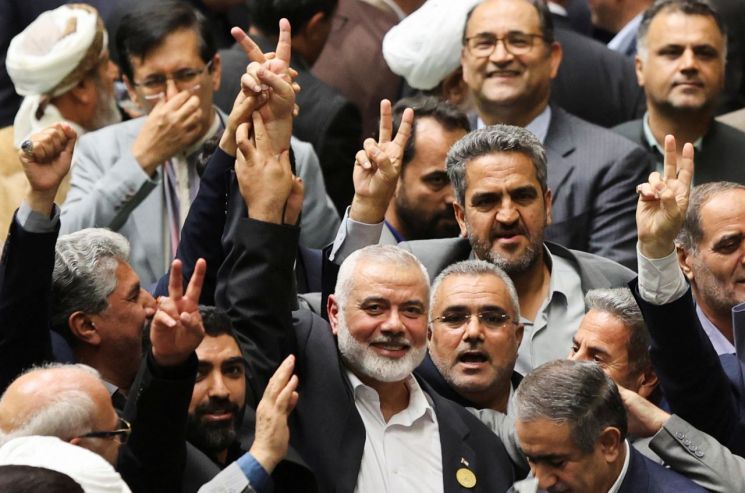
The Middle East conflict is reaching a peak as Iran reportedly ordered a direct attack on Israel in retaliation for the assassination of Ismail Haniyeh, the top leader of the Palestinian armed faction Hamas.
On the 31st of last month (local time), the New York Times (NYT) reported, citing three Iranian government officials, that Iran's Supreme Leader and military commander-in-chief, Ayatollah Ali Khamenei, issued the directive to "attack Israel directly" during an emergency meeting of the Supreme National Security Council convened that morning.
Earlier, Ismail Haniyeh, the top political leader of Hamas, was assassinated around 2 a.m. that day in Tehran, the capital of Iran, where he had visited to attend the inauguration of Iranian President Masoud Pezeshkian. Iran and Hamas have both pointed to Israel as the party behind the assassination.
Along with President Pezeshkian, the Ministry of Foreign Affairs, the Revolutionary Guard, and Iran's Permanent Mission to the United Nations declared that Iran has the right to defend its sovereignty and will retaliate against Israel.
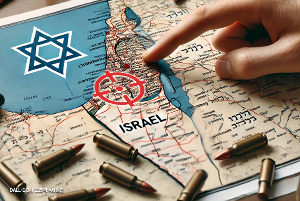
Along with the attack, Iran has also instructed to prepare defense plans in case Israel or the United States attacks Iran amid the escalation of the war.
As Iran formalizes its direct retaliatory attack against Israel, concerns are growing that the war between Israel and Hamas could escalate into a broader conflict involving Iran. Ali Baez, head of Iran affairs at the International Crisis Group, analyzed, "Iran will have no choice but to retaliate against Israel to deter further Israeli attacks, defend its sovereignty, and maintain the trust of Islamic armed groups."
Iran, which has supported Islamic armed groups such as Hezbollah, the Houthis, and Hamas and engaged in a so-called "shadow war" against Israel, also launched its first airstrike against Israel in April in response to Israel bombing the Iranian consulate in Syria. However, most of Iran's drones and missiles were intercepted, preventing significant damage.
The NYT reported that the level of Iran's response remains unclear. According to the NYT, Iranian military leaders are considering a combined drone and missile attack on military targets near Tel Aviv and Haifa in Israel.
Iran is also considering simultaneous attacks on other fronts such as Yemen, Syria, and Iraq to maximize the impact of the assault. However, Iran plans to avoid attacks on civilian targets.
Meanwhile, the United States stated that there are no imminent signs of an escalation in the Middle East related to the assassination of Haniyeh. John Kirby, National Security Council Coordinator for Strategic Communications at the White House, said at a regular briefing that "we are monitoring the situation very closely," but "there are no signs of an imminent escalation of conflict."
Regarding observations that the ceasefire negotiations between Israel and Hamas have collapsed due to this incident, he mentioned, "We believe there are still valid procedures in place," adding, "There are possible discussions and parties interested in them."
© The Asia Business Daily(www.asiae.co.kr). All rights reserved.


















