Comprehensive Reorganization of Over 200 Sites Within the Year
Final Announcement at Year-End After Demand Survey in August
Four months after announcing plans to revise the floor area ratio (FAR) system for district unit plans, Seoul City is set to begin follow-up work. It will comprehensively reorganize over 200 district unit plan zones.
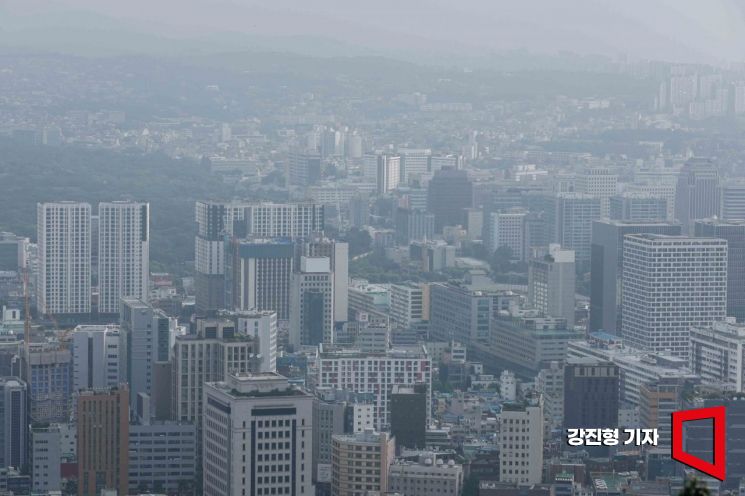 On the 19th, thick fog covered the city center as seen from Namsan in Jung-gu, Seoul. Photo by Jin-Hyung Kang aymsdream@
On the 1st, Seoul City announced that it will directly carry out a comprehensive reorganization of district unit plans, which had previously been managed separately by each autonomous district. In cooperation with 25 autonomous districts, it will prioritize the reorganization of over 200 zones.
District unit plan zones refer to areas within urban planning targets where plans are established regarding building height, scale, and other factors.
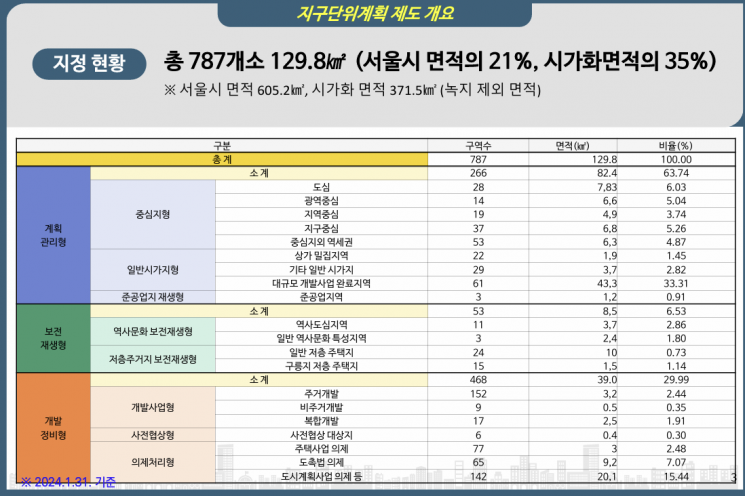
The comprehensive reorganization targets 266 zones (plan management type) out of a total of 787 district unit plan zones in Seoul, excluding those currently undergoing reorganization.
The 266 zones include plan management type district unit plan zones such as downtown, metropolitan centers, regional centers, areas outside central districts, station areas, commercial clusters, and semi-industrial areas. Development and maintenance type zones (including multi-family housing construction types) subject to the Housing Act or Urban Renewal Act, pre-negotiation systems, and station area revitalization projects are excluded.
With the full revision of the Urban Planning Ordinance on the 15th of last month, the legal basis for revising the FAR system was established. However, since the timing of reorganization varies depending on the characteristics and conditions of each autonomous district, and to ensure stable project implementation and fairness in timing between zones, Seoul City has decided to directly manage the reorganization.
Seoul City plans to start a demand survey for the comprehensive reorganization of district unit plans within this month, followed by public inspection announcements and reviews by the Urban and Architectural Joint Committee in the second half of this year, aiming for final notification around the end of the year.
Earlier in April, Seoul City announced the 'District Unit Plan Floor Area Ratio System Revision Plan,' focusing on expanding the scope of maximum FAR, establishing incentive items aligned with policy directions, and simplifying and integrating the FAR operation system to flexibly respond to future urban changes.
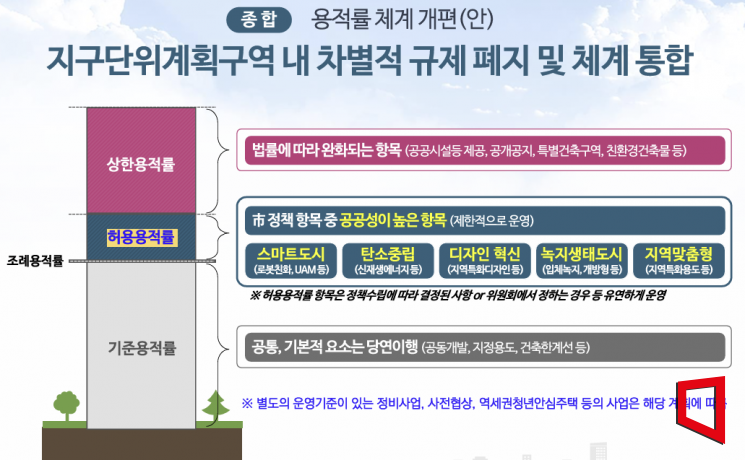 'District Unit Plan Floor Area Ratio System Reform Proposal' announced by Seoul City in April (Source: Seoul City)
The plan also includes abolishing regulations that artificially set low standard FARs by land use within district unit plan zones, applying △400% for quasi-residential areas △600% for neighborhood commercial areas △800% for general commercial areas △1000% for central commercial areas.
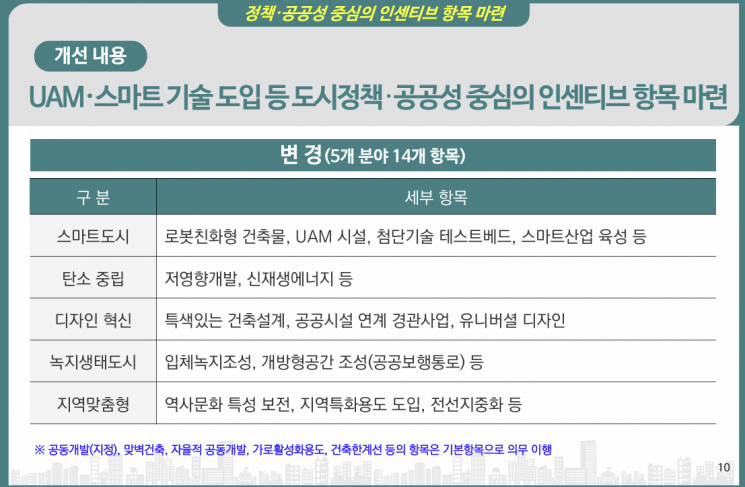
Additionally, the FAR system revision plan includes applying maximum FAR when creating public open spaces, providing up to an additional 110% incentive FAR when introducing items that meet policy objectives or are necessary for the public, and unifying the reference year for land use changes to 2000.
Zones excluded from this comprehensive reorganization, such as those preserving regional characteristics like historical culture and local assets, and development and maintenance type zones (including multi-family housing construction types), will have separate FAR revision plans prepared.
Jo Nam-jun, Head of Seoul City's Urban Space Headquarters, said, "Although various institutional relaxations and revision plans have recently been prepared, they will be meaningless if citizens cannot feel the improvements. We will strive to establish a continuous district unit plan reorganization system so that citizens can quickly experience the effects of policy improvements."
© The Asia Business Daily(www.asiae.co.kr). All rights reserved.



















