Some Charges Acquitted in Second Trial but Sentence Increased
Interpretation Issues Regarding 'Anxiety' Under the Information and Communications Network Act
A well-known BJ on AfreecaTV who threatened to expose the private life of his girlfriend after she broke up with him, demanding that she continue to see him, has been sentenced to a suspended prison term.
On the 31st, the Supreme Court's 1st Division (Presiding Justice Oh Kyung-mi) dismissed both the prosecutor's and Mr. A's appeals in the final appeal trial of Mr. A, who was charged with attempted coercion, defamation under the Information and Communications Network Act, and illegal information distribution (repeated transmission of text information causing fear or anxiety). The court confirmed the original sentence of 2 years and 6 months imprisonment with a 4-year suspension, probation, and 120 hours of community service.
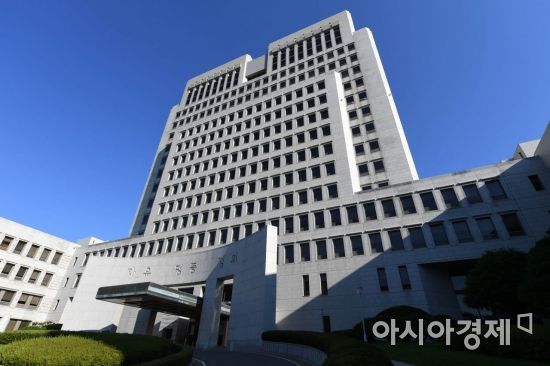
The appellate court found Mr. A guilty of attempted coercion and defamation under the Information and Communications Network Act, but acquitted him of illegal information distribution under the same law, which the trial court had found him guilty of.
Regarding the appellate court's acquittal, the court stated, "There is no error in dismissing the prosecutor's appeal as the appellate court's acquittal did not violate the rules of logic and experience, did not exceed the limits of free evaluation of evidence, nor misinterpret the legal principles regarding the establishment of the offense under the Information and Communications Network Act."
Furthermore, the court explained the dismissal of Mr. A's appeal by stating, "There is no error in the appellate court's guilty verdict as it did not violate the rules of logic and experience, did not exceed the limits of free evaluation of evidence, nor misinterpret the legal principles regarding the establishment of attempted coercion and defamation under the Information and Communications Network Act."
Mr. A, who was a personal broadcaster on AfreecaTV, met the victim, Ms. B, also an AfreecaTV BJ, while co-hosting a broadcast in January 2020, and they began dating in February of the same year.
During their relationship, they often quarreled, and Ms. B tried to break up several times, but Mr. A held on and they continued dating. In April 2020, Ms. B informed Mr. A of their breakup, accusing him of seeing another woman, and blocked his contact.
In response, in the early hours of May 1, 2020, Mr. A announced on his AfreecaTV broadcast and open chat rooms that he would reveal everything about who Ms. B was and what she said and did to him at 8 p.m. the next day.
Ms. B, who was suffering from depression, feared that this information would become public and contacted Mr. A, asking him not to broadcast it. However, Mr. A repeatedly sent KakaoTalk messages urging her to meet again, saying, "Let's meet and talk. Let's try dating for a year. I won't talk about your illness."
Eventually, Ms. B refused Mr. A's demands and asked the police to stop his broadcast. After being informed by the police that he could be punished for defamation, Mr. A broadcast on his AfreecaTV channel on the afternoon of May 1, saying, "I won't let those who mess with me go unpunished and will make them regret it. I'll pay the fine boldly and reveal everything. I'll show you more than you can imagine. An AfreecaTV BJ suffered dating violence, and I have no reason to stay silent. I'll hold a one-person protest and report this everywhere I can. Starting tomorrow, something really strong will come." During this broadcast, he revealed Ms. B's clothes, shoes, and cosmetics.
That evening, Mr. A sent emails to reporters from 30 media outlets mentioning Ms. B's real name and workplace, stating, "While dating Ms. B, who works in the PR department of Afreeca TVT, I was emotionally abused through insults and neglect. Please investigate." He also posted on the Afreeca TVT Ethics Management Office bulletin board, claiming that Ms. B emotionally abused him with insults and neglect during their relationship and requested an investigation into the use of corporate cards, suspecting Ms. B used them during their meetings.
Early the next day, Mr. A contacted Ms. B, angry about her filing a complaint against him, saying, "If you're sorry, withdraw the complaint; otherwise, I'll go all the way," and demanded the return of money he spent during their relationship and a necklace he gave her as a gift. Ms. B transferred 1.6 million won to Mr. A.
Later, Ms. B hinted at extreme self-harm and overdosed on prescribed depression medication. She was transported to the hospital by 119 emergency services, underwent gastric lavage, and was discharged.
After these events, Mr. A apologized to Ms. B, asking to meet again, promising to handle everything, and saying he would quit broadcasting. However, upon learning that Mr. A had reported information about her to media reporters and posted on the Afreeca TVT company bulletin board, Ms. B told him not to contact her anymore.
Mr. A apologized several times via KakaoTalk messages and AfreecaTV notes, but on May 11, 2020, he broadcasted on AfreecaTV, saying, "If the complaint is officially accepted and proceeds, I will take unimaginable actions. If I get fined for defamation, I will cause huge scratches in return. Broadcasting is a powerful weapon I have." He also said, "The KakaoTalk messages I revealed have public interest, so defamation is unlikely. If you send me a complaint, I will attack all those forces. I have plans even if additional complaints come."
Following Ms. B's complaint, Mr. A was summarily indicted for defamation under the Information and Communications Network Act and received a fine of 2 million won from the Incheon District Court on February 17, 2021. Mr. A appealed for a formal trial but withdrew the request in May of the same year, confirming the fine.
Separately, Mr. A was indicted on other charges related to the Supreme Court ruling and was sentenced in the first trial on February 1, 2023, to 1 year imprisonment with a 2-year suspension.
On the day of Mr. A's first trial sentencing, Ms. B sent a KakaoTalk message to her workplace superior stating, "I won on all counts, but Mr. A was given a suspended sentence. Over the past three years, I spent weekends writing petitions and paperwork, stressed and unable to take care of my health. The punishment is too light compared to my suffering, and the wound is very deep."
On the 25th of the same month, Ms. B overdosed on depression medication again and visited the emergency room. Two days later, she sent a KakaoTalk message to her younger sibling saying, "You have to see the punishment through to the end. That is your sister Yuji's wish." After a video call with her mother, she overdosed on depression medication again. Ms. B was transported to the emergency room but fell into an unconscious state four hours after arrival.
Ms. B, who remained unconscious and was in a nursing hospital, contracted COVID-19 and passed away on September 19, 2023.
Mr. A was tried on three charges.
The charges against Mr. A were ▲ attempted coercion for demanding Ms. B to meet again and withdraw her complaint, which did not reach completion due to Ms. B's refusal ▲ defamation under the Information and Communications Network Act by damaging Ms. B's reputation through his broadcasts, media reports, and posts on Ms. B's workplace bulletin board ▲ illegal information distribution under the Information and Communications Network Act by threatening Ms. B and damaging her reputation through broadcasts and media reports, and repeatedly sending messages causing fear or anxiety to Ms. B 20 times, including apology texts.
The trial court found Mr. A guilty on all three charges, sentencing him to 1 year imprisonment with a 2-year suspension, probation, and 80 hours of community service.
Article 44-7(1) of the Information and Communications Network Act prohibits anyone from distributing information through information and communication networks that falls under any of the following categories, including repeated transmission of symbols, words, sounds, images, or videos that cause fear or anxiety to the recipient, as stated in item 3.
Violation of this provision is punishable under Article 74(1)3 of the same law by imprisonment of up to 1 year or a fine of up to 10 million won.
Regarding Mr. A's third charge, the court cited a Constitutional Court decision, stating, "The term 'anxiety' in Article 44-7(1)3 of the Information and Communications Network Act means a state where, although not reaching the level of 'fear,' the recipient, based on social norms and as an ordinary person, feels uncomfortable and uneasy, potentially disturbing the peace of private life."
The court continued, "Looking solely at the content of each message sent to the victim, it could be seen as merely expressing a desire to restore the relationship. However, considering that the defendant committed attempted coercion by threatening specific harm and defamation offenses, repeatedly sent these messages against the victim's will, that the victim inevitably felt psychological anxiety due to these messages and the defendant was aware of this, and that the defendant continued to announce broadcasts exposing the victim, it is reasonable to conclude that the defendant intentionally caused fear or anxiety by repeatedly sending these messages through the information network."
However, the appellate court's judgment differed.
The appellate court acquitted Mr. A of the third charge, unlike the trial court. Nevertheless, accepting the prosecutor's appeal that the trial court's sentence was too light, the appellate court sentenced Mr. A to 2 years and 6 months imprisonment with a 4-year suspension, probation, and 120 hours of community service.
The court stated, "The evidence submitted by the prosecutor is insufficient to recognize that the defendant repeatedly caused fear or anxiety to the victim through the information network, and there is no other evidence to support this. Therefore, the original guilty verdict on this charge contains factual and legal errors."
Regarding the term 'anxiety' in the relevant provision, the court cited the Constitutional Court decision, stating, "The term 'anxiety' does not reach the level of 'fear' but means a state where, based on social norms and as an ordinary person, the recipient feels uncomfortable and uneasy, potentially disturbing the peace of private life. Considering the legislative purpose of prohibiting expressions that disturb an individual's private life, it is difficult to interpret that all expressions that merely make the recipient uncomfortable or annoyed are punishable."
The court further stated, "Even if the victim was already in a fearful state due to the defendant, and receiving contact was unpleasant and anxiety-inducing, if the content itself is not interpreted as causing fear or anxiety, even ironically or metaphorically, it is difficult to convict under Article 74(1)3 of the Information and Communications Network Act."
Moreover, "If only the victim's feelings were the standard regardless of the content's meaning, even a simple apology like 'I'm sorry' would constitute a violation, violating the principles of clarity and predictability of criminal laws."
The court also noted that this interpretation structurally differs from the Stalking Punishment Act, which requires anxiety or fear from the victim's perspective as an element of the offense.
The court concluded, "Although the victim may have felt unpleasant and bad due to messages like 'I'm sorry,' 'I miss you,' and 'I'm worried,' these messages do not socially cause fear or anxiety to an ordinary person. Therefore, the court omits judgment on the claims of excessive sentencing by both the defendant and the prosecutor and overturns the entire original judgment."
Thus, the appellate court acquitted Mr. A of one of the three charges found guilty by the trial court but increased the sentence.
Regarding sentencing, the court pointed out, "After the first trial verdict, the victim suffered extreme stress, overdosed on medication on February 27, 2023, fell into an unconscious state, and eventually passed away on September 19, 2023, after contracting COVID-19. The victim's family continues to suffer immense mental pain."
The court also stated, "The defendant, as a broadcaster, should always consider and take responsibility for the impact of his words and actions. Instead, he used private matters with the victim as sensational broadcast material, preventing the victim, also a broadcaster, from continuing her broadcasts. The promising young victim suffered and ultimately took her own precious life. Considering the increasing number of stalking crimes involving physical and mental harassment after breakups and the need for strict punishment, the original sentence was too light and unjust."
However, the court added, "Considering the content of each offense, the time gap between the offenses and the victim's overdose, and the victim's name change and diligent work after the offenses, it is difficult to conclude a direct causal relationship between the offenses and the victim's death. The victim's extreme choice was mainly due to the lighter sentence than expected in the original trial, but this alone does not fundamentally change the sentencing conditions to be considered in this case," thus maintaining the suspended sentence for Mr. A.
Both the prosecutor and Mr. A appealed, but the Supreme Court found no issues with the appellate court's judgment.
© The Asia Business Daily(www.asiae.co.kr). All rights reserved.
![Clutching a Stolen Dior Bag, Saying "I Hate Being Poor but Real"... The Grotesque Con of a "Human Knockoff" [Slate]](https://cwcontent.asiae.co.kr/asiaresize/183/2026021902243444107_1771435474.jpg)
















