Rep. Kim: "People-Centered Changes Needed in Nuclear and Radiation Safety Legislation"
New 'Health Impact Survey Petition' Introduced in Nuclear and Radiation Safety Laws
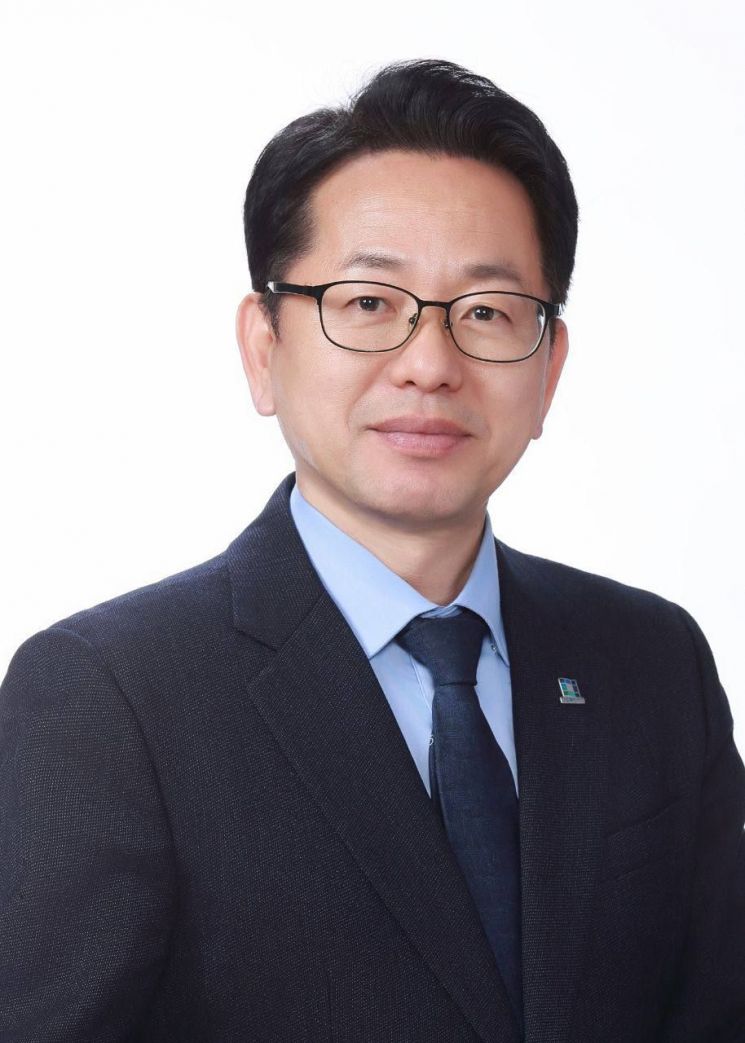
Kim Moon-soo, a member of the National Assembly from the Democratic Party of Korea (Suncheon-Gwangyang-Gokseong-Gurye Gap), is promoting a bill to strengthen government responsibility for radiation damage.
Rep. Kim has taken the lead in proposing partial amendments to the "Nuclear Safety Act" and the "Radiation Safety Management Act in Daily Life," which include applying the "precautionary principle" to nuclear and radiation safety management and establishing the "right to petition for health impact investigations."
Currently, there are two competing hypotheses regarding the health effects of radiation.
One is the "threshold theory," which states that there is no health impact when radiation exposure is below a certain level.
Studies on atomic bomb survivors have shown a significant increase in cancer incidence at doses above 100 mSv (millisieverts).
Based on the 100 mSv threshold, the International Commission on Radiological Protection sets the annual radiation exposure limit for radiation workers at 20 mSv, which is 20% of the threshold, and for the general public at 1 mSv, which is 1% of the threshold.
The other is the linear no-threshold theory, which posits that there is no threshold for radiation-induced health effects.
According to the 2006 report by the U.S. National Academy of Sciences titled "Biological Effects of Low-Level Radiation," there is no threshold for health effects caused by radiation.
Even the smallest dose of radiation carries a probability of causing cancer, and the more one is exposed, the greater the health impact. The report estimates that the risk of developing solid cancers follows this model.
While the health effects of high-dose radiation exposure are well known, controversy continues regarding low-dose radiation.
The controversy over the marine discharge of contaminated water from Japan's Fukushima nuclear power plant is a representative example in South Korea.
The Yoon Seok-yeol administration maintains that radiation exposure levels from Fukushima's contaminated water are minimal and therefore safe.
On the other hand, opponents argue that there is no safe level of radiation exposure and that it is especially dangerous for vulnerable groups such as pregnant women and infants.
Rep. Kim emphasized that radiation management should also apply the "precautionary principle."
The precautionary principle states that "even when risks are uncertain, if the damage caused by those risks is serious and irreversible, measures should be taken to prevent or reduce those risks."
This is a more advanced policy principle than the "precautionary principle" based on risk certainty.
South Korea codifies the precautionary principle in Article 4, Clause 1 of the Environmental Health Act, and France in Article 5 of its Environmental Charter.
Unlike South Korea, which applies the precautionary principle mainly to chemical substances, France applies this principle to nuclear and radiation management as well.
Rep. Kim also introduced the right to petition for health impact investigations in the partial amendments to the "Nuclear Safety Act" and the "Radiation Safety Management Act in Daily Life."
Currently, Article 17 of the Environmental Health Act allows citizens to petition for health impact investigations. However, the current law does not separately stipulate the right to petition for health impact investigations related to radiation.
The "Health Impact Investigation of Residents Around Wolseong Nuclear Power Plant" announced by the Ministry of Environment last year was conducted following a decision made during the 2021 National Assembly budget review process.
Rep. Kim Moon-soo pointed out, "It is very difficult in reality to scientifically prove causality for long-term exposure to low-dose radiation."
This is because various factors such as family history and lifestyle habits can also cause cancer when exposed to harmful agents over a long period.
He added, "Despite tritium being detected in a 5-year-old child living near the Wolseong nuclear power plant and 618 residents developing cancer, South Korea's nuclear and radiation safety legislation places the burden of proof solely on the residents."
Furthermore, he said, "These two amendment bills declare the principles of radiation safety management and will contribute to shifting from 'facility-centered safety management' to 'people-centered safety management.'"
The partial amendments to the "Nuclear Safety Act" and the "Radiation Safety Management Act in Daily Life," led by Rep. Kim Moon-soo, were jointly proposed by a total of 17 members of the National Assembly, including Kim Moon-soo, Kim Woo-young, Chung Dong-young, Lee Yong-seon, Joo Cheol-hyun, Kim Yoon, Kim Ki-pyo, Park Hee-seung, Lee Kwang-hee, Park Ji-hye, Park Beom-gye, Min Hyung-bae, Choi Min-hee, Baek Seung-ah, Lee Ki-heon, Jung Jun-ho, and Jo In-cheol.
© The Asia Business Daily(www.asiae.co.kr). All rights reserved.
![Clutching a Stolen Dior Bag, Saying "I Hate Being Poor but Real"... The Grotesque Con of a "Human Knockoff" [Slate]](https://cwcontent.asiae.co.kr/asiaresize/183/2026021902243444107_1771435474.jpg)
















