Government Weighs Shortening E-commerce Settlement Cycle
Signs of Tightened Regulations on Sales Fund Management
Experts Say "Settlement Cycle Essential for Consumer Protection"
The large-scale settlement delays involving e-commerce companies affiliated with Qoo10, including TMON and WEMAKEPRICE, have brought the lax management of the online shopping market under scrutiny. This incident has raised calls for regulatory improvements, as it involved a practically 'zombie company' with accumulated deficits misappropriating payments owed to sellers in a regulatory blind spot, causing significant harm to small business owners and consumers. While the e-commerce industry acknowledges the need for systems to manage settlement payments, there are concerns about excessive regulation.
According to industry sources on the 31st, efforts are underway to review the appropriateness of the Electronic Commerce Act and the Electronic Financial Transactions Act in the second half of this year to establish a system to prevent recurrence. In particular, measures to shorten the approximately two-month settlement cycle that triggered the TMEP incident and to oversee the management of settlement payments are being considered.
Will the settlement cycle exceeding two months be shortened?
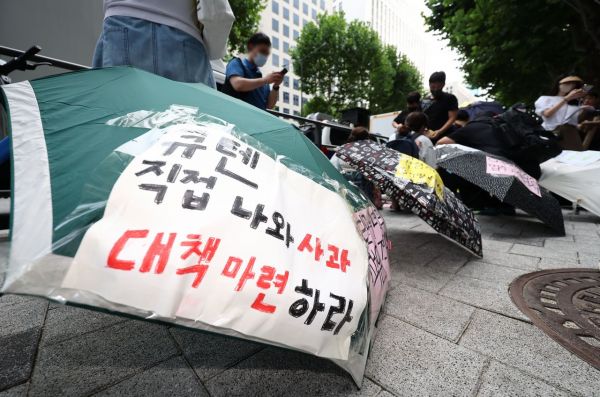
The settlement timing for TMON and WEMAKEPRICE was structured to be delayed up to two months from the transaction date. TMON paid settlement funds 40 days after the last day of the transaction month, while WEMAKEPRICE paid on the 7th day two months after the transaction. From the perspective of sellers, this means they could only receive payment for goods sold two months later. Due to the lack of legal regulations regarding settlement, payment custody, and usage by e-commerce companies, they could misuse sellers' funds by exploiting the long settlement cycle.
Under the current law, the Large-scale Distribution Industry Act mandates that large retail chains such as big-box stores pay suppliers within 40 days from the end of the sales month. For direct purchase transactions only, the payment deadline can be within 60 days from the receipt of goods. This has led to calls for e-commerce companies to shorten their settlement cycles as well.
Currently, major open market e-commerce platforms, excluding TMON and WEMAKEPRICE, support faster settlements. Although there are differences among companies, sellers can receive payments as early as the day after product shipment. Gmarket settles payments to sellers the day after the buyer confirms receipt of the product. Even if the buyer does not confirm the purchase, automatic settlement occurs two business days after one week from delivery completion. 11st operates two systems: standard settlement and fast settlement. Standard settlement completes payment two business days after the buyer confirms the purchase, and even without confirmation, automatic purchase confirmation occurs one week after delivery completion, with settlement two business days later.
However, Coupang is considered to have a relatively long settlement period among open markets. Coupang operates weekly and monthly settlement systems for open market sellers. Weekly settlement pays 70% of the amount 15 business days after the Sunday of the sales week, and the remaining 30% on the first day two months later. It is known that weekly settlement completion takes an average of 40 to 50 days. Monthly settlement pays 100% of the amount 15 business days after the last day of the sales month. To address delayed settlements, Coupang introduced a system that advances 90% of the payment via a check card at 10 a.m. the day after purchase confirmation. However, most of Coupang's transactions are direct purchases represented by Rocket Delivery, and open market sales account for less than 10%.
The e-commerce industry argues that the long settlement cycle is intended to protect consumers. Unlike large retailers that directly purchase and sell goods, open market platforms mediate between sellers and buyers and cannot guarantee product quality. If the platform settles payments early, there is a risk of sellers 'eoljuka' (absconding without shipping goods), and if consumers request returns, the platform must recover the payments, causing problems.
Experts also point out that mandating settlement cycles could cause side effects. Professor Dong Il Lee of Sejong University's Department of Business Administration said, "Settlement cycles are essential in the e-commerce industry," adding, "If systems such as immediate settlement upon deposit are introduced immediately, it could negatively impact the market ecosystem." He emphasized, "It is important to maintain a competitive structure among platforms while allowing sellers to filter out platforms that should be excluded from the market themselves."
Professor Yeon Seung Jung of Dankook University stated, "The biggest issues in this incident were the internal control deficiencies of TMON and WEMAKEPRICE and Qoo10's misuse of funds," adding, "Strong institutional improvements regarding settlement cycles could damage the e-commerce industry's reputation." He suggested, "It would be better to improve and establish guidelines so that e-commerce companies implement safety measures such as escrow services," emphasizing, "Since the closest partners know the e-commerce companies' internal situations best, listening to their opinions and minimal intervention is necessary."
Mandatory escrow registration
Currently, most e-commerce companies operate an escrow system, a safe transaction system where a third-party financial institution holds the payment and transfers it to the seller after the consumer confirms the purchase. An industry insider said, "Payments are tied up in the escrow system, a safe transaction system," adding, "The system pays sellers according to the set settlement cycle, preventing the use of payments for other purposes."
However, some argue that due to the nature of open markets, where payment trust is directly linked to e-commerce credibility, regulatory improvements are necessary. An official from the distribution industry said, "It is ironic that the settlement cycle for e-commerce has not yet been legislated, especially as online shopping now accounts for a larger share than offline," emphasizing, "Payment issues are directly related to platform trust, so minimal regulation through legislation is necessary to protect sellers."
© The Asia Business Daily(www.asiae.co.kr). All rights reserved.
![Clutching a Stolen Dior Bag, Saying "I Hate Being Poor but Real"... The Grotesque Con of a "Human Knockoff" [Slate]](https://cwcontent.asiae.co.kr/asiaresize/183/2026021902243444107_1771435474.jpg)
















