A Situation Where Leaving the Labor Market Is Inevitable
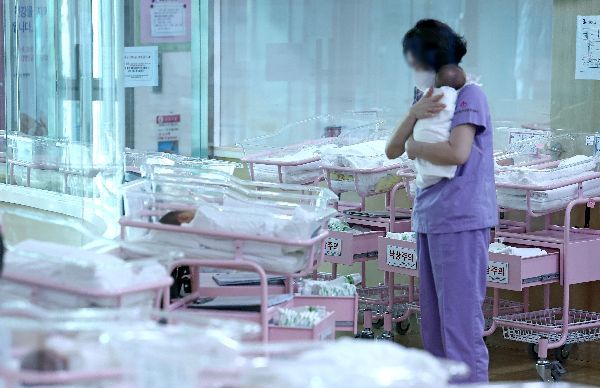
An analysis has revealed that women's labor market outcomes do not recover even 10 years after marriage and childbirth, with the decline observed immediately after marriage persisting. Compared to other countries, the maternal penalty continues over the long term.
On the 22nd, Minseop Kim, a research fellow at the Korea Development Institute (KDI), analyzed the impact of marriage and childbirth on workers' labor market outcomes in a report titled "Work Environment for Work-Family Balance," based on data from the Korea Labor Panel Survey from 1998 to 2021.
The data analysis showed that men experienced no significant changes in employment rates before and after marriage and childbirth. In contrast, women showed a considerable decrease.
Regarding employment rates, women's "marriage penalty" dropped by 39% in the short term, from immediately after marriage up to 4 years, and by 49.4% in the long term, from 5 to 10 years after marriage. In other words, 4 out of 10 women who were working before marriage did not work within 5 years after marriage. The analysis indicates that half of the women who were originally working had quit their jobs 10 years after marriage.
According to the report, women's labor market outcomes had not recovered even 10 years after marriage. The level that declined immediately after marriage was maintained for more than 10 years. The report explained, "The marriage penalty appears to exist very long-term and persistently."
Additionally, women working in industries with high time pressure, such as tight deadlines and irregular working hours, experienced a greater marriage penalty compared to those in less pressured jobs. Women in occupations with relatively low time pressure saw their employment rate decrease by 46.5% three years after marriage compared to before marriage. In contrast, women facing high time pressure experienced a 59.1% reduction.
The short-term penalty on wage income reached 49.3%, and the long-term penalty was 63.3%. As employment rates sharply declined after marriage and childbirth, overall women's wage income also decreased.
For those who maintained employment after marriage and childbirth, working hours increased by about 5-6% in both the short and long term. Furthermore, for "hourly wages" among those who remained employed, there was a slight increase in the short term after marriage and childbirth, followed by a decrease of around 15% in the long term.
Compared to other countries, the long-term maternal penalty was notably pronounced. When comparing the decline in employment rates 5 to 10 years after childbirth with the United States and five European countries (the United Kingdom, Austria, Germany, Sweden, and Denmark), South Korea (43.4%) had the second-highest decline after the United Kingdom (43.7%). The differences with Sweden (5.2%), Denmark (12.5%), and Germany (29.7%) were also significant.
Research fellow Kim pointed out, "In South Korea, the maternal penalty persists for a long time, and the penalty is greater in terms of employment rates rather than hourly wages or working hours." He added, "In South Korea's labor market, when workers face the burden of household chores and childcare after marriage and childbirth, there is little room to flexibly adjust working hours or wages. Ultimately, they have no choice but to leave the labor market."
© The Asia Business Daily(www.asiae.co.kr). All rights reserved.

















