The Supreme Court en banc has ruled that the right to claim child support payments for minor children, which a spouse who has raised the children after divorce can claim against the other spouse, expires after 10 years from the time the child reaches adulthood due to the statute of limitations.
Until now, the Supreme Court had held the position that the statute of limitations on past child support rights does not run until a specific claim is established through the parties' agreement or a family court judgment, even after the child has reached adulthood. However, this decision changed that view.
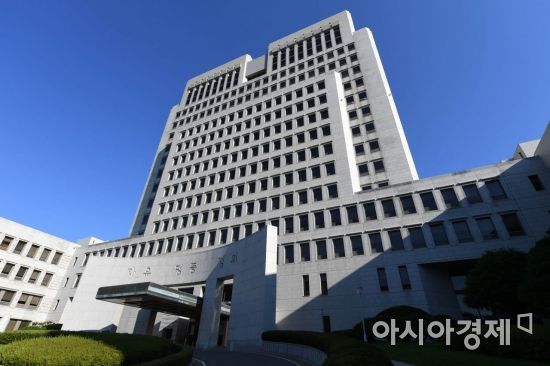
On the 18th, the Supreme Court en banc (Presiding Justice Lee Heung-gu) affirmed the lower court's decision dismissing the claim of Ms. A (87), who divorced her husband in 1984, against her ex-husband Mr. B (85) for past child support from November 1993, when their son (51) became an adult, about 23 years later, on the grounds that the statute of limitations had already expired.
The court stated in its order, "The petition for retrial is dismissed. The petitioner shall bear the costs of the retrial."
The court premised that "unless a specific claim is established through the parties' agreement or a family court judgment, the statute of limitations on rights related to past child support should be considered as not running during the period when the child is a minor and child-rearing continues, due to the nature of the rights concerning past child support that must be realized for the welfare of the child, and should begin to run from the time the child reaches adulthood and the child-rearing obligation ends."
The court added, "During the period when the child is a minor, the right to claim payment of past child support between divorced spouses should be regarded as having special circumstances under which the statute of limitations does not run due to the nature of the right. Before the specific content and scope are determined, the content of the right is not fixed, and it is difficult to consider it a complete property right independent of the status under family law that can be disposed of freely. It mainly has the nature of a right to demand the fulfillment of child-rearing obligations under family law based on the status of a minor child, rather than simply a monetary payment obligation, so the statute of limitations should not run on that right."
On the other hand, regarding the right to claim past child support after the child has reached adulthood, the court stated, "However, once the child reaches adulthood and the child-rearing obligation ends, the statute of limitations on the right to claim specific past child support, established through the parties' agreement or a family court judgment, should be considered to run from the time the child reaches adulthood."
It continued, "When the child reaches adulthood, the joint child-rearing obligation of the divorced couple ends, and there is no longer an issue of deciding or sharing future child support. Only the relationship of settling expenses previously incurred by either party for child-rearing remains. The right concerning past child support can be considered a complete property right independent of the status under family law from the time the child reaches adulthood and the child-rearing obligation ends, even if the specific amount has not yet been determined by agreement or family court judgment. It can no longer be regarded as a right to demand the fulfillment of child-rearing obligations based on family law status, so the statute of limitations should run on that right."
The court also added, "If the statute of limitations did not run on rights related to past child support not yet confirmed by agreement or family court judgment even after the child reached adulthood, it would result in an absurd situation where a person who has not exercised the right is in a much more advantageous position than a person who has actively exercised the right."
Furthermore, the court stated, "Decisions or rulings of the Supreme Court in 2011 that held there is no room for the statute of limitations to run on rights related to past child support before a specific claim is established through agreement or family court judgment even after the child reaches adulthood and the child-rearing obligation ends are all changed to the extent that they conflict with this decision."
Ms. A and Mr. B married in 1971 and had a son in 1973. The couple separated the following year and officially divorced in 1984. Ms. A took full responsibility for raising their son for 19 years starting in 1974.
In 2016, 23 years after their son became an adult, Ms. A filed a lawsuit against Mr. B claiming about 120 million KRW in past child support.
The first-instance court, following previous Supreme Court precedents, ruled that the statute of limitations had not expired and ordered payment of 60 million KRW. However, in the appellate court, which reviewed the case upon Ms. A's appeal, the second-instance court overturned the first-instance decision, ruling that the statute of limitations had expired and dismissed all of Ms. A's claims.
By changing the existing view on the statute of limitations for claims on past child support, the Supreme Court found no problem with the appellate court's decision dismissing Ms. A's retrial petition on the grounds that the 10-year statute of limitations had already passed and dismissed her retrial petition.
Chief Justice Cho Hee-dae and Justices Kim Seon-su, Lee Dong-won, Lee Heung-gu, Oh Seok-jun, Seo Kyung-hwan, and Eom Sang-pil agreed with the majority opinion.
Justices Noh Jeong-hee, Kim Sang-hwan, Noh Tae-ak, Oh Kyung-mi, and Shin Sook-hee dissented, stating, "The right to claim payment of past child support between divorced spouses has the nature of an abstract claim or legal status recognized under family relations until a specific claim is established through agreement or judgment, so the statute of limitations should not run."
Justice Kwon Young-joon agreed with the majority's conclusion but wrote a separate opinion stating, "In principle, the statute of limitations runs from the time the custodian incurs expenses for supporting the minor child, i.e., child-rearing."
A Supreme Court official said, "This ruling is significant in that it appropriately harmonizes the purpose and specific validity of the statute of limitations system with the welfare of the child and legal stability."
© The Asia Business Daily(www.asiae.co.kr). All rights reserved.

















