The Supreme Court's full bench has ruled that the government's prohibition on gatherings at religious facilities to prevent the spread of COVID-19 was lawful.
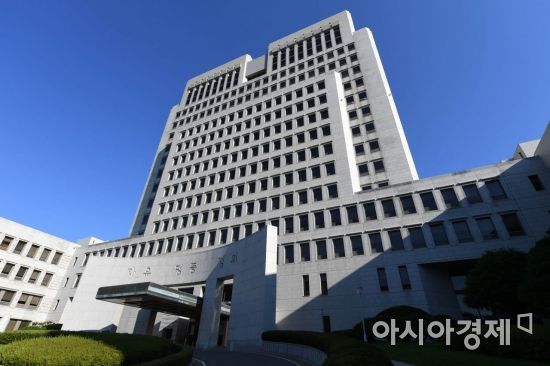
The Supreme Court full bench (Presiding Justice Lee Dong-won) on the 18th dismissed the appeal by Gwangju Antioch Church against the Mayor of Gwangju Metropolitan City in a lawsuit seeking to cancel the prohibition order on gatherings, thereby upholding the lower court's ruling against the plaintiff.
The court stated, "Considering the characteristics of COVID-19 and the specific circumstances of Gwangju Metropolitan City at the time, it is difficult to view the exercise of discretion as exceeding or abusing authority by violating the principles of proportionality or equality, thereby infringing on the plaintiffs' freedom of religion."
First, regarding the violation of the principle of proportionality, the court said, "This order was intended to promote public health and safety, and choosing to prohibit gatherings such as in-person worship services by church members was an effective and appropriate means to achieve administrative objectives. It is difficult to find that there were less restrictive but equally effective alternatives to this order."
Furthermore, "Considering that the restriction on religious freedom was temporary and limited in duration, and taking into account the high scientific uncertainty and the rapidly changing environment related to the pandemic, it is difficult to see the plaintiffs' restricted religious freedom as outweighing the public interest sought through this order," the court added.
The court also found it difficult to conclude that the principle of equality was violated, thereby infringing on the plaintiffs' freedom of religion. The court noted, "Religious facilities were classified together with other facilities characterized by activities that generate a high amount of droplets or where users tend to stay for relatively long periods. It is difficult to see the defendant's judgment as going beyond an objective and reasonable scope."
It further added, "Considering infection routes, the proportion of confirmed cases originating from religious facilities, and existing statistics related to cluster infections, it is difficult to say there was no reasonable basis."
Earlier, on August 27, 2020, Gwangju Metropolitan City issued a prohibition order banning all in-person worship services at churches and other religious facilities within its jurisdiction until September 10 to prevent the spread of COVID-19. Under this prohibition, only online services were allowed, and gatherings of up to nine people were permitted to prepare for these services. However, on August 30, the church held three separate in-person worship services attended by 30 to 40 people each. When authorities discovered this and requested an investigation, the church opposed the order itself and filed an administrative lawsuit.
The first and second trials ruled in favor of the local government. The appellate court judged that it was difficult to see the order as fundamentally infringing on religious freedom or as an abuse of discretion violating constitutional principles.
On this day, the Supreme Court also found no problem with the lower court's judgment.
However, Justices Kim Seon-su, Lee Dong-won, and Kim Sang-hwan dissented, stating, "It cannot be seen that the order, which immediately imposed a total ban on in-person worship services without first considering alternatives such as limiting the number of attendees or social distancing measures, satisfies the minimal infringement requirement. Maintaining existing measures for restaurants and wedding halls while ordering a total ban on gatherings at all religious facilities essentially treated similar facilities arbitrarily differently."
A Supreme Court official said, "This ruling is significant in that it provides standards for judging whether there is illegality in the exercise of discretion by administrative agencies in their professional risk assessments when selecting necessary measures to prevent infectious diseases like COVID-19, including violations of the principles of proportionality and equality."
© The Asia Business Daily(www.asiae.co.kr). All rights reserved.

















