ByteDance and Alibaba to Dispatch Inspectors
Investigating Implementation of Core Socialist Values
According to major foreign media reports on the 17th (local time), the Chinese government, which has recently been expanding its censorship system, has begun ideological verification of domestic artificial intelligence (AI) companies. The policy is to check whether these companies' AI models can embody the core values of socialism.
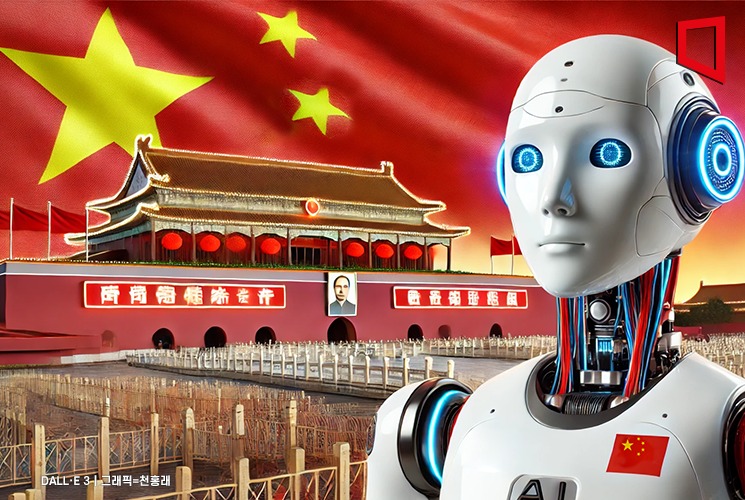
According to the reports, the Cyberspace Administration of China (CAC) dispatched auditors not only to big tech companies such as ByteDance and Alibaba but also to AI startups like Moonshot and 01.AI. They reviewed the data used for training their large language models (LLMs) and safety processes, and examined how these models responded to sensitive political issues in China and questions related to President Xi Jinping.
An employee of an AI company based in Hangzhou, China, who requested anonymity, complained, "The (CAC) special team came to our company and monitored meetings," adding, "It took several months to pass the audit." An employee of a well-known AI startup in Beijing said, "Our AI model has almost no restrictions on answers, so we put a lot of effort into filtering." Experts explained that to pass CAC's censorship, it is necessary to pre-filter sensitive information in the training data, but since LLMs learn from vast amounts of data in English, this task is very difficult and complex.
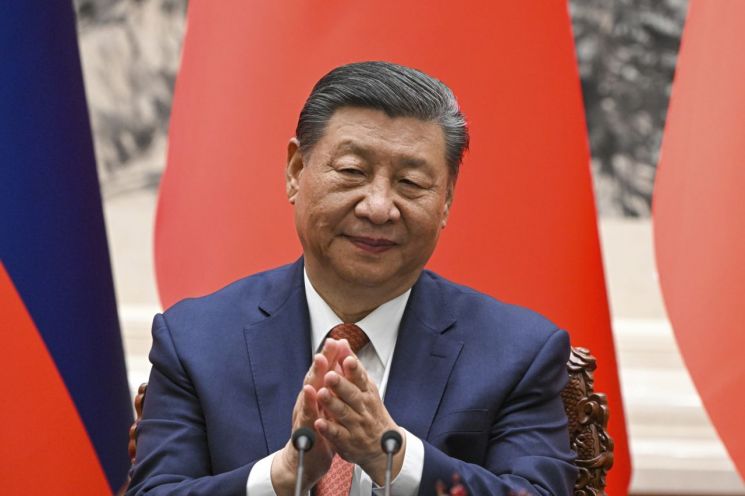
Foreign media explained, "Some companies block content related to President Xi altogether to avoid being caught," citing Moonshot's AI chatbot 'KimiChat' as a prime example. Additionally, Baidu's 'Ernie Bot' and Alibaba's 'Tongyi Qianwen' were found to evade questions about the Tiananmen incident or memes related to President Xi by responding, "Try another question." AI expert Huan Li analyzed, "Because it is very difficult for developers to control the text generated by AI, they build additional software to replace answers in real time."
China, which introduced the 'Great Firewall' (China's internet censorship system) in 2000 to block access to foreign websites, has recently accelerated content regulation of generative AI. In February, it announced operational guidelines for AI companies, requiring them to collect and update weekly thousands of sensitive keywords and questions that damage the 'core values of socialism,' such as inciting subversion of the state or hindering unification. However, to avoid chatbots evading all political topics, the CAC limited the number of questions a chatbot can refuse during the censorship process to less than 5%.
Meanwhile, a study conducted by Fudan University in China, which posed difficult questions related to core socialist values to various chatbots, found that ByteDance's 'Dubaobao' ranked first with a safety compliance rate of 66.4%. Dubaobao was found to respond to questions about President Xi's leadership by listing his achievements at length and calling him an "undisputed great leader." In the same study, OpenAI's 'GPT-4o' recorded a safety compliance rate of 7.1%, ranking lowest among the tested models.
© The Asia Business Daily(www.asiae.co.kr). All rights reserved.


















