Albino or Lucism Mutation Suspected Individual
Appearance Probability One in Tens of Thousands... Symbol of Auspiciousness
A white badger, considered a good omen, was discovered in Jirisan National Park.
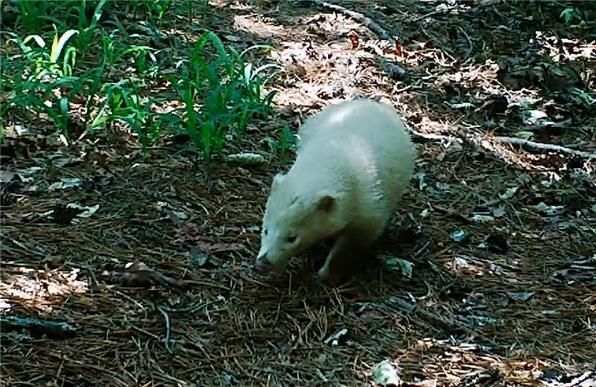 A white badger was captured in Jirisan National Park for the first time in 7 years. [Image source=Jirisan National Park Jeonnam Office]
On the 17th, the Jeonnam Office of Jirisan National Park under the Korea National Park Service announced that the Wildlife Protection Team confirmed the presence of a white badger during the monitoring process using unmanned sensor cameras installed within the national park to observe wildlife.
The white badger is presumed to be an albino or leucistic mutant. The phenomenon called 'albino,' also known as albinism or congenital pigment deficiency, is a genetic mutation caused by a lack of melanin synthesis, resulting in the entire body or fur turning white. Unlike albinos, who genetically lack melanin pigment, leucism is a mutation where problems occur during the differentiation of pigment cells from skin and fur stem cells, causing the skin or fur, excluding the eyes, to appear white or pale due to pigment deficiency. The probability of albino or leucistic animals appearing is only one in tens of thousands, so white animals have long been regarded as 'auspicious symbols.' However, white wild animals are more visible to humans and other predators, and are known to have a lower natural survival rate compared to normal animals.
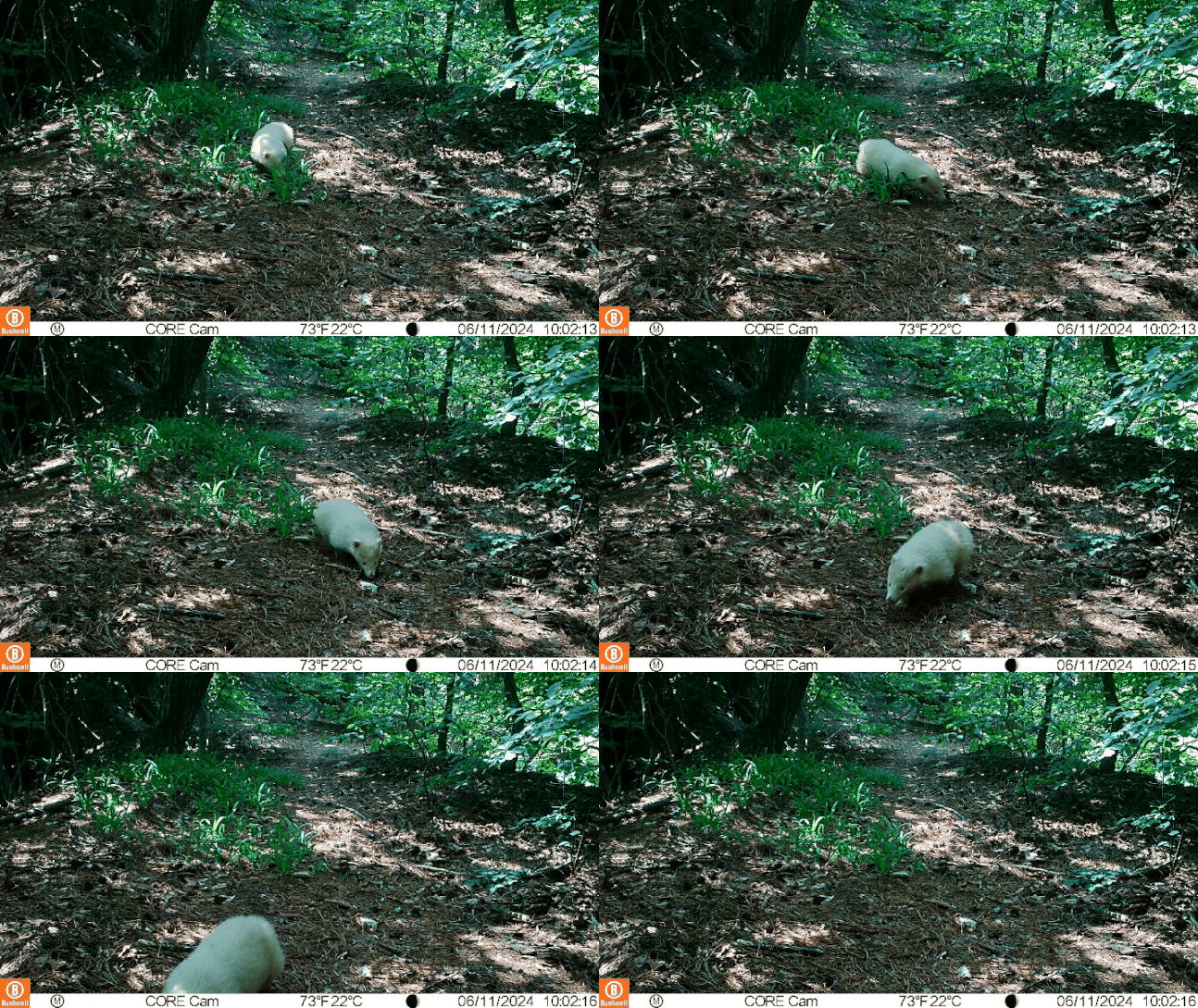 A white badger was captured in Jirisan National Park for the first time in seven years. [Image source=Jirisan National Park Jeonnam Office]
The white badger was first discovered in Jirisan in 2015, marking the first such finding in Korea, and was confirmed again after seven years since being captured in 2017. This individual was found more than 4 km away from the locations where it was identified in 2015 and 2017. Cha Soo-min, Head of Resource Conservation at the Jeonnam Office of Jirisan National Park, said, "This has reaffirmed that the ecosystem of Jirisan is well preserved," adding, "We will do our best to protect and manage wildlife habitats through continuous monitoring and patrols."
© The Asia Business Daily(www.asiae.co.kr). All rights reserved.