International Students Fluent in Korean, Over 5-Year Residency Visa... Long-Term Stable Stay Possible
In Yeongdeok-gun, North Gyeongsang Province, the “Regional Specialized Visa Program” is being implemented to break the vicious cycle of regional population decline caused by low birth rates, an aging population, and population concentration in the metropolitan area, as well as labor shortages for local businesses and a decrease in regional economic vitality.
The “Regional Specialized Visa System” is a project promoted as part of foreigner policy to realize a virtuous cycle by encouraging the settlement of foreigners suitable for the industries, universities, and job markets of population-declining regions through customized visa programs that reflect the precise needs of the area. This aims to expand the resident population, stimulate economic activity, and attract new residents to local governments.
Currently, foreign workers active in the region include those employed under the Employment Permit System (E-9), which allows a maximum work period of 4 years and 10 months, and seasonal workers in the agricultural and fisheries sectors (E-8), who can stay for up to 8 months. However, due to insufficient Korean language skills, communication is difficult, and the short period of stay makes long-term employment impossible.
The “Regional Specialized Visa Program” includes two types: the Regional Specialized Outstanding Talent (F-2-R) and the Regional Specialized Overseas Korean (F-4-R).
The regional specialized visa program that Yeongdeok-gun is currently focusing on issues the Regional Specialized Visa (F-2-R) to foreigners who meet certain requirements, such as being an international student who has graduated or is expected to graduate from a domestic junior college or higher, or a worker earning at least 70% of the previous year's per capita Gross National Income. These foreigners must reside in a population-declining area and be employed in one of 26 industries within the region, including fisheries, agriculture, various manufacturing industries, lodging, restaurants, public administration, and social welfare services, allowing them to stay long-term.
In addition, they can invite their spouses and minor children to live with them. The spouse is also allowed to work, and children can attend local educational institutions. As a result, not only does the number of permanent residents in the area increase, but it also greatly contributes to revitalizing the local economy and alleviating labor shortages.
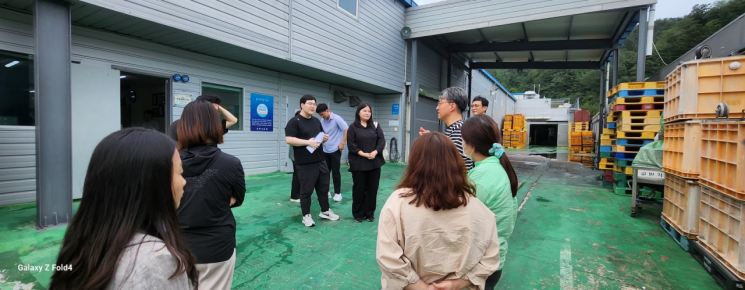
On June 24, Yeongdeok-gun held a promotional session at the Yeongdeok Lohas Fisheries Food Support Center conference room, attended by representatives from over 30 seafood processing companies. As a result of such promotional activities, there have been steady recruitment requests from the fisheries, cafe, and restaurant industries. On July 10, 11 international students hoping to work at seafood processing companies and cafes in Yeongdeok visited the area, toured businesses, and interviewed with company representatives. Since then, recruitment requests have also come from local M chain stores, G companies, and others, indicating that the employment of outstanding foreign talent in the region is expected to continue.
Companies and foreigners wishing to participate in this program can be matched for employment by registering with the K-Dream Foreigner Support Center’s job matching system.
For more detailed inquiries about this program, contact the Population Policy Team of Yeongdeok-gun or the Yeongdeok-gun Family Center.
© The Asia Business Daily(www.asiae.co.kr). All rights reserved.
![Clutching a Stolen Dior Bag, Saying "I Hate Being Poor but Real"... The Grotesque Con of a "Human Knockoff" [Slate]](https://cwcontent.asiae.co.kr/asiaresize/183/2026021902243444107_1771435474.jpg)
















