As household debt surges rapidly, authorities have stepped in to apply the brakes, prompting major commercial banks to consecutively raise interest rates.
According to the financial sector on the 17th, Shinhan Bank decided to increase the interest rates on loan products based on 3-year and 5-year bank bonds by 0.05 percentage points starting from the 22nd. Most of these loan products are mortgage loans, and this additional increase comes just a week after a previous 0.05 percentage point hike on the 15th.
KB Kookmin Bank will also raise interest rates on mixed (fixed) and variable-rate mortgage loans and jeonse deposit loans by 0.2 percentage points starting from the 18th. Woori Bank plans to raise the loan interest rate on 5-year variable-rate apartment mortgage loans by 0.2 percentage points from the 24th, following a similar increase on the 12th.
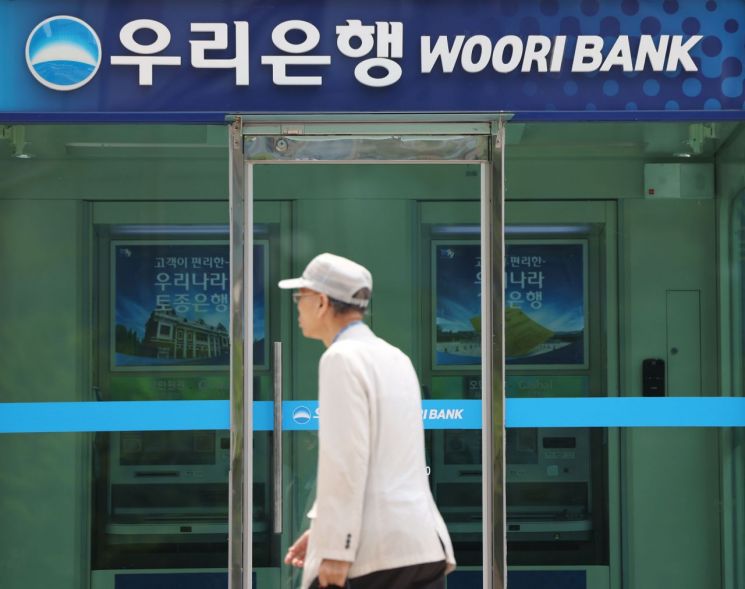
Woori Bank will also increase the interest rates on 5-year variable-rate mortgage loans for houses other than apartments by 0.15 percentage points. Additionally, the interest rate on the 2-year fixed-rate Woori Jeonse Loan, a jeonse deposit loan, will be raised by 0.15 percentage points. Both KB Kookmin Bank and Woori Bank had already raised loan interest rates earlier this month, but they are implementing additional hikes in less than a month.
The reason banks are consecutively raising interest rates like this is to control the rapidly increasing household debt. According to the Bank of Korea, household loans in the banking sector increased by 20.5 trillion won from January to June. This far exceeds the levels of 4.1 trillion won in 2023 and 100 billion won in 2022. The increase in household loans was mainly driven by mortgage loans (including jeonse deposit loans). During the same period, the increase in mortgage loans reached 26.5 trillion won, marking the highest level in three years.
In response, authorities are pressuring for active control of household loans. The Financial Services Commission convened the banking sector to discuss household debt measures, while the Financial Supervisory Service has been conducting written and on-site inspections since the 15th to check compliance with the Debt Service Ratio (DSR) regulations targeting the five major commercial banks and KakaoBank.
Moreover, the recent decline in market interest rates has diminished the effect of the rate hikes. The lowest fixed-rate mortgage interest rate among the five major commercial banks was around 2.90% earlier this month, but despite the recent rate hikes aimed at controlling household debt, the lowest rate as of the previous day was 2.89%, showing a reverse trend.
A financial sector official said, "Although interest rates were raised to control the increase in household debt, the effect has been offset to some extent as market interest rates fell due to growing expectations of a base rate cut."
© The Asia Business Daily(www.asiae.co.kr). All rights reserved.
![Clutching a Stolen Dior Bag, Saying "I Hate Being Poor but Real"... The Grotesque Con of a "Human Knockoff" [Slate]](https://cwcontent.asiae.co.kr/asiaresize/183/2026021902243444107_1771435474.jpg)
















