The U.S. Federal Reserve (Fed) is expected to begin cutting the benchmark interest rate starting in September, supported by a slowdown in economic indicators, and the market is gradually gaining momentum for a 0.75 percentage point cut within the year, which would mean three rate cuts.
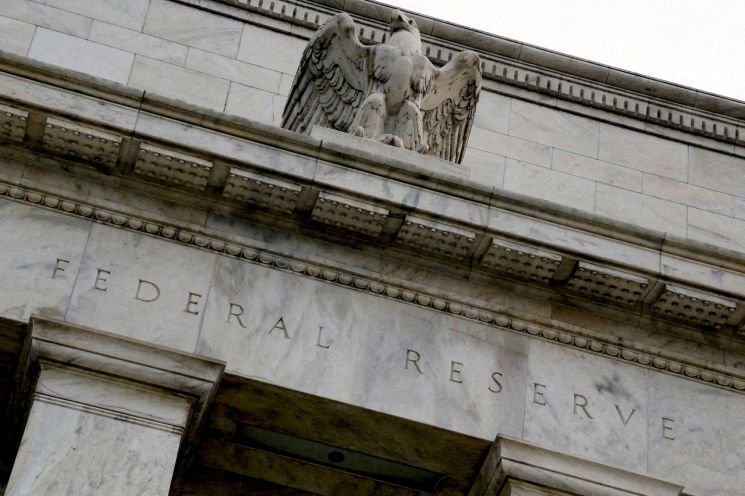
According to the Chicago Mercantile Exchange (CME) FedWatch on the 15th (local time), the federal funds (FF) rate futures market reflected a more than 60% chance that the Fed will cut the current 5.25-5.5% rate by at least 0.75 percentage points within the year. This is a significant increase from just a week ago when the probability was in the 25% range. It also rose compared to the previous trading day on the 12th, which was in the 53% range. Considering that the Fed typically implements rate cuts in increments of 0.25 percentage points, this implies the possibility of three cuts by the end of the year.
Initially, the Fed had indicated the possibility of three rate cuts on its dot plot earlier this year. However, due to growing concerns about a rebound in inflation, the Federal Open Market Committee (FOMC) updated the dot plot in June to show a year-end median rate of 5.1%, revising the outlook to a single rate cut.
The renewed market expectation for additional cuts is driven by recent major economic indicators, including the Consumer Price Index (CPI), all showing a slowdown. The U.S. June CPI inflation rate released on the 11th was 3.0%, the lowest level since June of last year. On a month-over-month basis (-0.1%), it recorded a negative figure for the first time in about four years. Last month's unemployment rate also exceeded market expectations at 4.1%, indicating a cooling labor market.
Moreover, the tone from Fed officials and Wall Street investment institutions has recently become more dovish (favoring monetary easing). Fed Chair Jerome Powell, attending an Economic Club discussion in Washington DC on the same day, said, "The three indicators over the past three months, especially last week's data, give us some confidence (in achieving the inflation target)," and assessed that "inflation is coming down and the labor market has definitely cooled." Mary Daly, President of the Federal Reserve Bank of San Francisco and a voting member of this year's FOMC, also stated at an event that "confidence is growing that we are moving toward the 2% inflation stability target."
On the same day, Goldman Sachs also released an analysis suggesting that it might be appropriate for the Fed to start cutting rates from the July FOMC rather than September. Jan Hatzius, Goldman Sachs' chief strategist, wrote in an investor memo that while maintaining the existing September rate cut forecast, "there is clear data providing 'solid grounds' to move earlier than that. Why wait seven more weeks?" He cited clearer data, persistent concerns about inflation rebound, and political pressure due to the November election as reasons to consider a July cut.
Bloomberg News also reported on the same day that "after Goldman Sachs stated that conditions for rate cuts have matured, Wall Street traders are betting on three rate cuts within the year." The outlet noted that "at least two 0.25 percentage point cuts within the year are already considered a given, and the probability of a third cut is about 60%," adding that futures market contract rates briefly fell to as low as 4.6%, reflecting the sentiment.
Earlier, Austin Goolsby, President of the Federal Reserve Bank of Chicago, said in an interview released late last week that there is little practical difference between a July cut and a September cut. However, the market is currently pricing in over a 90% chance of a rate hold in July. The upcoming FOMC meetings are scheduled for July 30-31, September 17-18, November 6-7, and December 17-18.
© The Asia Business Daily(www.asiae.co.kr). All rights reserved.

















