The Supreme Court has ruled that workers responsible for quality control of semi-assembled export automobile parts at Hyundai Mobis partner companies should also be considered employees of Hyundai Mobis.
According to the legal community on the 16th, the Supreme Court's 3rd Division (Presiding Justice Lee Heung-gu) upheld the lower court's ruling in favor of three workers, including Mr. Kim, who filed a lawsuit against Hyundai Mobis seeking confirmation of employee status and wage claims.
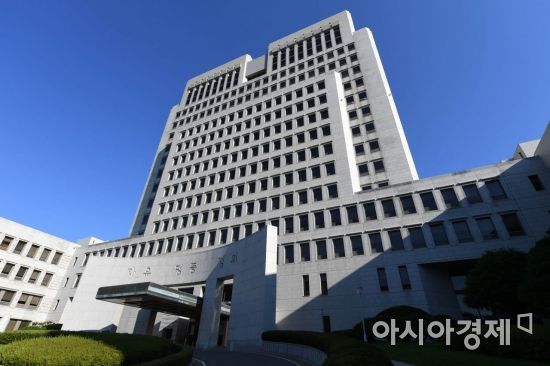
The court stated, "The lower court's acceptance of the plaintiffs' claims, including monetary claims for the period after resignation, based on the premise that the effect of deemed direct employment or the obligation of direct employment persists, is justified. There is no error affecting the judgment such as misunderstanding the legal effects of deemed direct employment and the obligation of direct employment or the severance of employment relationships of dispatched workers," and dismissed Hyundai Mobis's appeal.
Mr. Kim and others were affiliated with Hyundai Mobis partner companies and engaged in inspecting the quality of semi-assembled export automobile modules and parts produced by these partners.
The production process at Hyundai Motor factories is divided into direct production processes and indirect production processes (such as production management and maintenance). Mr. Kim and others were responsible for quality inspection of semi-assembled products (CKD), which fall under the indirect production process.
The partner companies to which Mr. Kim and others belonged had subcontracting contracts with Hyundai Mobis. However, they performed their tasks according to the work standard inspection criteria provided by Hyundai Mobis, received direct and individual work instructions via email from Hyundai Mobis quality team employees, and reported attendance status.
Mr. Kim and others filed a lawsuit claiming that they were actually dispatched workers and demanded Hyundai Mobis directly employ them and pay the overdue wages.
Under the Act on the Protection of Dispatched Workers, dispatched workers belong to subcontractors but work on-site under the instructions of the primary contractor and can be used for a maximum of two years. According to the Dispatch Act, if the period exceeds two years, direct employment is required, and dispatching is prohibited in direct production process work in manufacturing.
The first-instance court ruled that Mr. Kim and others were indeed dispatched workers and that Hyundai Mobis had used them for more than two years, thus recognizing a direct employment relationship. The court ordered confirmation that one plaintiff was an employee of the defendant and ordered the defendant to express intent to employ the other two plaintiffs. Additionally, the court ruled that the company must pay unpaid wages or damages to the workers.
After examining the workplaces, equipment, work performance methods, training, and attendance management of the plaintiffs including Mr. Kim, the court concluded that Hyundai Mobis exercised substantial command and control over the performance of work, directly or indirectly issuing binding instructions.
Furthermore, the court found that Mr. Kim and others formed a single work group with Hyundai Mobis employees and were substantially integrated into Hyundai Mobis’s business.
On the other hand, the court found that the partner companies to which Mr. Kim and others were dispatched did not independently exercise decision-making authority regarding the selection of workers to be deployed, the number of workers, training, work and break times, vacations, or attendance checks, and did not possess independent corporate organizations or facilities necessary to achieve the contract purpose with Hyundai Mobis.
Hyundai Mobis appealed, but the second-instance court reached the same conclusion.
The Supreme Court also found no problem with this judgment.
© The Asia Business Daily(www.asiae.co.kr). All rights reserved.
![Clutching a Stolen Dior Bag, Saying "I Hate Being Poor but Real"... The Grotesque Con of a "Human Knockoff" [Slate]](https://cwcontent.asiae.co.kr/asiaresize/183/2026021902243444107_1771435474.jpg)











