Relatively Poorer Due to Record Low Yen
"Is the FIRE Tribe Now Unrealistic?" Concerns Arise
One year ago, a 45-year-old Japanese man made headlines by saving nearly 100 million yen (approximately 900 million KRW). His social media ID was 'Jeoldae Toesaeman' (Absolute Resignation Man). He was an office worker with the ambition to save 100 million yen before retiring, secure sufficient retirement funds, and proudly join the FIRE movement (financial independence, retire early).
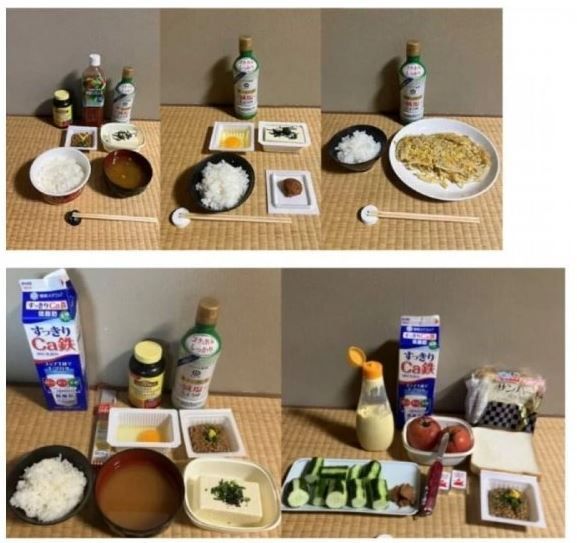
 Dinner photo posted by Jeoldae Toesaman. He saves on living expenses as much as possible by using inexpensive ingredients such as tofu, rice, and vegetables.
 [Image source=Capture from X]
However, one year later, Jeoldae Toesaeman regrets the 'frugal life' he has led for the past 21 years. Why is that?
Yen Depreciation as a Hidden Obstacle... "What Was All the Hard Work For?"
On the 28th of last month (local time), Jeoldae Toesaeman posted on X, "If the yen depreciation continues like this, I think it might be impossible for the FIRE movement anymore." He lamented, "I regret what I have been working so hard for over the past 21 years," adding, "It was truly a meaningless life."
Jeoldae Toesaeman is known as a typical salaried worker, or sarar?man (サラリ―マン, salaryman). Just a year ago, he became a wealthy individual in his 40s, earning the envy of many netizens. However, the ongoing yen depreciation has become a new variable. Since his assets were accumulated solely through savings without significant investments, all the money he holds is in yen. In other words, as the yen's value falls, his relative wealth has decreased accordingly.

The impact of yen depreciation is increasingly reflected in rising consumer prices. In another post, Jeoldae Toesaeman joked, "By 2034, convenience store diapers might cost 10,000 yen each, convenience store wages might be 3,000 yen per hour, and the exchange rate might be 5,000 yen per dollar." He added, "Only a bleak future comes to mind. I might be suffering from depression."
Some Japanese netizens who read his posts showed partial agreement. Comments included, "My investment account only keeps increasing in dollars," and "Like some South American countries, our local currency might be abandoned, and only the dollar used."
Rising Import Prices and Declining Worker Wages... Can a Turnaround Be Achieved?
Jeoldae Toesaeman reportedly has been frugal and focused solely on saving since his mid-20s when he started working. At one point, his "dinner table" became a hot topic on X. He minimized food expenses by eating only one jar of pickles, instant rice, and convenience store rolled omelet, saving all remaining money.
Thanks to this, last year Jeoldae Toesaeman reached 90 million yen (about 800 million KRW), and it seems he will soon surpass his goal of 100 million yen. He also published a book sharing his experiences.
However, the record-breaking yen depreciation is unsettling ordinary Japanese salaried households, including Jeoldae Toesaeman. According to the 'Labor Statistics Survey' published by Japan's Ministry of Health, Labour and Welfare in March, the average real wages of Japanese workers have declined for 24 consecutive months. While living costs are rising due to import price increases, wage growth for typical workers remains minimal.
Nonetheless, some express hope that the declining worker incomes may soon reverse. Recently, Rengo, Japan's largest labor union, announced that the average wage increase rate for union members in the first half of this year was 5.24%. This suggests that the next labor statistics survey might show wage growth surpassing inflation.
© The Asia Business Daily(www.asiae.co.kr). All rights reserved.