Ahn Cheol-soo "Almost No Returned Residents"
Specialist Hospitals? ... How Is It Possible with Resident Shortage
"There Is No More Time Now"
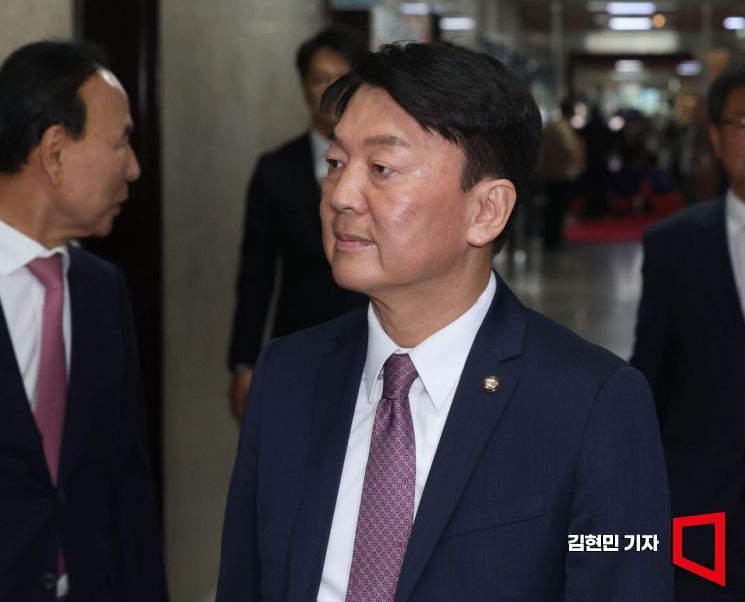
On June 16, Ahn Cheol-soo, a member of the People Power Party, pointed out the extremely low return rate of residents despite the government's conciliatory measures, stating, "To resolve the medical crisis, the government must engage in dialogue with the medical community without any restrictions on the agenda, including next year's medical school quota."
Through social media (SNS), Ahn said, "In the end, the residents did not return. There is no end in sight to the medical crisis," adding, "Almost no residents returned by yesterday, the deadline for processing resignations." He continued, "If nearly ten thousand residents are collectively processed as resigned, the medical vacuum will inevitably be prolonged," and "Since residency is a training process to become a specialist, nearly ten thousand specialists will disappear from our medical system within a few months."
Regarding the government's solution, he evaluated it as "a matter of stalling and juggling." Ahn said, "The government plans to recruit residents again this September under the 'training special case,' but currently, there are not many residents willing to return," adding, "If resigned residents are allowed to return to other hospitals, it is widely expected that only popular departments such as dermatology and plastic surgery in large Seoul hospitals will normalize." Furthermore, he said, "There are also concerns that if regional restrictions are lifted, residents from local hospitals will move to the Big 5 hospitals in Seoul."
Ahn lamented, "The chronic problems of our medical system?the shortage of essential specialty doctors and the weak local healthcare?are worsening rapidly," adding, "Medical school expansion was promoted to address the shortage of essential specialties and local doctors, but paradoxically, the concentration in popular specialties is intensifying, and local healthcare is on the verge of collapse."
He also criticized the government's policy to create specialist-centered hospitals as "nonsense." He said, "Since it takes 3 to 4 years of residency to become a specialist, if there is a vacancy in residents and they are concentrated only in certain popular specialties, I cannot understand how hospitals with sufficient specialists in all departments can be created," adding, "I worry this might be a signal for the collapse of the medical system."
Ahn pointed out that the government needs to change its perception of the situation. He said, "Since the July 15 measures failed, the government should stop waiting until many residents return during the September recruitment or trying to juggle residents from local hospitals to the Big 5 hospitals in Seoul. They must abandon this short-term, patchwork mindset," adding, "Indiscriminately relying on a kind of 'Jonbeo' (endurance until the end) approach, hoping residents will return over time, and only issuing short-term fixes will not prevent the impending medical crisis."
Regarding the government's approach to medical reform, he said, "First, identify the problems in the medical system (shortage of essential and local medical care), then secure strong 'allies' through announcements about saving essential medical care via fee and legal reforms and securing investment funds such as building local medical centers, and finally, increase the number of doctors needed to implement these measures. It is regrettable that this sequence was not followed."
Ahn stated, "Given that the government has already announced an increase of 2,000 medical school admissions, it is desirable to negotiate a gradual increase based on consensus, starting not with this year's admissions but from next year, and to discuss the scale of the increase through a public deliberation committee composed of the government, medical community, and credible international organizations," adding, "Discussions on fee and legal reforms should also precede this."
He urged dialogue between the government and residents to resolve the immediate crisis. He said, "To solve the medical crisis, the government must engage in dialogue with the medical community without any restrictions on the agenda, including next year's medical school quota." He also called for a change in awareness among medical students and residents. Ahn said, "The medical community, including students and residents, must recognize that if the medical system collapses, it will be mutual destruction, and work together to find solutions," adding, "The greatest victims are the general public, whom both the government and medical community are most concerned about. There is no more time left."
© The Asia Business Daily(www.asiae.co.kr). All rights reserved.

















