One Day Before the 5th Anniversary of the Prohibition Law Enforcement
Workplace Gapjil 119 Forum
# During an investigation of workplace harassment, team members were interviewed, and based on that information, the company is trying to frame me, the victim, negatively on another issue. I understand that it is not allowed to link the victim to other matters or turn the victim into the perpetrator during the investigation. I believe this is a targeted investigation; does this make sense? (Case reported to the civic group Workplace Bullying 119 in January 2023)
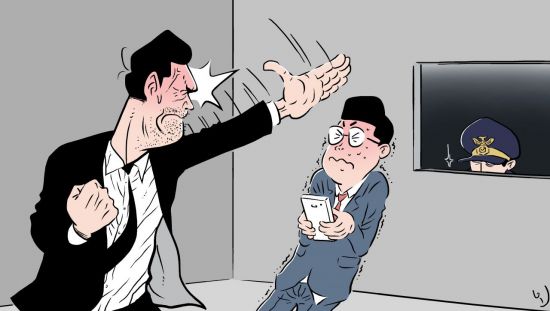 Workplace harassment. Photo by Asia Economy DB
There has been a call to guarantee the participation of the victim in the investigation and judgment process after reporting workplace harassment. This is to prevent secondary harm inflicted on the victim due to the employer’s handling of the case according to their own intentions and to help provide relief.
Choi Hye-in, a labor attorney at the Metalworkers’ Union Legal Office, stated at the forum “Paradigm Shift in Workplace Harassment: From Abuse of Power to Safety,” held on the 15th at the National Assembly Members’ Office Building by Workplace Bullying 119 to mark the 5th anniversary of the Workplace Harassment Prohibition Act, “When a worker reports workplace harassment to the employer, the employer can initiate an internal investigation either directly or by appointing an investigator, designating an investigation department, or forming an investigation committee. However, since the procedures and judgment authority rest solely with the employer, the victim may be exposed to secondary harm during this process.”
She added, “Beyond prioritizing autonomous resolution within the workplace, it is necessary to develop the capacity to properly handle workplace harassment. Objectivity should be enhanced by involving workers in the investigation process or obtaining the consent of the reporter when forming the investigation committee.”
Attorney Choi also explained cases where the employer, during the investigation, scrutinizes the reporter’s statements and previous work attitude or behavior, then claims to investigate the reporter’s misconduct after handling the harassment report, or tries to justify the harassment as mutual fault. She pointed out, “If the employer intends to cover up the workplace harassment incident, using their authority to attack the victim in reverse is an abuse of power.”
Attorney Kim Dong-hyun (Hope Law, a public interest human rights lawyers’ group) expressed concern about calls to add “continuity” and “repetition” as requirements for workplace harassment, saying, “This does not align with international standards and legislative intent, and may exacerbate side effects.” On the other hand, Kim Dong-hee, head of the Labor Standards Policy Team at the Korea Employers Federation (KEF), said, “Since courts already consider the perpetrator’s intent and the continuity and repetition of acts in their judgments, it is necessary to specify objective judgment criteria through case law research.”
The Workplace Harassment Prohibition Act, enacted as an amendment to the Labor Standards Act and effective from July 16, 2019, prohibits acts that use superiority in status or relationships to cause physical or mental suffering or worsen the working environment beyond reasonable work scope to other workers. According to a survey conducted last month by the public opinion research firm Global Research on 1,000 office workers commissioned by Workplace Bullying 119, 23.8% of workplace harassment perpetrators were employers.
© The Asia Business Daily(www.asiae.co.kr). All rights reserved.
![Clutching a Stolen Dior Bag, Saying "I Hate Being Poor but Real"... The Grotesque Con of a "Human Knockoff" [Slate]](https://cwcontent.asiae.co.kr/asiaresize/183/2026021902243444107_1771435474.jpg)















