2024 Hankyung CEO Jeju Summer Forum Press Conference
"Union-related risks likely lower than Biden's second term"
South Korea's 'O·L·D' more serious than '3 Highs'
System outdated (Old)·Low birthrate (Low)·Industrial structure stagnant (Dormant)
Big 4 groups' membership fees to bring "good news"
Ryu Jin, chairman of the Korea Economic Association, predicted that even if former President Donald Trump is elected in the upcoming U.S. presidential election this November, Korean companies will not face significant difficulties in management. He anticipated that if Japan is brought into the fold to establish a Korea-U.S.-Japan cooperative framework, former President Trump and his aides would respond positively.
He mentioned that companies like Samsung and Hyundai Motor, which operate in states such as Texas and Georgia where labor unions are relatively weak, could benefit from a reduced 'union risk' compared to the Biden administration.
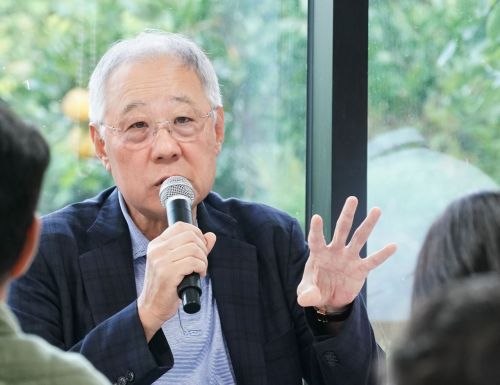 Ryu Jin, Chairman of the Korea Economic Association, is speaking at a press conference held during the '2024 Korea Economic Association CEO Jeju Summer Forum' at Lotte Hotel in Seogwipo, Jeju on the 12th.
 [Photo by Korea Economic Association]
Chairman Ryu held a press conference on the 12th in Seogwipo, Jeju, during the '2024 Korea Economic Association CEO Jeju Summer Forum' hosted by the Korea Economic Association, stating, "While there will be challenges if Trump is elected, there will also be some advantages."
He added, "If a Korea-U.S.-Japan cooperative system is established, former President Trump and his cabinet members will likely be cooperative." He continued, "The Democratic Party tends to protect domestic companies from overseas corporate expansion, but Trump appears to treat foreign companies investing in the U.S. the same as domestic companies, which might be better. Especially regarding labor unions, Korean companies mainly enter states without unions, so a Biden victory would be a negative, but a Trump victory could be favorable."
States such as Texas, where Samsung Electronics has invested, and Georgia and Alabama, where Hyundai Motor has invested, apply 'Right-to-work laws' that limit mandatory union membership for workers.
Chairman Ryu pointed out that a more fundamental and structural problem than Korea's '3 highs (high interest rates, high inflation, high exchange rates)' is 'OLD (Outdated·Low·Dormant).' OLD refers to outdated systems (old), low birth rates (low), and stagnant industrial structures (dormant).
He emphasized, "We need to reform the outdated systems unique to our country and be especially cautious that the recently promoted amendment to the Commercial Act expanding directors' fiduciary duties does not cause irreversible mistakes." He also stated, "To increase the birth rate, we should change the culture of avoiding adoption and instead accept immigrants from countries with similar religions to Korea." He added, "We must improve systems to dramatically increase labor productivity," and noted, "The industrial structure has stagnated, with only three new items added to the top ten product categories in the past 20 years, and the slow progress in new business initiatives must also be addressed."
Chairman Ryu expressed optimism about the payment of membership fees by the four major conglomerates (Samsung, SK, Hyundai Motor, LG). On the 18th of last month, Lee Chan-hee, Samsung's Compliance Committee Chairman, stated that persuading members of Samsung affiliates regarding the use of funds and post-monitoring systems should precede the payment of Korea Economic Association fees by major Samsung affiliates including Samsung Electronics. In response to related questions, Chairman Ryu said, "Regarding the Samsung membership fee issue, it will take time, but if we wait, we hope good news will come."
Kim Chang-beom, the full-time vice chairman of the Korea Economic Association who attended the press conference, said, "Although the four major groups may not have chairmen participating, presidents and vice presidents engage in ESG (environment, social, governance) alliances and current issues, cooperating with the Korea Economic Association." He added, "As time passes, the Korea Economic Association will expand, and awareness of the value and role of its work will broaden, increasing the intensity and density of activities by the four major groups."
Regarding the Korean economy in the second half of the year, he expressed a positive outlook. Chairman Ryu said, "The semiconductor and electronics sectors have improved, and Samsung does not seem to have major concerns." Jung Chul, the research director of the Korea Economic Association and president of the Korea Economic Research Institute, stated, "The U.S. Federal Reserve is signaling interest rate cuts, inflation is stabilizing, and exports are improving, so the economic conditions in Korea will improve in the second half. However, there are risks from legislative trends in politics that could suppress corporate investment and ongoing geopolitical risks, so our companies need to make efforts."
© The Asia Business Daily(www.asiae.co.kr). All rights reserved.
![Clutching a Stolen Dior Bag, Saying "I Hate Being Poor but Real"... The Grotesque Con of a "Human Knockoff" [Slate]](https://cwcontent.asiae.co.kr/asiaresize/183/2026021902243444107_1771435474.jpg)
















