National Museum of Korea 'Samguk Samsaek - East Asian Lacquerware'
Artifacts showcasing the history and culture of lacquerware from Korea, Japan, and China come together in one place. This is at the special exhibition "Samguk Samsaek (三國三色) - Lacquerware of East Asia," jointly planned by the National Museum of Korea, the Tokyo National Museum in Japan, and the National Museum of China. From the 10th of this month until September 22, forty-six lacquerware pieces, each with distinct characteristics, will be displayed in the special exhibition hall.
This is an opportunity to appreciate the unique and splendid crafts of the three countries, based on their solid lacquer culture. Ancient people often incorporated natural sap extracted from lacquer trees into their crafts. Lacquered wood is resistant to moisture and pests and does not easily decay. The decorative techniques, forms, colors, and patterns can be summarized as methods of "applying, sprinkling, and carving."
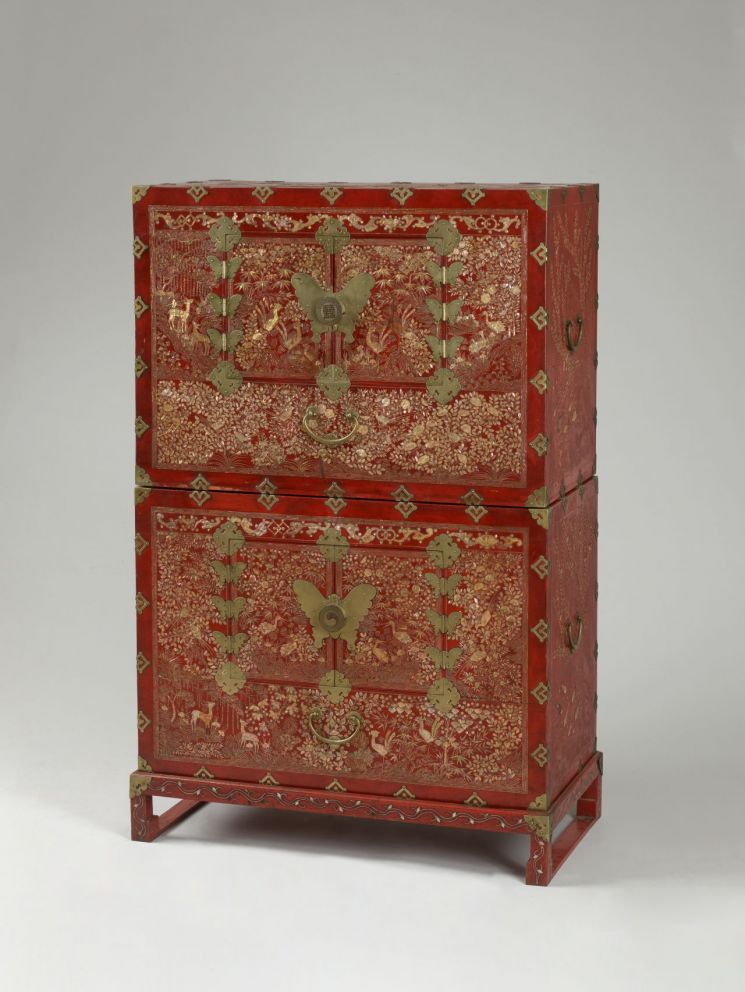
Korean mother-of-pearl lacquerware, recognized worldwide, is made by "applying" pieces. Patterns are decorated with mother-of-pearl, finely processed into thin sheets from shells such as abalone and clams. The National Museum of Korea introduces representative artifacts such as the treasure "Najeon Gyeongham," a Buddhist scripture box from the late Goryeo period, and a comb case that stored a two-tiered rice container, hair ornaments, and binyeo (traditional hairpins) donated by the late Lee Kun-hee, former chairman of Samsung. The Najeon Gyeongham is a lacquerware piece repatriated from Japan and donated by the National Museum of Korea Foundation in 2014. It boasts a unique beauty with patterns of peonies, vines, and beads. Only about six pieces remain worldwide, making it highly precious.
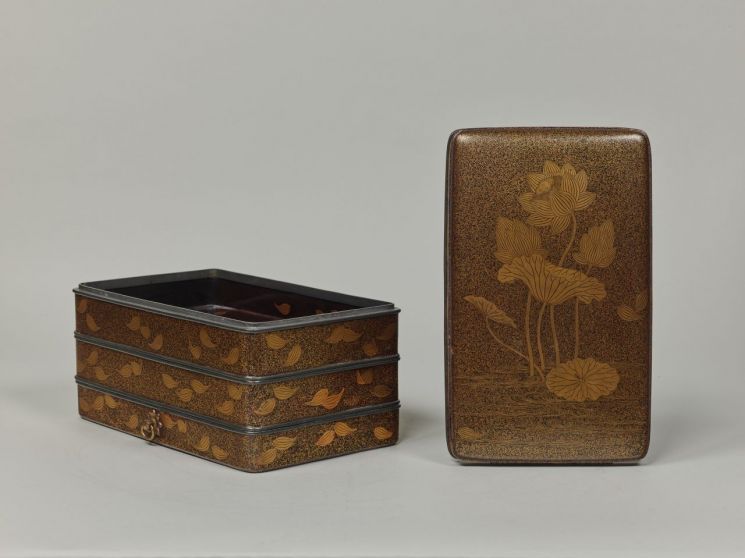
Japanese lacquerware is known for the maki-e (蒔繪) technique. This involves delicately sprinkling gold powder onto lacquered objects. The exhibition features a scripture box with a pond pattern, believed to have been made in the 15th century during the Muromachi period, and boxes made in the mid-16th century for export to Portugal and Spain. Visitors can also see maki-e decorated saddles, stirrups, and seal cases.
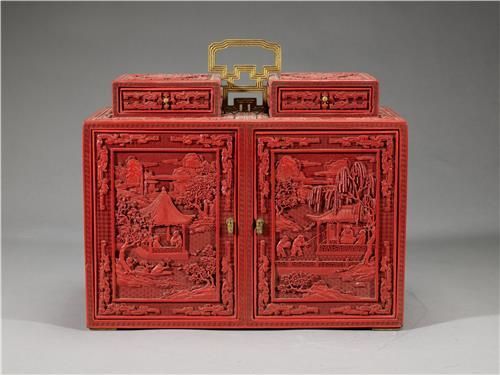
China has continued lacquerware for thousands of years through the carved lacquer technique (di?o q? q?, 彫漆器). This technique involves layering red and black lacquer alternately and then carving or engraving the surface. The exhibition highlights a Ming dynasty table with cloud and vine patterns showing alternating black and red colors, as well as a stringed instrument with black lacquer and the character "Zhonghe (中和)" engraved on its back.
The National Museum of Korea stated, "It is good to compare the development processes, histories, and main techniques of lacquerware by country." They added, "Just as masterpieces of lacquerware are completed through enduring time, we hope this continuous mutual exchange will serve as an opportunity for the three countries to understand each other better and strengthen cooperation."
© The Asia Business Daily(www.asiae.co.kr). All rights reserved.



















