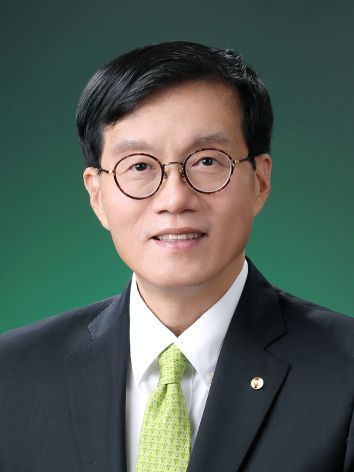
Lee Chang-yong, Governor of the Bank of Korea, predicted that the disinflation trend (slowing inflation rate) will continue in the future. He emphasized that while prices are stabilizing, the direction of monetary policy will be determined by considering the trade-offs with growth rates and financial stability.
Governor Lee stated at the morning session of the Planning and Finance Committee report held at the National Assembly in Yeouido, Seoul, on the 9th, "Due to the continued monetary tightening stance, the core inflation rate has stabilized at the low 2% range, and the consumer price inflation rate has also decreased to the mid-2% range, showing positive recent price movements."
He forecasted, "Although the slowing trend may temporarily pause due to factors such as rising oil prices, the overall disinflation trend will continue."
He projected that both exports and domestic demand will improve this year. Governor Lee said, "Our economy will continue its export-driven growth, and domestic demand will gradually improve in the second half, resulting in a 2.5% growth this year."
Regarding financial stability, he expressed concerns about rising loan delinquency rates, housing price increases, and household debt growth. He diagnosed, "While the domestic financial system is generally maintaining stability, the real estate project financing (PF) market is sluggish, and the debt repayment burden in vulnerable sectors is increasing, causing delinquency rates to rise."
He added, "Recently, housing prices have risen mainly in the metropolitan area, and the growth rate of household debt has expanded compared to the beginning of the year. Due to the possibility of prolonged high interest rates in the U.S. and increased political uncertainties in major countries, volatility in the foreign exchange market has increased."
Governor Lee explained, "Considering these factors, the Bank of Korea has maintained the base interest rate at a tight level of 3.5% since February last year."
He emphasized, "Regarding future monetary policy, the Monetary Policy Committee will make decisions by fully considering the recent disinflation trend and the trade-offs between growth and financial stability."
Additionally, Governor Lee explained, "The Bank of Korea continues its support efforts for vulnerable sectors, such as implementing the ‘Temporary Special Support for Small and Medium Enterprises’ to provide additional assistance to SMEs facing financial difficulties due to prolonged monetary tightening."
He also mentioned, "In response to increased volatility in financial and foreign exchange markets, we have actively responded by working with the government to devise market stabilization measures and flexibly managing liquidity. To enhance market stabilization functions against financial instability, we included the central associations of non-bank deposit-taking institutions in the scope of open market operation target institutions."
He further stated, "Regarding the introduction of central bank digital currency (CBDC), we are currently conducting usability tests of the CBDC for domestic users and the Agora project to improve cross-border payment services."
© The Asia Business Daily(www.asiae.co.kr). All rights reserved.

















