Pyeongtaek Waste Disposal Facility Canceled After One Month
Ichon Crematorium Project Also Halted After Failed Retry
"Conflict among residents." This is the reason recently given by Pyeongtaek City in Gyeonggi Province for scrapping its plan to build waste disposal facilities. As conflicts among local residents over the construction of waste disposal facilities intensified, the city judged that the disadvantages of proceeding with the project outweighed the benefits.
Major local governments in the Seoul metropolitan area are seeing their waste disposal and cremation facility projects repeatedly stalled or drifting. Although the need for such facilities is growing rapidly due to increasing demand, they are struggling to find solutions as they face opposition from residents in the proposed locations.
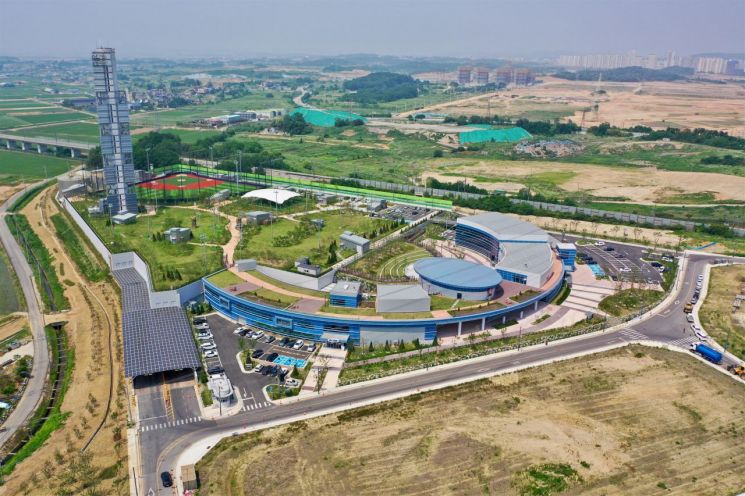 Pyeongtaek Eco Center exterior. Although the construction of new waste treatment facilities is urgently needed, projects promoted by local governments are facing resident opposition, causing delays or failures.
 [Image source=Pyeongtaek City]
In the case of Pyeongtaek City, the plan for a new waste disposal facility took a zigzag path within a month: from announcing a 'candidate site' to switching to a public contest, and finally to scrapping the project. Early last month, the city announced an 800,000㎡ area in the Hyeondeok-myeon area as the 'first candidate site,' but strong opposition from local residents led to changing the project method to a public contest. However, as resident conflicts failed to subside, the city ultimately declared a full cancellation of the project earlier this month. Mayor Jeong Jang-seon of Pyeongtaek even firmly stated, "We will not pursue the construction of waste disposal facilities during the 8th elected term."
In Hwaseong City, struggles over a landfill site continue. In May last year, S-P Nature, a subsidiary of Sampyo Industry, applied for an environmental impact assessment to develop a waste disposal facility on a 348,110㎡ quarry site in Yangno-ri, Bibong-myeon. This site has been used for sand and gravel extraction for 35 years since 1988, and with the expiration of the business period, the company sought to build a landfill.
However, strong opposition from residents not only in the area but also in the nearby Bibong district has only escalated conflicts. During this process, a residents' briefing session held by the project operator in May ended prematurely due to disruptions. Hwaseong City has only stated the fundamental position that "if residents oppose, it cannot proceed."
The problem is that while the demand for processing household and business waste is rapidly increasing, existing facilities have reached their capacity limits. In Pyeongtaek City, the existing Pyeongtaek Eco Center in Godeok-myeon has a daily processing capacity of 250 tons, but the average inflow reaches 270 tons.
Moreover, with the revision of the Waste Management Act Enforcement Rules, from 2026, direct landfill of household waste will be prohibited in the Seoul metropolitan area, including Seoul, Gyeonggi, and Incheon. Accordingly, waste contained in volume-based waste bags must be sorted for recycling or incinerated before the residual ash is landfilled. For metropolitan local governments already facing a shortage of disposal facilities, this is an urgent issue, but they are caught in a dilemma due to resident opposition and unable to find solutions.
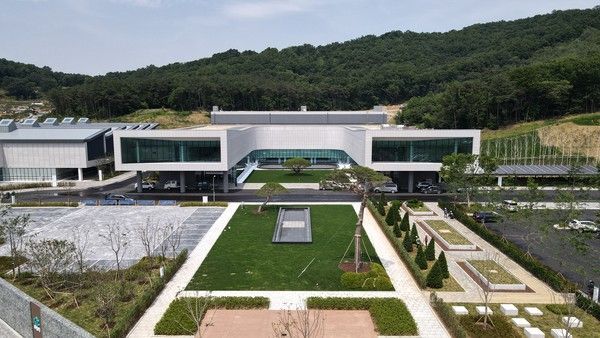 A panoramic view of Hwaseong Hambaksan Memorial Park. It is a cremation facility jointly used by six local governments: Hwaseong-si, Bucheon-si, Ansan-si, Anyang-si, Siheung-si, Gwangmyeong-si, and Gunpo-si. [Image source=Hwaseong-si]
The situation is similar for crematoriums. Currently, there are only four cremation facilities in Gyeonggi Province: Suwon Yeonhwajang, Yongin Pyeongon Forest, Hwaseong Hambaksan Memorial Park, and Seongnam Funeral Culture Center. All are concentrated in the southern metropolitan area, forcing residents in the eastern and northern regions to resort to 'long-distance cremation.' However, local governments are blocked by residents opposing these 'nuisance facilities' and cannot even begin to properly promote such projects.
A representative example is Icheon City. Since 2019, Icheon has actively pursued the construction of a crematorium. In the following year, it selected Sujeong-ri in Bubal-eup as the candidate site, but opposition from neighboring Yeoju residents and procedural controversies led to repeated setbacks, culminating in the project's cancellation in September last year. The city then held another public contest this year and confirmed Gusi-ri in Daewol-myeon as an alternative candidate site in March, but residents withdrew their application within a month, effectively ending the project.
Icheon City has since effectively halted efforts to build a crematorium. A city official said, "Since the crematorium project has failed twice, it is difficult to hastily restart it. If we try again and the outcome is unfavorable, we may lose all momentum for building a crematorium."
© The Asia Business Daily(www.asiae.co.kr). All rights reserved.
![User Who Sold Erroneously Deposited Bitcoins to Repay Debt and Fund Entertainment... What Did the Supreme Court Decide in 2021? [Legal Issue Check]](https://cwcontent.asiae.co.kr/asiaresize/183/2026020910431234020_1770601391.png)

















