First Development of Perovskite Solar Cells
"Researchers with Achievements Should Consider Abolishing Retirement Age"
Professor Nam-Gyu Park of Sungkyunkwan University has been selected as the recipient of the 'Korea's Highest Scientist and Engineer Award,' the highest honor for Korean scientists and engineers.
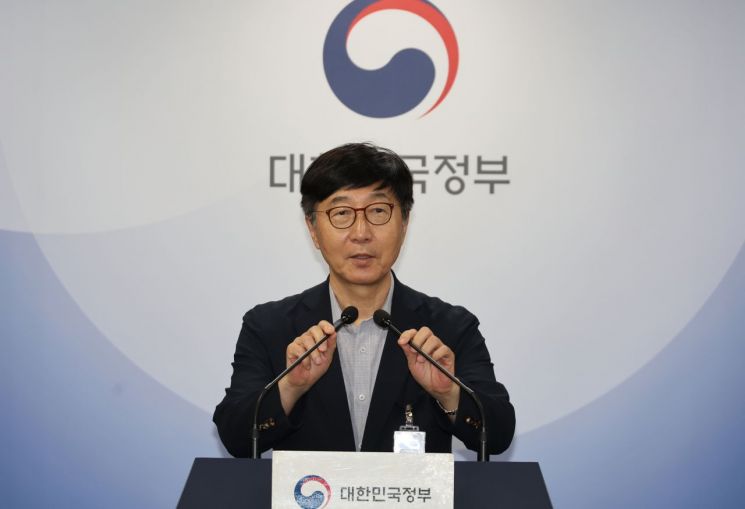 Park Nam-gyu, Distinguished Professor at Sungkyunkwan University and recipient of the 2024 Korea Top Scientist and Engineer Award, is giving his acceptance speech at the award announcement held on the 5th at the Government Seoul Office in Jongno-gu, Seoul. Professor Park was recognized for his contribution to the global solar energy industry by developing a stable and highly efficient solid-state perovskite solar cell using a light-absorbing material with a perovskite structure.
 [Image source=Yonhap News]
The Ministry of Science and ICT and the Korea Federation of Science and Technology Societies announced on the 7th that Professor Park was chosen as the recipient of the Korea's Highest Scientist and Engineer Award for being the first to develop a stable and highly efficient solid-state perovskite solar cell using a perovskite-structured light-absorbing material, thereby changing the paradigm of solar cell technology.
The Korea's Highest Scientist and Engineer Award has been given since 2003 to scientists and engineers who have achieved outstanding research results representing Korea. This year, among 17 candidates, Professor Park was selected as the awardee. He will receive the Presidential Award and a prize of 300 million KRW at the opening ceremony of the '2nd World Korean Scientists and Engineers Convention' held on the 10th at the Korea Science and Technology Center in Gangnam-gu, Seoul.
In 2011, Professor Park focused on the characteristic of perovskite-structured compounds found in prior research that absorb light well, and in 2012, he developed a perovskite solar cell that operates stably for over 500 hours with 9.7% efficiency under standard solar illumination conditions. The related research paper published that year has been cited more than 8,300 times as of April, and it is recognized for pioneering a new research field called perovskite photovoltaics.
Based on related papers, Professor Park has also been selected as a top 1% researcher worldwide by Clarivate Analytics for seven consecutive years since 2017.
In his acceptance remarks, Professor Park said, "I believe this award was given with the intention of encouraging scientists to accelerate and work diligently on renewable energy research," adding, "The solar cell capacity needed to address climate change by 2050 is about 75 terawatts (TW), but only 1 TW was produced in 2020. To solve climate change, I will continue research to commercialize perovskite solar cells and improve their efficiency."
Professor Park predicted, "As we develop perovskite solar cells and discover better materials, they will become a kind of platform device that can be used not only for solar cells but also for vivid displays and other applications."
Professor Park is 64 years old this year. Although he can continue research until the age of 70 through the endowed professorship system, he did not overlook the situation of his colleagues. In a Q&A session with reporters that day, he argued that if researchers are producing results, consideration should be given to extending the retirement age.
He said, "For those with excellent research achievements who want to continue, it might be acceptable to let them research until they die," and added, "The abolition of the retirement age should also be considered."
He also stated that to revitalize the science and engineering fields, "Policies or supplementary measures are needed to make science and engineering socially attractive."
© The Asia Business Daily(www.asiae.co.kr). All rights reserved.
![Clutching a Stolen Dior Bag, Saying "I Hate Being Poor but Real"... The Grotesque Con of a "Human Knockoff" [Slate]](https://cwcontent.asiae.co.kr/asiaresize/183/2026021902243444107_1771435474.jpg)
















