Gas Corporation "Decided Minimum Increase Considering Public Burden"
From the 1st of next month, residential city gas rates will increase by 6.8%. Since gas rates are usually adjusted on the 1st of odd-numbered months, it was widely expected that the rates would rise from the 1st of this month. However, the increase has been postponed to August 1st to minimize the burden on the public.
Korea Gas Corporation announced on the 5th that the wholesale price of residential city gas will be raised by 1.41 KRW per MJ (megajoule), a 6.8% increase, effective from August 1st. The wholesale price for general use will increase by 1.30 KRW.
Following the adjustment of city gas rates, Korea Gas Corporation expects that the monthly gas bill for a four-person household in Seoul (residential use) will increase by approximately 3,770 KRW (including VAT).
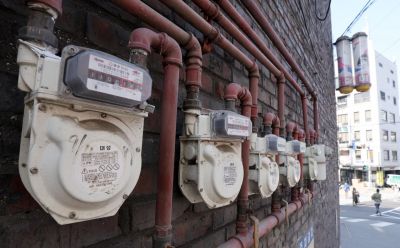 The increase in electricity and gas rates for the second quarter of this year is imminent. Although the announcement of the electricity rate hike scheduled for the 11th has been postponed for now, there is a consensus both inside and outside the government on the inevitability of the rate increase, so it is expected that the final decision will not take too long. The photo shows a gas meter in a residential area in Seoul on the 11th. Photo by Hyunmin Kim kimhyun81@
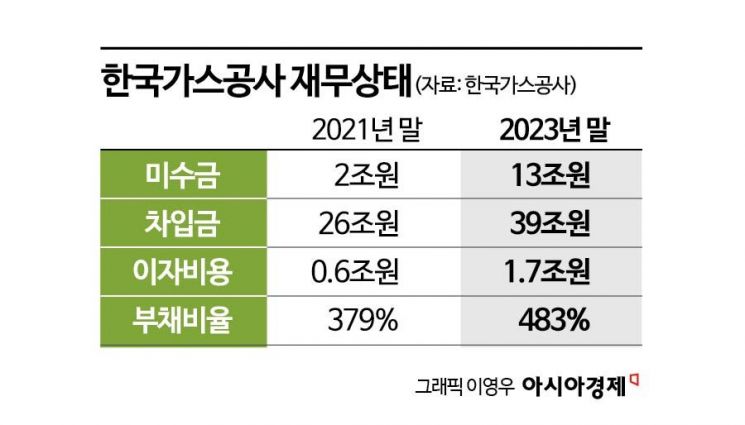
A representative from Korea Gas Corporation stated, "This decision was made to improve the corporation’s deteriorated financial condition caused by continuous supply below cost, while minimizing the increase to consider the burden on low-income households. Currently, the debt ratio exceeds 600%, and interest expenses arising from unpaid bills exceed 500 billion KRW annually. This rate increase was an unavoidable decision to ensure stable natural gas procurement." The interest expenses must be reflected in the rates in the long term, meaning consumers will have to bear them eventually.
The wholesale rates for residential and general use have been frozen since a 5.3% increase (1.04 KRW/MJ) in May last year. With this rate hike, the growth rate of unpaid bills for residential city gas is expected to slow down.
Since the outbreak of the Russia-Ukraine war, unpaid bills for residential city gas by Korea Gas Corporation surged from 1.8 trillion KRW at the end of 2021 to 8.6 trillion KRW at the end of 2022. Unpaid bills represent the difference between the cost and the supply price for gas supplied below cost, effectively constituting operating losses. Despite a rate increase last year, unpaid bills have continued to rise from 13 trillion KRW in 2023 to 13.5 trillion KRW in the first quarter of this year.
Meanwhile, Korea Gas Corporation plans to actively identify beneficiaries for its heat efficiency improvement project targeting social welfare facilities and low-income households, expanding the number of sites tenfold to 2,350 from next year through 2027. This project aims to improve energy efficiency by replacing boilers, insulation materials, and windows in aging buildings. Korea Gas Corporation expects that this expanded support policy will reduce heating costs during the winter months (October to March) by 10% per household for vulnerable groups. A representative from the corporation said, "We will continue to make every effort to minimize factors leading to rate increases while promoting support for vulnerable groups and cooperative projects to ensure that no energy welfare blind spots occur."
© The Asia Business Daily(www.asiae.co.kr). All rights reserved.


















