Yonggyejeong and Gigaecheon Feature NumaRu Offering Scenic Views
Bunokjeong Boasts Outstanding Scenery Harmonizing with Mountains and Streams
Yonggyejeong (龍溪亭) and Bunokjeong (噴玉亭) in Pohang, Gyeongbuk, will be designated as national cultural heritage treasures. The Cultural Heritage Administration announced on the 5th that it will finalize the designation after collecting opinions from various sectors for a month and reviewing them through the Cultural Heritage Committee.
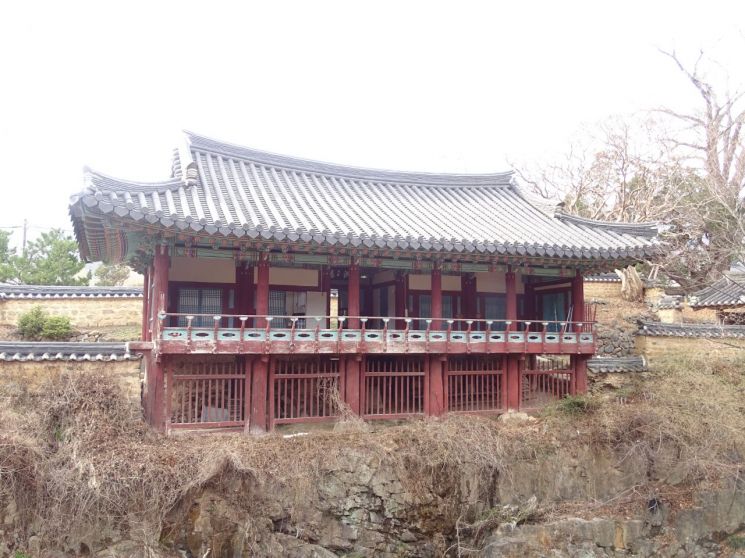
These are late Joseon Dynasty buildings harmonizing with the natural landscape. They were built in 1696 and 1820, respectively.
Yonggyejeong is an 'ㅡ'-shaped pavilion with a hipped-and-gabled roof, five bays wide at the front and two bays deep on the side. It has a second-floor open wooden floor (numaru) that overlooks the nearby Gigaecheon stream and other scenery. At the time of its construction, it was three bays wide at the front and two bays deep on the side. It was used as a training space for descendants of the Yeogang Yi clan.
The pavilion was expanded in 1778. The following year, it was assigned the role of a gatehouse for the Seodeoksa shrine of the seowon (Confucian academy) built behind it. A new name plaque (Yeonyeonru) commemorating this was also hung. However, in 1871, the old plaque was restored due to the seowon abolition decree, which could have caused damage. The Yeogang Yi descendants even built walls around the area to prevent demolition.
Deokdong Village, where Yonggyejeong is located, is a clan village of the Yeogang Yi clan's Hyangdan faction. Various cultural heritages related to the clan have been formed. In particular, the Deokdong Forest, created with a water-blocking method (where water flowing through a valley is diverted so that the downstream is not visible), has been recognized for its preservation value along with Yonggyejeong and was designated as a national natural heritage scenic site in 2011 (Pohang Yonggyejeong and Deokdong Forest).
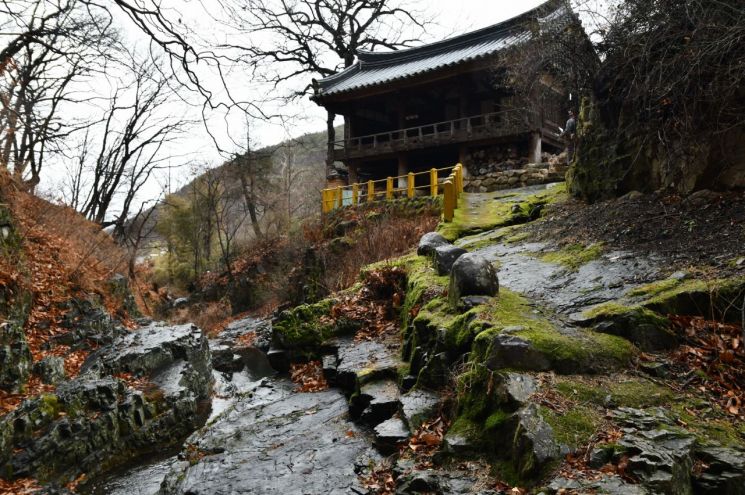
Bunokjeong also boasts outstanding scenery harmonizing with the surrounding mountains and streams. Especially in front of it is the Yonggyecheon valley, shaded by old trees. As its name suggests, it seems to spout pearls. Inside, plaques emphasizing this include 'Cheongryuheon (聽流軒·Place to Hear the Flowing Water)' and 'Yonggyejeongsa (龍溪精舍·A place where the flowing water resembles a dragon)'.
The building is shaped like the character '丁', with a three-bay-wide numaru at the front and two ondol rooms arranged behind it. Generally, a '丁'-shaped pavilion places living rooms on the upper horizontal part (ㅡ) and a large wooden floor below. Bunokjeong places the numaru on the upper part and ondol rooms below to provide a good view of the valley in front.
The roof over the ondol rooms is hipped-and-gabled, while the numaru has a gable roof. The heights of the ridges and eaves of each roof are matched. The Cultural Heritage Administration stated, "This is an element that supports Bunokjeong’s outstanding scenic value" and evaluated it as "a sophisticated architectural feature rarely seen in other pavilions."
© The Asia Business Daily(www.asiae.co.kr). All rights reserved.


















