"Emergence of Companies with Multiple Subsidiaries Like Korean and Japanese Firms"
The Russian Ministry of Industry and Trade has diagnosed that a 'chaebolization' trend, similar to that of South Korea, is emerging in the Russian economy due to the impact of Western sanctions.
Vasily Osmakov, First Deputy Minister of Industry and Trade of Russia, said in an interview with RIA Novosti on the 4th (local time), "Chaebolization is derived from the Korean word 'chaebol,' and there is a similar term in Japanese called 'zaibatsu.'"
He cited Samsung as an example of a chaebol, explaining, "A chaebol refers to a large industrial conglomerate operated by an individual or family that owns companies in various fields. Samsung manufactures both televisions and gas carriers."
He continued, "Historically, the capitalism of these countries (South Korea and Japan) developed with a trade-oriented bias," adding, "They formed capital first, then established industrial assets underneath to build a vertical structure," resulting in South Korean and Japanese companies handling multiple industrial sectors.
In contrast, Osmakov compared that in Russia, industrial, banking, and financial capital have developed separately.
He explained, "When the market globalized and loans were relatively easy, industry operated independently. However, with severe sanctions imposed, it became necessary to sell goods through financial partners and trading companies."
He added, "Therefore, currently we need synergy among capital, trade, and industrial capital, that is, chaebolization in terms of form rather than origin," and predicted, "This trend will continue."
As an example of chaebolization in Russia, he mentioned that 100% of the shares of the Russian shipbuilding company United Shipbuilding Corporation (USC) were transferred last year to VTB, a major Russian state-owned bank. He also noted that Russia's largest state-owned bank, Sberbank, is seriously considering industrial assets, and Gazprombank is already a 'quasi-chaebol.'
He emphasized, "Banks have the financial capacity to establish long-term strategies and provide funding for industrial sector subsidiaries."
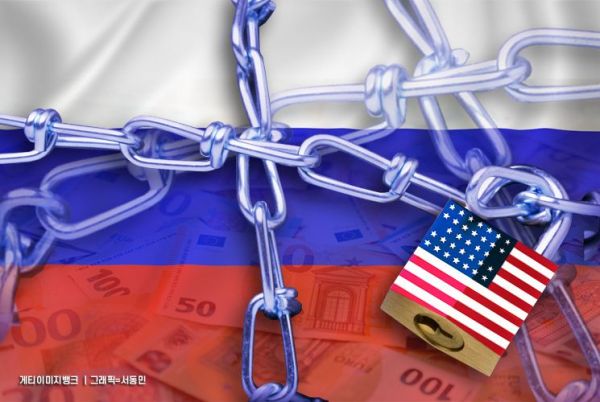
Since Russia launched its 'special military operation' in Ukraine in February 2022, it has been subjected to Western economic sanctions. As a result, global companies in finance, industry, and manufacturing sectors have largely withdrawn from Russia.
Deputy Minister Osmakov stressed that demand for Russian industrial products has greatly increased since the sanctions.
© The Asia Business Daily(www.asiae.co.kr). All rights reserved.

















