Controversy Over Adult Literacy Spreads Across Generations
Experts Point to Habitual Consumption of Short, Provocative Information as the Cause
Recently, a post by a current daycare teacher on an online community has become a hot topic. According to this teacher, one parent, after seeing a notice that said "The location will be changed in case of rain," asked, "Which city is Ucheon-si?" Additionally, when encountering a phrase that said, "It is recommended not to (perform a certain action)," there was a flood of inquiries asking whether it was allowed or not. The teacher expressed concern, saying, "I'm not that smart myself, but I truly feel that the literacy level of adults these days is really serious," and added, "It seems that more and more people are lacking the ability to understand basic vocabulary or context as time goes by."
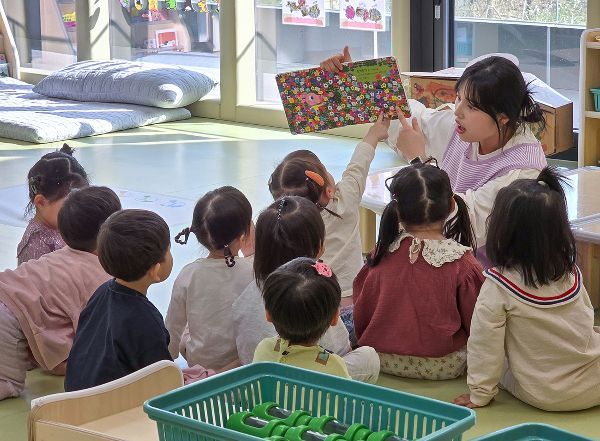
The controversy over adult literacy, which initially emerged among younger generations, now appears to be spreading across all age groups. Experts have pointed out that the root of the problem lies in the lack of ability and habit among modern people to read and interpret long texts with perseverance in a media society where provocative and short-lived information is distributed in large quantities.
This is not the first time the issue of adult literacy has come to the fore. In 2020, when the phrase "three-day holiday" appeared in real-time search terms, there was a barrage of questions asking, "Why use 'sahul' instead of just saying three days?" In 2021, when Lee Junseok, then leader of the People Power Party, met with presidential candidate Ahn Cheolsoo and used the phrase "I wish you good fortune," a journalist from a broadcasting company misinterpreted it as "wishing for bad luck" and reported it incorrectly. In 2022, the word "simsimhan sagwa" (meaning "sincere apology") used by a webtoon artist in a fan signing reservation notice was distorted to mean "a boring and uninteresting apology."
As the controversy over adult literacy grew, "adult literacy tests" that allow individuals to measure their own literacy levels became explosively popular for a time. In June 2022, the number of test-takers for the adult literacy test jointly developed by Korea Educational Broadcasting System (EBS) and Professor Cho Byoungyoung's research team at Hanyang University increased from 71,100 in 2022 to 82,400 last year. As of June this year, the cumulative number of test-takers has already reached about 26,600. The self-diagnosis literacy test developed by Millie's Library and reviewed by the KBS Korean Language Promotion Institute has surpassed 650,000 cumulative test-takers since its launch.

Nevertheless, the average score on adult literacy tests has been found to fall below half. In a pre-test conducted by EBS in 2022 with 350 adults in their 20s to 40s, participants answered an average of 6.19 out of 15 questions correctly, with the accuracy rate not even reaching 50%. The average score for the literacy test provided by Millie's Library is also only slightly above half, at 66 points.
An EBS official explained, "When the adult literacy test was launched in the summer of 2022, more than 40,000 people took it in just two months, showing its popularity," and added, "It's not possible to judge someone's literacy as 'excellent' based solely on how many questions they get right. However, the test results did show that a significant number of adults are struggling with literacy."
Experts believe that the fundamental problem lies in the current trend of people becoming accustomed to only short and stimulating information due to the development of social networking services (SNS). Because people have become used to the online world where a large amount of information is distributed all at once, it has become difficult for modern individuals to develop the habit of patiently reading long texts, and the tendency to selectively choose and interpret information as they wish has grown stronger.
Some also see the dramatic increase in the breadth and frequency of communication compared to the past as a cause. In the past, people mostly communicated with others in similar fields and environments, but now, with the development of media, all generations and fields are mixed together, raising the level of literacy required by society.
Seo Hyuk, a professor in the Department of Korean Language and Literature at Ewha Womans University, analyzed, "Modern people, who have become accustomed to 'digital reading'-quickly acquiring a lot of information-basically lack the ability to read books at length and understand information contextually and critically. In addition, compared to the past, the breadth and frequency of communication have increased, and the level of literacy required by society has risen even further. Modern people are simply unable to keep up with this."
© The Asia Business Daily(www.asiae.co.kr). All rights reserved.
![Clutching a Stolen Dior Bag, Saying "I Hate Being Poor but Real"... The Grotesque Con of a "Human Knockoff" [Slate]](https://cwcontent.asiae.co.kr/asiaresize/183/2026021902243444107_1771435474.jpg)













