Pilot Project Planned... Song Sanghyeon Square, Gaya Station, Donghae Line Centum Station, Choryang Station BRT Stops
Environmental Improvements with Geothermal, Sunlight, and Fine Dust Expected to Boost Public Transit Use
Starting in the second half of this year, Busan City will implement a pilot project to create "garden-type urban forests" at Bus Rapid Transit (BRT) stations.
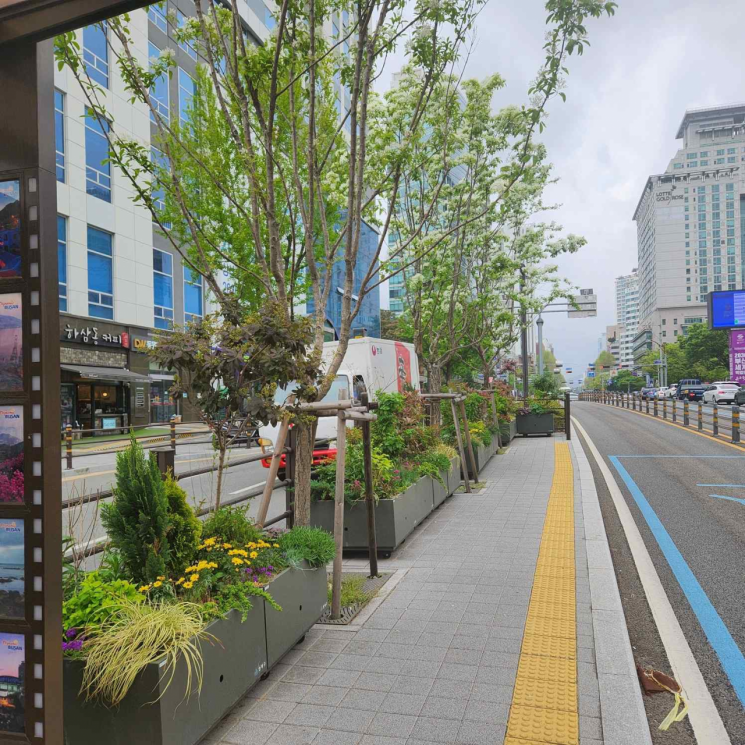
The "garden-type urban forest" is a small-scale garden designed for narrow spaces, prioritizing the operation of large buses and passenger safety. By planting various garden plants, it provides a pleasant environment for passengers using BRT stations and improves the landscape of urban streets.
This pilot project was established to improve the user environment of BRT stations, where citizens have experienced discomfort due to direct exposure to hot sunlight, ground heat, and fine dust during the summer, and to promote the use of public transportation.
In particular, this reflects the city's firm commitment to making Busan a city people want to live in again, as well as continuous demands from BRT users for environmental improvements, input from environmental organizations, and local public opinion.
To this end, the city has secured an additional budget of 200 million KRW for the project.
The pilot project locations are BRT stations at Songsanghyeon Square, Gaya Station (Line 2), Donghae Line Centum Station, and Choryang Station (Choryang Intersection). The city plans to complete the project within the year after prior consultations with relevant agencies.
Starting with this pilot project, the city plans to implement the "garden-type urban forest creation project" at all 125 BRT platforms over two years, from next year through 2026.
Ahn Cheolsoo, Director of the Green City Bureau, stated, "For the future of Busan as a city full of gardens and parks, we ask for your great interest in and use of the garden-type urban forests that will be created."
© The Asia Business Daily(www.asiae.co.kr). All rights reserved.

















