Implementation of the 'Rural Area Maintenance Act Amendment' on the 3rd
Government to Promote Vacant House Bank and Vacant House Regeneration Projects
From now on, in rural areas where there are 10 or more vacant houses and the vacancy rate is 20% or higher, the mayor, county governor, or district head will be able to designate a Vacant House Priority Maintenance Zone. Additionally, if the owner of a vacant house fails to comply with a demolition order for vacant houses with high risks of safety accidents, crime occurrence, or landscape damage, a compliance penalty will be imposed. This is intended to revitalize the maintenance of vacant houses in rural areas.
The Ministry of Agriculture, Food and Rural Affairs announced on the 2nd that the system for designating Vacant House Priority Maintenance Zones and imposing compliance penalties on specific vacant houses, introduced through a partial amendment of the Rural and Fishing Village Maintenance Act in January, will be enforced starting from the 3rd.
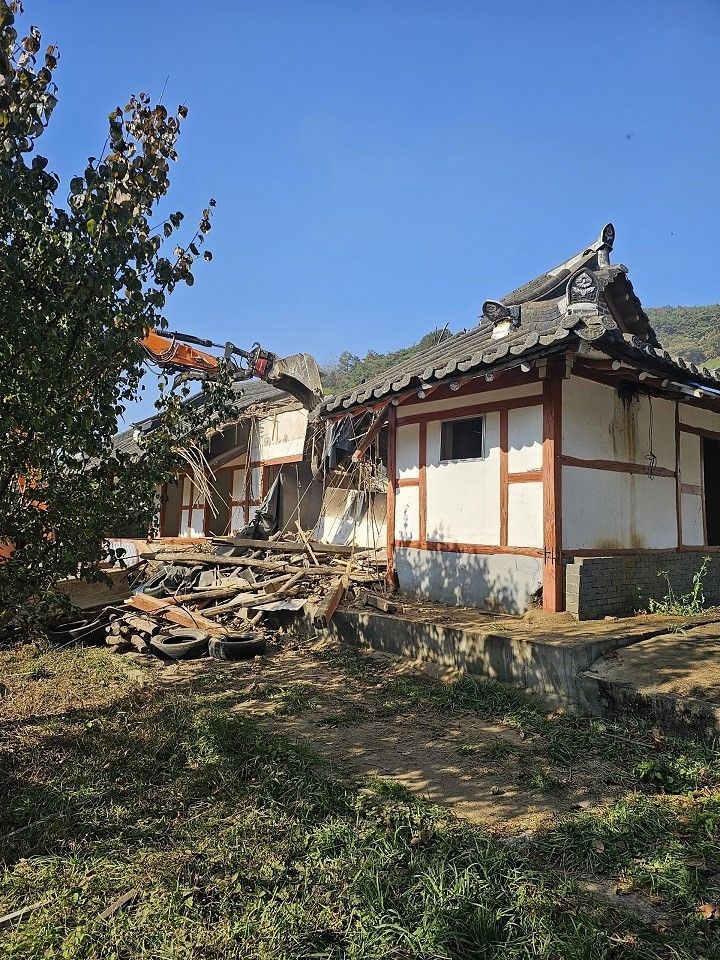
Ahead of the enforcement of the amended Rural and Fishing Village Maintenance Act, the Ministry of Agriculture, Food and Rural Affairs has revised the enforcement decree and enforcement rules of the Act to specify detailed criteria for designating Vacant House Priority Maintenance Zones and standards for compliance penalties by type.
First, to focus on areas where the number or proportion of vacant houses in rural areas is increasing, the mayor, county governor, or district head can designate a Vacant House Priority Maintenance Zone. A zone can be designated if there are at least 10 vacant houses or if the vacancy rate is 20% or higher in a village center. However, for rural village protection zones under the Act on Restructuring and Regeneration Support of Rural Spaces, designation is possible even if there are fewer than 5 vacant houses, allowing flexible designation of Vacant House Priority Maintenance Zones according to regional conditions.
Once designated as a Vacant House Priority Maintenance Zone, when an implementer of a living environment maintenance project reconstructs or changes the use of vacant houses within the zone, restrictions on building coverage ratio, floor area ratio, and building height under the Building Act, etc., can be relaxed within the scope of the existing vacant houses after review by the local government’s deliberation committee.
In addition, for specific vacant houses with high risks of safety accidents, crime occurrence, or landscape damage, if the mayor, county governor, or district head’s order for demolition or other measures is not complied with, a compliance penalty will be imposed on the owner of the vacant house. Considering the costs required for demolishing rural vacant houses, the standard for the compliance penalty is set at 5 million KRW for non-compliance with a 'demolition order' and 2 million KRW for non-compliance with 'other orders' such as removal of hazardous elements like tree cutting. The mayor, county governor, or district head may reduce the penalty by up to 50% through an ordinance if deemed necessary.

The Ministry of Agriculture, Food and Rural Affairs continues to support vacant house maintenance not only through voluntary maintenance by vacant house owners via legal and institutional improvements but also through rural housing improvement projects that provide loans for demolition and renovation of vacant houses. Furthermore, it actively promotes policies that view rural vacant houses as regional resources and support diverse private sector utilization.
Through collaboration with local governments and the private sector, a rural vacant house bank is being established to activate vacant house transactions and increase private utilization of vacant houses. In cooperation with local governments, the Foundation for Cooperation between Large, Medium, and Small Enterprises in Agriculture, Forestry and Fisheries, and private companies, vacant house regeneration projects remodeling rural vacant houses into village hotels, workation spaces, etc., will continue to be promoted.
In particular, regarding vacant house sales and utilization, a consultative body will be formed with interested local governments and private companies to develop various models using vacant houses, while simultaneously conducting separate empirical research to identify necessary improvements in laws and systems.
An official from the Ministry of Agriculture, Food and Rural Affairs stated, "It is crucial that rural vacant house owners maintain vigilance and properly manage their vacant houses so that rural vacant houses do not become another factor contributing to rural depopulation. We ask local governments to cooperate so that vacant house maintenance progresses rapidly through the designation of Vacant House Priority Maintenance Zones and the imposition of compliance penalties. The Ministry will actively collaborate with related ministries, local governments, and the private sector to ensure systematic maintenance of rural vacant houses and diverse private utilization."
© The Asia Business Daily(www.asiae.co.kr). All rights reserved.


















