Approaching 200 Million Cumulative Uses
Annual Deficit Around 10 Billion KRW
Damage Persists Since QR Code Introduction
As the cumulative usage of the public bicycle service 'Ddarungi' approaches 200 million rides, incidents of loss and damage continue unabated. Although the number of damages has decreased since the introduction of QR codes, the service is still facing an annual operating and management deficit of around 10 billion KRW.
According to Seoul City on the 2nd, the number of lost or damaged Ddarungi bicycles was 87 in 2020, 6 in 2021, 3 in 2022, and 23 in 2023. A Seoul city official explained, "The QR system was first introduced in 2019 and fully installed by 2021, resulting in a decrease in loss and damage cases."
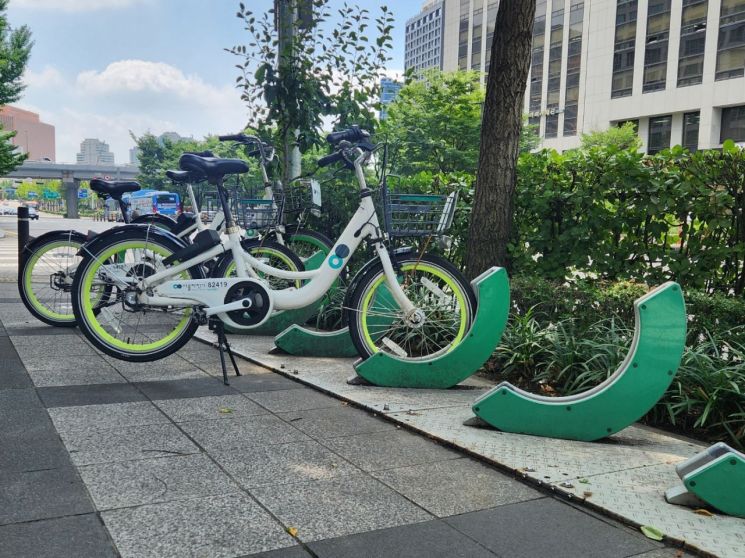
Ddarungi is suffering due to some inconsiderate citizens. The Seongbuk Police Station in Seoul arrested a man in his 20s who threw 27 Ddarungi bicycles into the Seongbukcheon stream. Mr. A is charged with property damage for discarding the bicycles three times on the 9th and 12th of last month. The police apprehended Mr. A based on CCTV footage after receiving reports on the 11th and 12th of last month that several Ddarungi bicycles had been abandoned in Seongbukcheon. Seoul City plans to file a claim for damages once the investigation is concluded.
At one point, stealing Ddarungi bicycles became a trend among teenagers. Most cases involved detaching the locking mechanism from the docking stations and damaging the terminals. They would hide the bicycles in underground parking lots or alleys and use them like personal bicycles. This exploited the loophole that user information could not be identified if the terminal was broken, making it difficult to claim damages. In response, Seoul City installed theft alert bells that sound an alarm if the bicycle is detached from the docking station and the wheels are turned without authorization.
Ddarungi was first piloted with 440 bicycles in November 2010, and as of 2023, 45,000 bicycles are in operation. The cumulative number of rides reached approximately 190 million by May this year. Weekday usage increased from 13 million rides in 2019 to 33 million last year, while weekend usage rose from 5 million to 11 million rides. By time of day, weekday commuting hours saw a significant increase in usage, especially during the evening rush hour. By region, areas with concentrated business districts such as Magok, Jamsil, and Yeouido, which have high commuting demand, as well as areas with high subway and public transportation transfer demand, and leisure areas like the Han River, had the most users.
Professor Yoon In-jin of the Department of Sociology at Korea University stated, "Damage to Ddarungi can be seen as a lack of public awareness and responsibility. Local governments promote it only as a welfare service and do not publicize punishments for illegal acts. As a result, people behave more irresponsibly. This incident should serve as a turning point to strengthen penalties. Only then can public services for ordinary citizens expand and provide more benefits."
© The Asia Business Daily(www.asiae.co.kr). All rights reserved.
![A Woman Who Jumps Holding a Stolen Dior Bag... The Mind-Shaking, Bizarre Con of a "Human Knockoff" [Slate]](https://cwcontent.asiae.co.kr/asiaresize/183/2026021902243444107_1771435474.jpg)
















