Pressure on Defense Cost Sharing Tightens Indo-Pacific-NATO Alliance
Leaders Including UK Foreign Secretary Cameron Meet with Trump
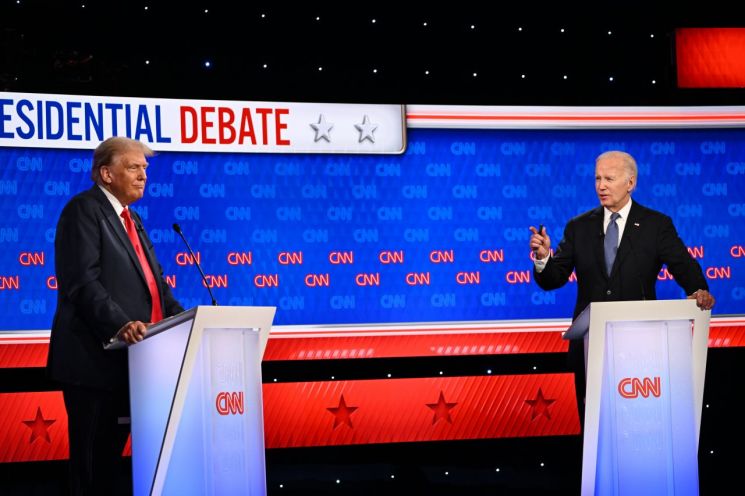
Following last week's U.S. presidential debate, President Joe Biden is facing pressure to withdraw his candidacy, while the international community is accelerating efforts to prepare for a potential second term of Trump.
According to U.S. political media outlet The Hill on the 30th of last month (local time), the North Atlantic Treaty Organization (NATO) is pushing for a plan to take the lead in supporting Ukraine at the NATO summit scheduled for the 9th. This is in anticipation that former President Donald Trump, who strongly pressured NATO to increase defense spending, would reduce support for Ukraine under a U.S.-first policy if he returns to power.
Indo-Pacific allies with high political and military dependence on the U.S., such as Japan, South Korea, Australia, and New Zealand, are also under urgent pressure. This is because former President Trump threatened to abandon security commitments if these allies do not increase their defense spending. Evelyn Parkas, director at the McCain Institute of Arizona State University, described the participation of Japan, South Korea, Australia, and New Zealand in this NATO summit as "an effort to ensure that national relations can grow further and democratic countries can continue to support each other even without the U.S."
Moves to establish good relations and build rapport with former President Trump in advance are also ongoing. British Foreign Secretary David Cameron visited the U.S. in April and met with former President Trump, and Polish President Andrzej Duda also met with Trump that same month, describing the meeting as "a very pleasant and friendly encounter." Jens Stoltenberg, NATO Secretary General whose term is nearing its end, also delivered a speech at the Heritage Foundation, a conservative U.S. think tank where many individuals likely to join a second Trump administration are based.
Lobbying efforts to avoid former President Trump's key pledge of 'bomb tariffs' are also underway. Earlier this year, Germany dispatched Michael Link, Coordinator for Transatlantic Cooperation, to the U.S. as a special envoy. Link engaged with Republican governors to conduct behind-the-scenes work aimed at avoiding punitive tariffs on European Union (EU) products. Additionally, European diplomats stationed in Washington D.C. reportedly met with former President Trump's associates at hotels, embassies, and think tanks to gather information on policy intentions and cabinet plans to relay back to their home countries.
However, there is also an assessment that not all countries are worried about the repercussions of a second Trump term. Parkas noted, "The Middle East is a region that does not hedge (manage risks) against the possibility of former President Trump's return," explaining that some countries, such as Saudi Arabia, which has a close relationship with Jared Kushner, Trump's son-in-law and former senior White House advisor, welcome Trump's return to the White House. Furthermore, The Hill analyzed that Israeli Prime Minister Benjamin Netanyahu, who is at war with the Palestinian militant group Hamas, is also likely to prefer the Trump administration, which has held Iran responsible for Middle East conflicts and casualties.
© The Asia Business Daily(www.asiae.co.kr). All rights reserved.
![From Hostess to Organ Seller to High Society... The Grotesque Scam of a "Human Counterfeit" Shaking the Korean Psyche [Slate]](https://cwcontent.asiae.co.kr/asiaresize/183/2026021902243444107_1771435474.jpg)
















