Amazon Web Services to Sign Contract with Costellation Energy
Nuclear Energy Rising Amid AI-Driven Surge in Electricity Demand
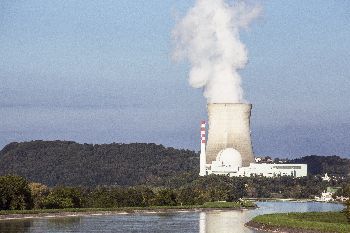
U.S. tech companies are signing direct contracts with nuclear power plants to prepare for the surge in electricity demand driven by artificial intelligence (AI). The development of generative AI requires massive amounts of electricity, and there is a judgment that fossil fuel energy and renewable energy have limitations. Moreover, since nuclear energy is a carbon-free energy source capable of supplying power 24 hours a day, it is analyzed that companies are gaining attention from an ESG (Environmental, Social, and Governance) perspective.
The Wall Street Journal (WSJ) reported on the 30th of last month (local time) that “about one-third of U.S. nuclear power plant owners are discussing ways to supply electricity to tech companies to meet the data center power demand caused by the AI boom.”
According to WSJ, Amazon Web Services (AWS) is set to sign a contract with Constellation Energy (CEG) to receive power directly from a nuclear power plant located on the East Coast. This is to supply electricity to the Pennsylvania-based nuclear-powered data center that Amazon purchased for $650 million in March. PSEG, a nuclear energy company in New Jersey, is also negotiating supply contracts with data centers that can support efforts to make New Jersey an AI hub.
The active contract discussions between data centers and nuclear power companies are due to the fact that generative AI has been labeled an “electricity-hungry beast,” making energy procurement more important than ever.
For example, ChatGPT developed by OpenAI requires a massive learning and inference process to answer human questions, consuming vast amounts of electricity in the process. However, fossil fuel energy such as coal poses significant climate crisis risks, and renewable energy sources like solar and wind are heavily influenced by natural changes, making stable power supply difficult. For this reason, nuclear power, which produces large-scale electricity and is carbon-free, has rapidly emerged as a solution.
The nuclear power plant industry sees the surge in electricity demand in the AI era as a new opportunity. Shares of nuclear-related companies Vistra and Constellation Energy have risen 125% and 73%, respectively, since the beginning of this year. In the U.S., after the overbuilding boom in the 1990s, the industry has faced a downturn for over a decade due to nuclear accidents worldwide and profitability issues, leading to the early closure of about ten nuclear plants.
However, some predict that natural gas demand will also increase in the short term. Natural gas power plants can complement the weaknesses of fossil fuels, renewable energy, and nuclear energy. Compared to fossil fuels, they emit less carbon, and unlike renewable energy, they can supply power 24 hours a day. Additionally, they are cheaper and more practical than building new nuclear power plants.
According to the U.S. Electric Power Research Institute, the electricity required by data centers in the U.S. last year was estimated to be about 4% of the country’s total electricity consumption. It is expected to surge to as much as 9% by 2030.
© The Asia Business Daily(www.asiae.co.kr). All rights reserved.
!["The Woman Who Threw Herself into the Water Clutching a Stolen Dior Bag"...A Grotesque Success Story That Shakes the Korean Psyche [Slate]](https://cwcontent.asiae.co.kr/asiaresize/183/2026021902243444107_1771435474.jpg)
















