Economic Impact Assessment of the Second Baby Boomer Generation Entering Retirement Age
With the retirement of the second baby boomer generation beginning in earnest this year, concerns have been raised that their exit from the labor market could significantly constrain South Korea's growth potential. To prevent negative economic impacts, it has been pointed out that social discussions should be actively pursued to extend employment for the elderly, allowing them to work longer even after retirement.

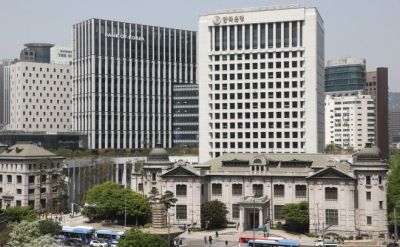
According to the report titled "Economic Impact Assessment of the Second Baby Boomer Generation Entering Retirement Age," released by the Bank of Korea on the 1st, the largest single generation in South Korea, the second baby boomers, are expected to officially reach the statutory retirement age (60 years) starting this year.
The second baby boomers, born between 1964 and 1974, number 9.54 million, accounting for 18.6% of the total population. The first baby boomers, born between 1955 and 1963, numbered 7.05 million, making up 13.7% of the population.
The report states that the first baby boomers completed their entry into retirement age last year. The resulting decrease in the labor force is estimated to have lowered the annual economic growth rate by 0.33 percentage points during the period from 2015 to 2023.
Starting this year, the second baby boomers, who are larger in number than the first, will leave the labor market, raising concerns that the potential growth rate may decline more sharply as a result.
According to the report, under a scenario where the current employment rate of those in their 60s is maintained, the retirement of the second baby boomers is expected to reduce the annual economic growth rate by 0.38 percentage points during the period from 2024 to 2034.
However, the report evaluates that the second baby boomers, who grew up during the period when South Korea's economic growth accelerated, have a stronger willingness to work and higher educational attainment compared to previous generations. They also have high IT utilization, favorable income and asset conditions, and a strong demand for socio-cultural activities.
Considering these factors, the negative impact of the second baby boomers entering retirement age may be smaller than expected, and with sufficient policy support, the decline in economic growth rate could be significantly reduced.
Given their strong willingness to continue working after retirement, if the recent trend of increasing employment rates continues with government policy support, the decline in economic growth rate could be reduced by 0.14 percentage points.
Furthermore, due to the Japanese government's efforts to promote employment among the elderly, the employment rate of those in their 60s in Japan has risen significantly. Assuming a similar trend in South Korea following strong institutional changes, the decline in economic growth rate could be reduced by 0.22 percentage points.
Ultimately, the diagnosis is that if the willingness to continue working is supported by policy and strong institutional changes, there will be a substantial improvement in future economic growth rates.
Jaeho Lee, head of the survey team at the Bank of Korea's Research Department and author of the report, emphasized, "In a situation where rapid aging is expected to lower economic growth rates to a low level, policy support is essential to enhance growth potential by utilizing the workforce of the second baby boomers."
Lee added, "It is especially important to create conditions that allow long-term utilization of human capital accumulated over a lifetime. As the second baby boomers begin entering retirement age this year, social discussions on various employment extension options such as continuous employment systems and retirement age extensions should be actively initiated."
© The Asia Business Daily(www.asiae.co.kr). All rights reserved.


















