Indonesian Factory Operates at 114.9% Capacity in Q1
Electric Vehicles Produced with Locally Manufactured Batteries
Hyundai Motor's Indonesia plant is quickly settling in and playing a leading role in targeting the ASEAN (Association of Southeast Asian Nations) market. This region has long been considered a stronghold of Japanese manufacturers, but with rapidly increasing demand for electric vehicles locally and a large population, it has been identified as a key future market.
According to the company's explanation on the 1st, as of the first quarter of this year, Hyundai Motor's Indonesia plant has a production capacity of 20,300 units, with actual production reaching 22,520 units. The operating rate stands at 110.9%, the highest among the seven overseas plants operated by the company (including the semi-knockdown plant in Vietnam). The Korean plant, which often requires overtime work, has an operating rate of about 114.9%.
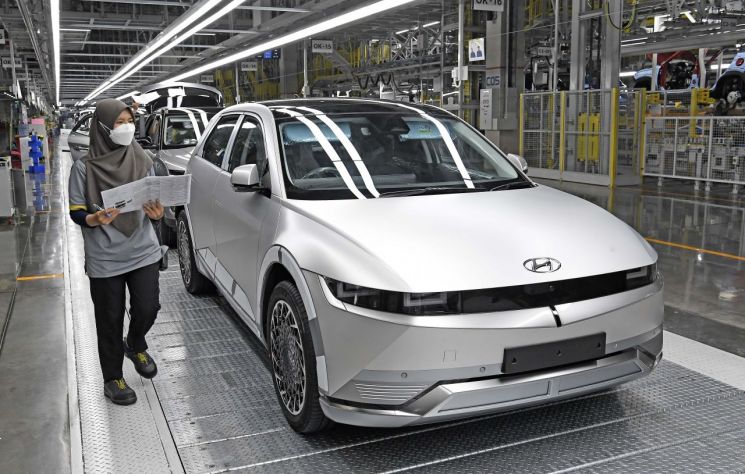
Hyundai Motor's Indonesia plant was completed in September 2022 and began full-scale operations. Except for the company's semi-knockdown plant in Vietnam and the made-to-order factory in Singapore, it is the most recently established. Even after building a complete vehicle plant, it often takes considerable time to organize the supply chain for partner parts and local sales networks, but this plant has quickly established itself within two years.
The ASEAN market, including Indonesia, is considered a blue chip for global automakers due to its high growth potential. The population, which was about 670 million in 2022, is expected to exceed 800 million by 2050. The average age is also young, at 30 years. While there is significant demand for small internal combustion engine vehicles produced by Japanese automakers, recently, demand for new types of vehicles such as electric vehicles with zero carbon emissions and multi-purpose vehicles (MPVs) has diversified. This is the background for active targeting by Korean and Chinese companies.
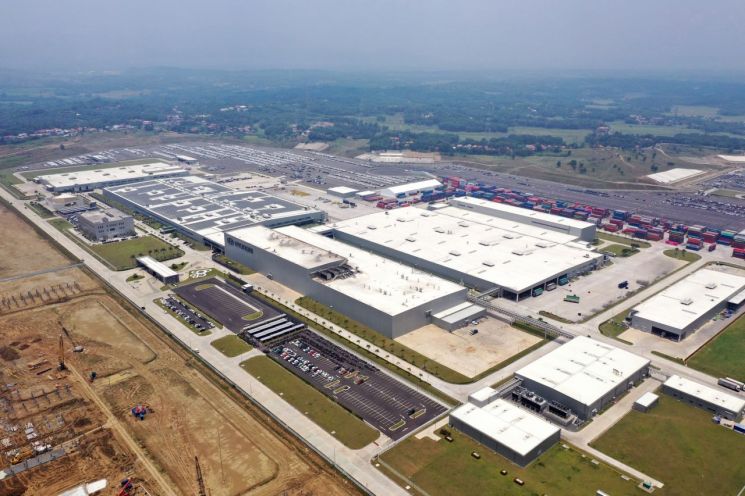
Hyundai Motor produces locally strategic models such as the Creta, MPV Stargazer, mid-size sport utility vehicle (SUV) Santa Fe, and electric vehicle Ioniq 5 at its local plant. Until the first quarter of last year, a year ago, the operating rate was 50%, and it remained at 64% by the end of the year, but it has rapidly increased this year. The cumulative production volume of the local plant reached 192,792 units as of the end of May this year, and it is likely to surpass 200,000 units within the first half of this year. During the same period, export volume was 22,880 units, an increase of more than 20% compared to the same period last year.
The localization strategy is also considered to be one step ahead. After the battery cell joint venture plant HLI Green Power, built jointly by Hyundai Motor Group and LG Energy Solution, was completed in June last year, it was decided to mass-produce the Kona Electric made with local batteries within one year. This is the first time among automakers operating locally to have an integrated system from battery cells to final new car sales.
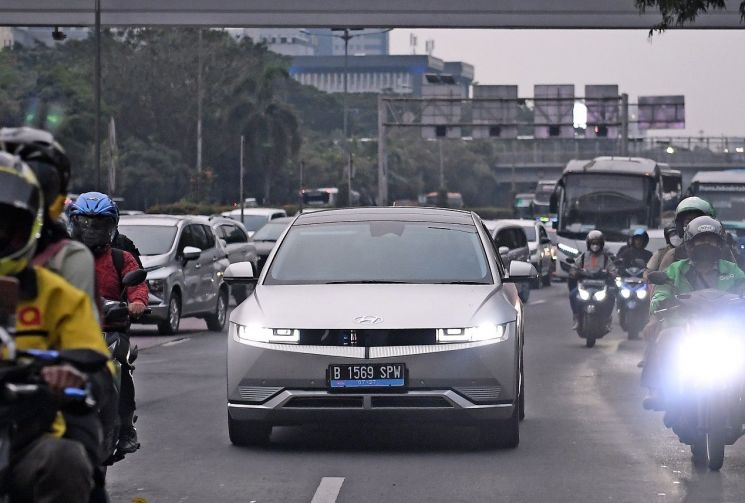
The company explained, "By establishing a full-fledged electric vehicle ecosystem, we can reduce logistics costs and shorten battery supply lead times, greatly improving production efficiency," adding, "In the mid to long term, we will establish an Indonesian value chain to create the image of 'Hyundai Motor as a localized vehicle.'"
Indonesia has the world's largest nickel reserves, a key material for electric vehicle batteries, and to foster the electric vehicle industry ecosystem, it bans the export of raw nickel ore and only allows local battery manufacturing and processing. It also encourages electric vehicle demand by exempting luxury taxes and odd-even license plate restrictions. Other production bases within ASEAN centered on Indonesia also support market penetration. In Vietnam, two local plants have been operating since 2022 in partnership with the Tan Chong Group. The Singapore Global Innovation Center, unveiled in November last year, is equipped with research and development and customer experience facilities.
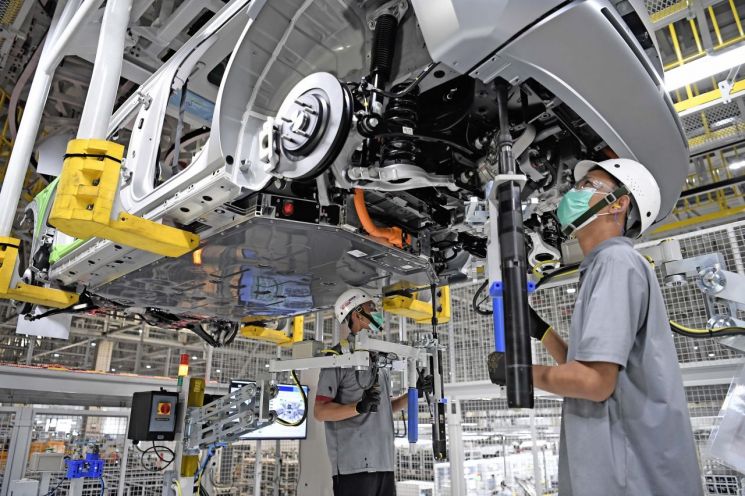 An employee at Hyundai Motor's Indonesia factory is installing an electric vehicle battery on the new car assembly line.
 [Photo by Hyundai Motor Group]
© The Asia Business Daily(www.asiae.co.kr). All rights reserved.



















